
AI-generated illustration
Local government roles vary
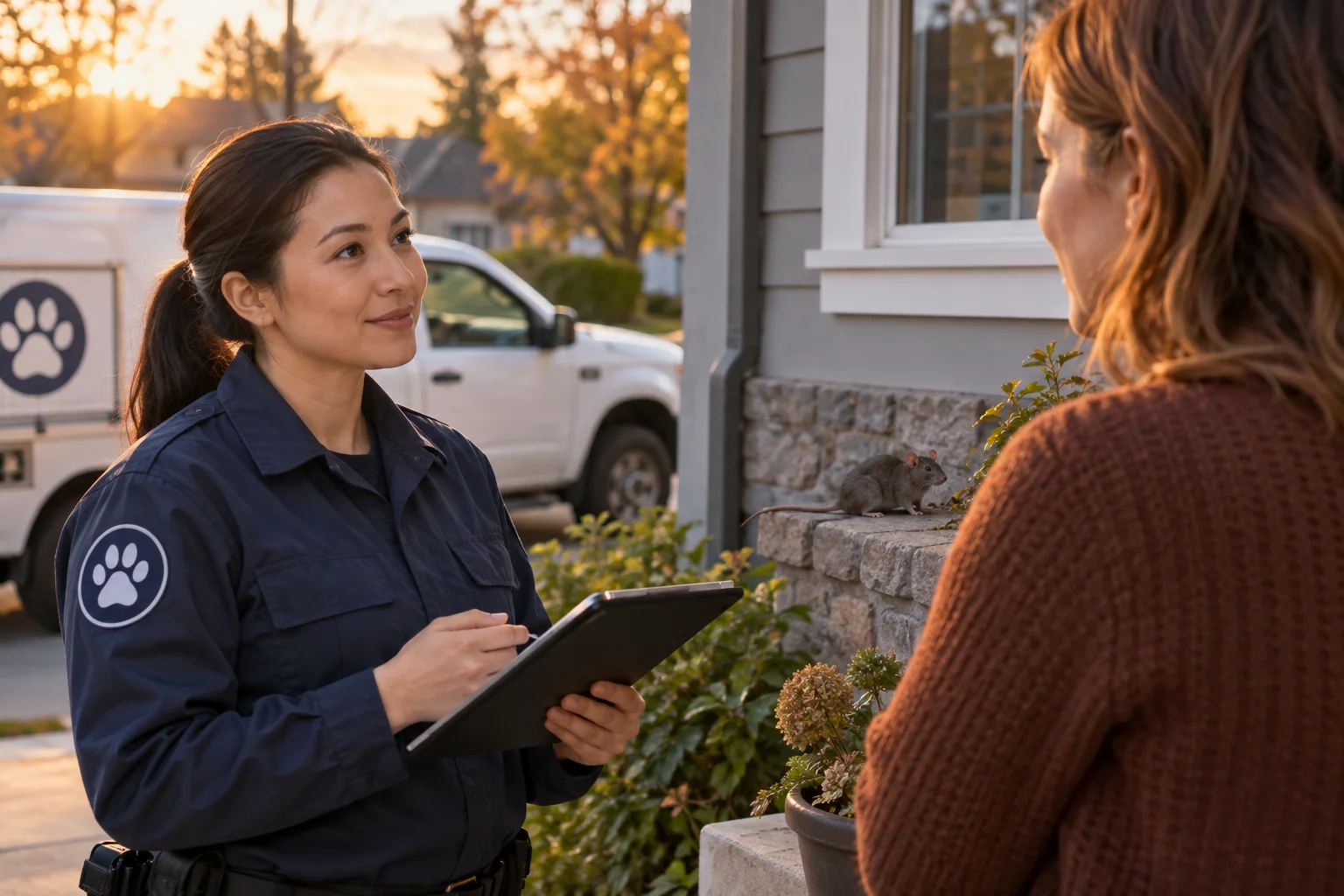
A city or county may help with a rat problem, but the answer depends on where you live and what is causing the issue. Public-health departments may provide education or investigate certain health concerns; code enforcement may address unsafe property conditions; sanitation departments may handle waste services; animal control may have limited roles; and sewer utilities may address infrastructure questions. None of these roles guarantees free household trapping, cleanup, or building repair. Start with the agency's official local website or phone line.
Describe the issue clearly before calling. Is the problem an active rat inside a private home, overflowing garbage, a rental-property dispute, a suspected sewer defect, a public right-of-way, a restaurant, or a neighboring property? The agency that can answer a sewer question may not handle a private attic infestation. A concise description, dates, photographs from a safe distance, and the exact address or block can help staff route the request without assuming an outcome they cannot deliver.
Use the correct local contact
For a rat in your house, a licensed pest professional is often the direct removal resource. For a damaged roof, door, electrical system, HVAC duct, or plumbing line, the appropriate building trade may be needed as well. A local health department can be a useful source of disease-prevention information, especially after a large infestation or exposure, but it may not send a technician to remove rodents from private property. Check official instructions before paying a third party that claims government affiliation.
For trash, collection schedules, damaged municipal bins, illegal dumping, or overflow in a public area, contact the local sanitation or public-works service. For a suspected sewer issue, contact the utility or a qualified sewer inspector. For a rental unit, document the condition and contact the landlord in writing; local tenant, housing, or code resources may explain reporting options. Responsibilities vary with lease terms, local code, and the source of the defect, so avoid assuming one agency decides every part.
Make a useful report
When contacting an agency, stick to observable facts: fresh droppings near a public bin, a damaged municipal lid, a recurring burrow at a named location, a blocked drain, or an exterior opening at a rental building. Share dates, times, and photos if requested. Do not exaggerate a population estimate or claim a disease diagnosis. Staff can act more effectively on specific, verifiable information than on a general statement that the neighborhood has rats.
Ask what the agency can do, what property owner actions are expected, and whether there is a reference number or written guidance. If the issue is an immediate utility, fire, or public-safety emergency, use the appropriate emergency channel rather than a routine complaint form. For an ordinary private-property rat problem, use the local contact for information while continuing safe food storage, exclusion planning, and professional inspection as needed.
Do not delay basic prevention
Waiting for a municipal response should not mean leaving food and access available. Secure trash and feed, clean spills, pick up fallen fruit, reduce dense cover near the building, and inspect door, vent, and utility gaps. CDC says it is easier to control rodents before they establish themselves and recommends removing food, water, and shelter. These are reasonable private maintenance steps regardless of what service a city offers.
Do not take unsafe actions on public property or another person's land. Do not pour chemicals into burrows, drains, or sewers, and do not set unprotected traps where children, pets, or wildlife can reach them. Pesticides and property access rules apply even when the rat problem feels urgent. An agency may have procedures precisely because an improvised response can create environmental, animal, or human safety problems.
Understand rental and neighbor situations
In a rental, document the issue promptly and give the owner or manager a chance to address building defects. Keep your own food and garbage secured and keep a record of communication and repairs. If the problem involves habitability, shared areas, or code concerns, local housing or tenant resources may provide guidance on reporting and next steps. They may not resolve a simple dispute about an unclean patio or a single outdoor sighting without evidence of a code violation.
With a neighbor, a calm factual conversation may resolve a damaged garbage bin or food source faster than a complaint. Keep the conversation focused on the observable issue and do not enter their property or place traps there. If there is a persistent public-health or code concern, follow the official reporting process. The goal is a maintained area with fewer food sources and routes, not conflict over which household saw the first rat.
Use professional help for the private repair
If rats are active in a wall, attic, duct, roofline, or crawl space, a qualified pest professional can identify routes and coordinate removal. CDC recommends rat-sized traditional snap traps for confirmed indoor activity and advises against glue and live traps. A professional can also explain whether exclusion should wait until active rats are removed. For heavy waste, damaged wiring, or plumbing defects, add the appropriate cleanup or trade professional.
A helpful city or county program can support this work with information, referrals, or enforcement where applicable, but it does not replace your own building maintenance. Keep records of the agency advice and professional findings. That documentation is useful if a landlord, utility, or insurer must become involved. The practical answer is local: ask the agency what it covers, then act on the repairs and sanitation within your responsibility.