
DIY tips
Start with the work you can do safely—and know when to call.
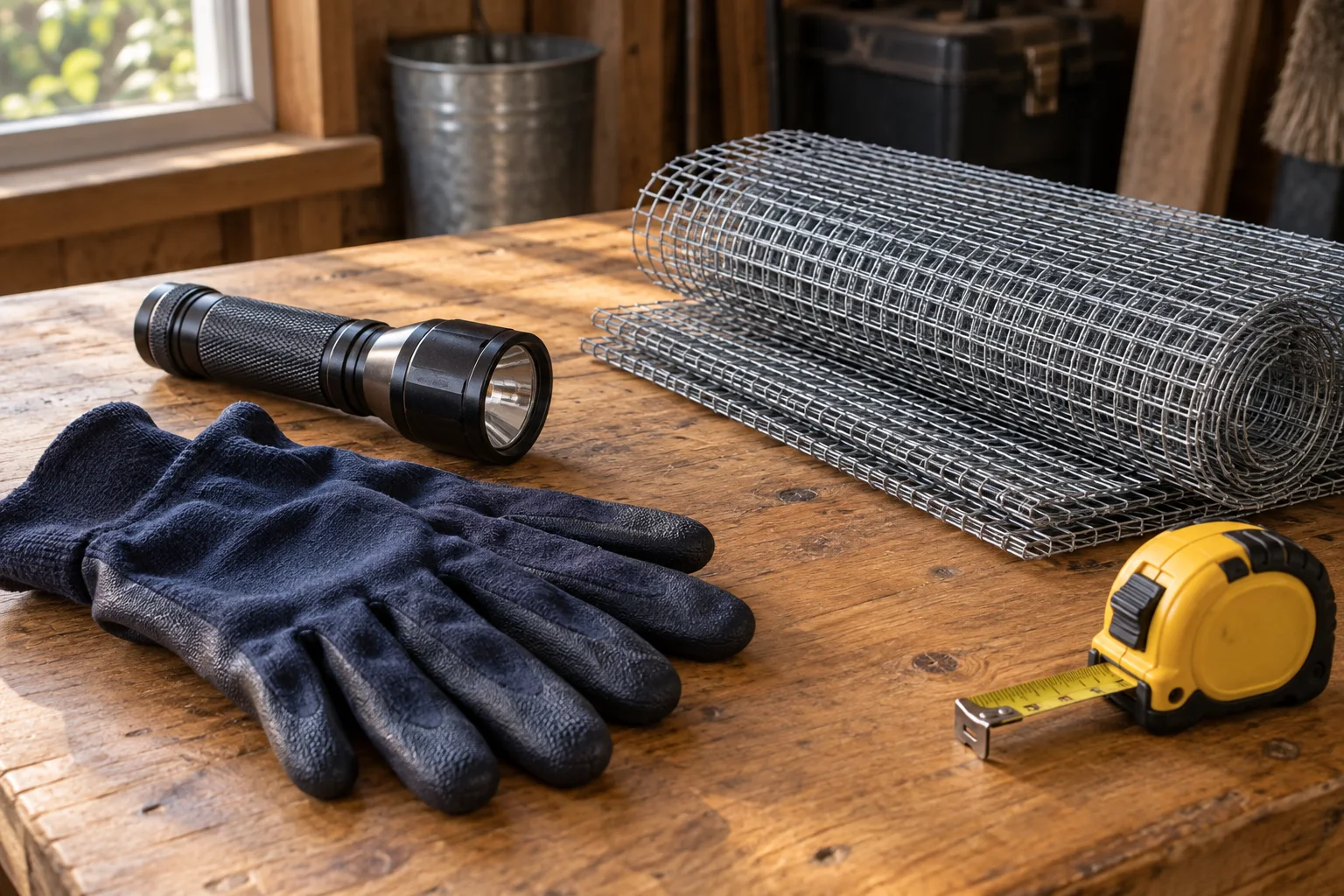
Make the property
less inviting.
Secure food and animal feed, close waste containers, address accessible leaks, and reduce clutter that hides activity. These changes support control; they do not confirm that animals already inside are gone.
Inspect accessible door seals and exterior gaps from the ground. Leave roof access, unsafe attics, damaged wiring, and heavily contaminated spaces to appropriately equipped professionals.
Keep a simple record.
Note the room, time, and type of sign. Photograph visible damage from a clean, safe position. Avoid disturbing droppings.
Plan your inspectionCompare the methods.
Consider access for checking traps, risks to children and pets, and the need to retrieve captured animals.
Understand poison limitationsPlan the cleanup.
Do not dry-sweep or vacuum untreated waste. Match the cleanup method to the material and extent of contamination.
Read the cleanup guideWhen to get professional help
- Activity is in inaccessible walls, ceilings, ducts, or roof spaces.
- Animals keep returning after repairs or trapping.
- You find extensive waste, damaged electrical components, or an unidentified nest.
- You cannot inspect or check the treatment safely.
Should I seal every opening immediately?
Coordinate sealing with removal and monitoring. Closing an active route without accounting for animals inside can leave activity in inaccessible spaces. Preserve required ventilation and drainage.
Does one quiet night mean the rats are gone?
No. Use follow-up observations and fresh evidence over time, together with inspection of the repairs. Sound alone is an unreliable measure of completion.
Get a plan for your rat problem.
Find your location and speak with the listed local service.