
AI-generated illustration
The short answer
Rat poison can kill rats, but killing individual animals is only one part of controlling an infestation. A product may reduce activity while the building continues to admit new rodents through damaged vents, door gaps, or openings around pipes. The useful question is therefore not simply whether poison works. It is whether a particular treatment fits the property, the people and animals using it, and the plan for preventing another infestation. For an occupied home, those practical considerations often make accessible trapping and structural repairs easier to monitor than relying on toxic bait alone.
Start by confirming that rats are actually responsible. Scratching in a ceiling can come from several animals, and droppings alone may not reliably establish the species. Record where signs appear, when noises occur, and whether there are damaged food packages or visible entry gaps. This information helps a technician choose a targeted approach instead of placing pesticide in response to an uncertain noise.
What a bait product actually does
Rodenticides are formulated to be eaten. Different active ingredients work differently, and their hazards, permitted uses, and directions are not interchangeable. A bait is not an exclusion material, a disinfectant, or a way to repair damage. It also does not provide a dependable count of how many rats remain. Missing bait can show that something has interacted with a station, but it does not by itself prove that every rat has consumed a lethal amount or that the original entry point is closed.
Avoid treating a product name, color, or block shape as sufficient identification. The current label specifies where that particular product may be used, how it must be placed, and what precautions apply. If a contractor proposes baiting, ask for the product name and an explanation of why it is appropriate for your building. A clear answer should include inspection, monitoring, and the conditions for removing or changing the treatment.
Why indoor poisoning can be difficult to manage
An animal that eats bait does not necessarily die beside the station. A carcass can remain inside a wall, ceiling, duct chase, or other inaccessible space. That can create an odor problem and an additional search or removal job. No responsible treatment plan should depend on a promise that poisoned rats will always leave the building to seek water. Plan for the possibility that a carcass will need to be found and removed.
A trap in an accessible, protected location offers a different kind of evidence: it can be checked and a captured animal removed. That does not make every trapping setup appropriate. Placement, animal identification, protection from children and pets, and frequent checks still matter. The advantage is that the result is more directly observable, which can help distinguish progress from a temporary reduction in noise.
Protecting children, pets, and other animals
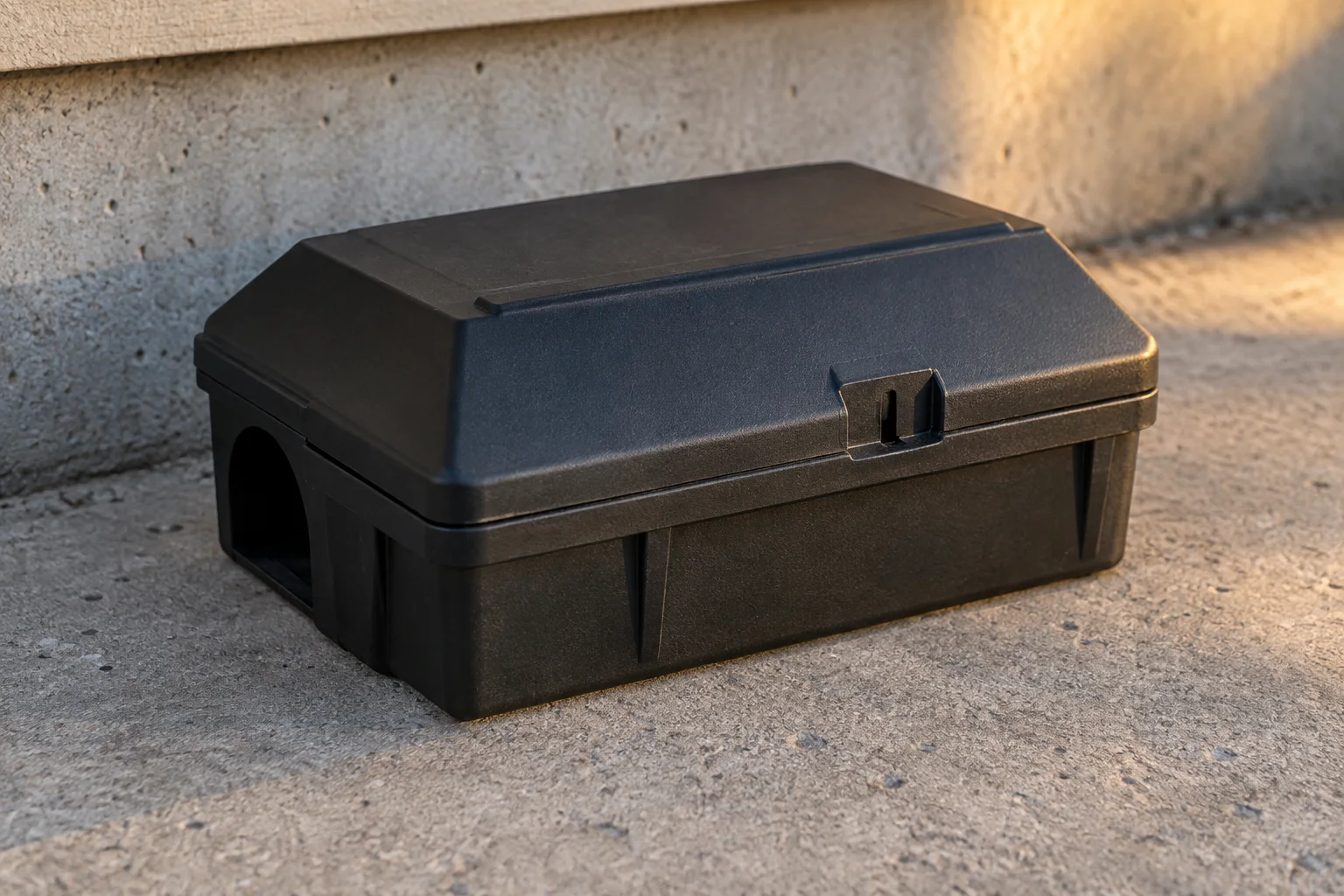
Loose bait should never be scattered around a home or yard as an improvised control measure. Use only a currently authorized product and follow its label, including any bait-station requirements. A station is a protective enclosure, not permission to place poison anywhere convenient. Its location, condition, and resistance to interference matter. Keep the original packaging so the active ingredient and emergency directions remain available.
Discuss pets and wildlife with the service provider before treatment starts. The relevant risks include direct access to bait and, for some products and circumstances, animals feeding on poisoned rodents. Do not assume that a product marketed for rodents is harmless to other animals. If an exposure is suspected, seek prompt advice from an appropriate poison-control service or veterinarian and provide the product label. Do not wait for visible symptoms or attempt an improvised antidote.
A more complete rat-control plan
First, reduce readily available food and water. Secure stored food and animal feed, manage waste, remove fallen fruit where relevant, and address leaks. These changes make the property less supportive of rats, but they are not a substitute for investigating animals already inside. Next, inspect the exterior systematically. Pay attention to doors, damaged vent screens, service penetrations, and roof transitions that can connect outdoor routes to sheltered spaces.
Coordinate exclusion with removal so repairs do not strand animals in inaccessible parts of the structure. Use materials suited to the opening and building assembly, preserving required ventilation and drainage. Then monitor for fresh activity. Keep a simple record of trap checks, new droppings, repaired openings, and changes in sound. A period without fresh evidence is more informative than one quiet night. Contaminated materials and damaged wiring may also need separate professional attention after rodent activity is controlled.
Questions to ask before approving baiting
Ask what evidence supports the diagnosis, where each station will be located, who will check it, and how often the plan will be reviewed. Find out whether exclusion, carcass retrieval, cleanup, and follow-up visits are included in the estimate. If they are separate services, request that distinction in writing. A low initial treatment price can be difficult to compare with a proposal that includes repairs and multiple visits.
Finally, ask what would make the provider change methods. Continued activity may reflect an untreated entry route, abundant competing food, poor placement, or a mistaken identification. Repeating the same treatment without reassessing those possibilities can waste time. The best choice is a documented plan that addresses the building and verifies results. Poison may have a role in some settings, but it should not be presented as a shortcut around inspection, exclusion, and follow-up.