
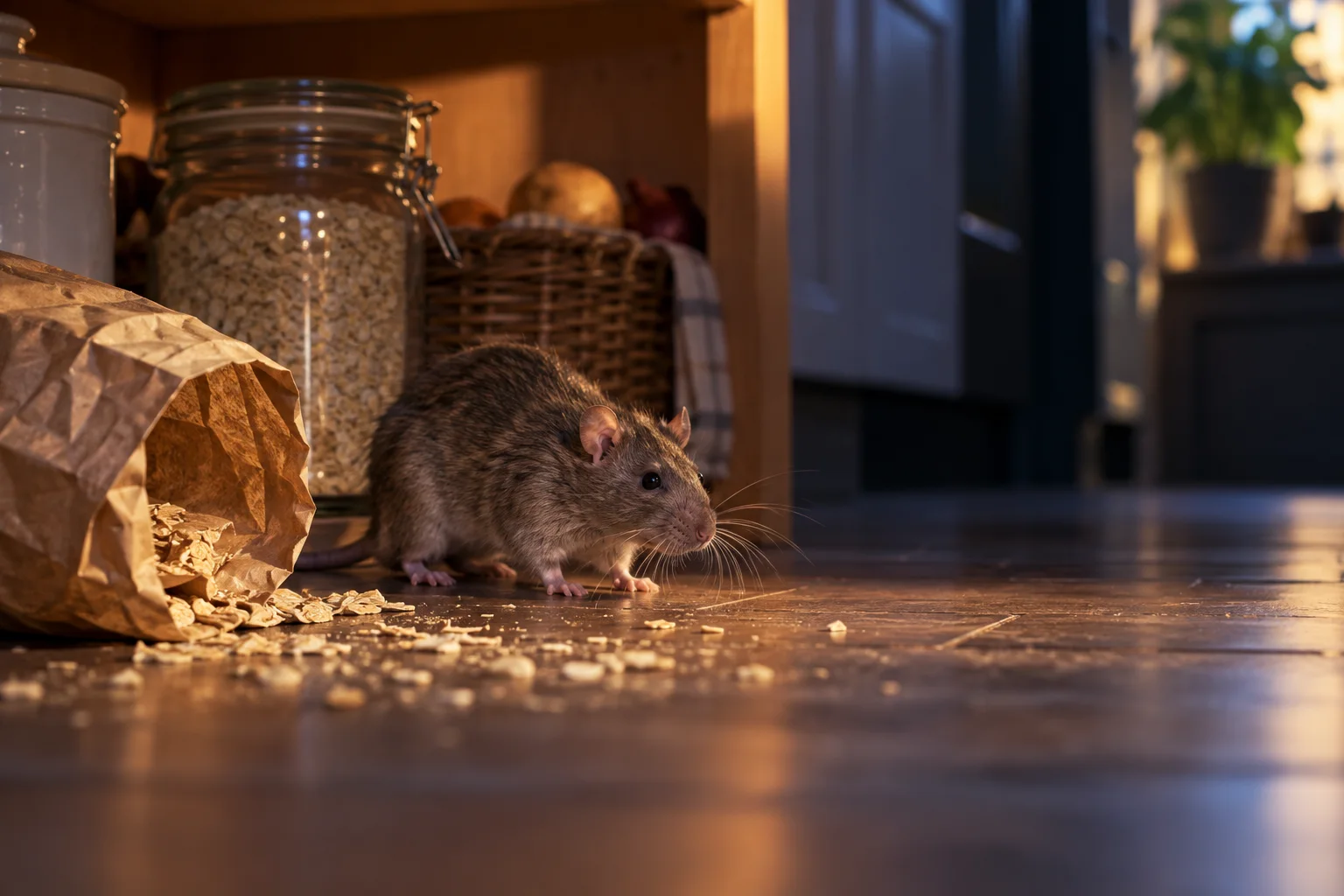
AI-generated illustration
Set the scope before doing anything
A rat-removal plan starts by deciding what must be answered, not by placing devices everywhere. Record the places where fresh droppings, gnawing, food damage, sounds, tracks, odors, or sightings occur. Note when activity is noticed and who or what can access each area. Then divide the property into practical zones: exterior food and shelter, attached garage or basement, living space, attic or ceiling voids, and outbuildings. This helps the work stay organized when a single route connects several spaces. It also reveals constraints: a trap location may be useful but inaccessible for daily checks; a suspected opening may be near electrical equipment; a repair may require a roofer or plumber. The initial record is not a diagnosis by itself. It is the baseline for later decisions. Without it, a quiet night, an empty trap, or a repaired hole can be mistaken for success when activity has simply shifted elsewhere.
Inspect to choose a sequence
The inspection for removal has a specific purpose: decide what should happen first and what must wait. Start outside with doors, screens, vents, pipe and cable penetrations, roof transitions, vegetation touching the structure, waste storage, standing water, and sheltered clutter. Compare those findings with the interior map. A lower-wall route can lead to a basement or garage; an elevated route can lead to attic space or a wall cavity. UC IPM advises reducing food, water, shelter, and entry points as part of rat management. Do not turn that into a rush to close every gap. If animals are active inside, permanent closure can strand them in a void or send them to another opening. Mark confirmed access, likely access, and areas that could not be examined safely. The plan should state how active animals will be monitored while routes are repaired and which openings must remain observable until that work is complete.
Use active control that can be checked
Choose removal methods according to the location, identification, and access risks. Trapping can provide direct evidence because each device can be inspected and a capture removed, but it only works as a management tool when it has a check schedule. Protected devices belong where rats are likely to travel and where children, pets, and non-target animals cannot reach them. Keep an inspection log with date, placement, result, bait condition, and any nearby fresh sign. An untouched device may mean the location is wrong, the problem is not a rat, activity has changed, or competing food is available. It does not automatically mean the infestation is over. Rodenticide requires another set of decisions. EPA advises using bait products only as directed and keeping them away from children and pets. Indoor bait may result in a carcass inside a wall or ceiling, so a proposal that includes it should explain monitoring, carcass retrieval, and why the method fits the setting.
Time exclusion around the evidence
Exclusion is the point at which removal becomes prevention, but the materials and timing matter. UC IPM recommends sealing openings larger than one-quarter inch with appropriate rodent-resistant materials such as sheet metal or wire screen. A repair must suit the assembly: a door gap may need a fitted sweep; a damaged vent needs screening that preserves airflow; an opening around a service line may need backing and a weather-appropriate seal. Foam alone is vulnerable where it can be chewed or pulled out. Do not close a drainage path, combustion vent, appliance clearance, or plumbing feature merely because it looks like an opening. Coordinate final closure with the evidence from monitored devices and inspections. If a one-way exclusion device is used, it should be installed on a confirmed route, checked for function, and removed once the route is no longer active. Ask how the provider will distinguish a successful exclusion from a shifted travel path.
Clean after the source is under control
Removal includes the conditions left behind. CDC says not to sweep or vacuum dry rodent droppings, urine, or nesting material, because this can put contaminated particles into the air. For accessible contamination, wear gloves, wet material with an appropriate disinfectant, allow the stated contact time, then wipe it up with disposable material before cleaning hard surfaces. Do not use odor products as a substitute for locating a carcass or removing nesting material. Check stored food, pet feed, cardboard, insulation, and other porous materials individually. A hard plastic bin may be suitable for cleaning; heavily contaminated cardboard or insulation may require disposal or a professional cleanup plan. When contamination is extensive, an attic or crawl space is difficult to access, or damaged wiring and ducts are involved, arrange the necessary trades rather than asking a single treatment visit to conceal a building defect.
Define completion and reassessment
A removal plan is complete when the evidence supports it, not when the last visit is over. Continue checking the original activity zones after repairs and cleanup. Fresh droppings, recent gnawing, new sounds, moved bait, camera observations, or another capture all warrant a reassessment. Return first to the decision points: Was the animal identified correctly? Was a route missed? Did a repair fail? Is food, water, or shelter still supporting outdoor activity? Is a device inaccessible or poorly placed? Several checks with no fresh evidence after access repairs are more meaningful than a single quiet evening. Keep photographs, service records, repair notes, and product labels where applicable. They help a future technician identify what changed instead of repeating the same treatment. The lasting result is a property that is harder to enter and less rewarding to occupy, with a record that can verify why the removal plan was ended.