
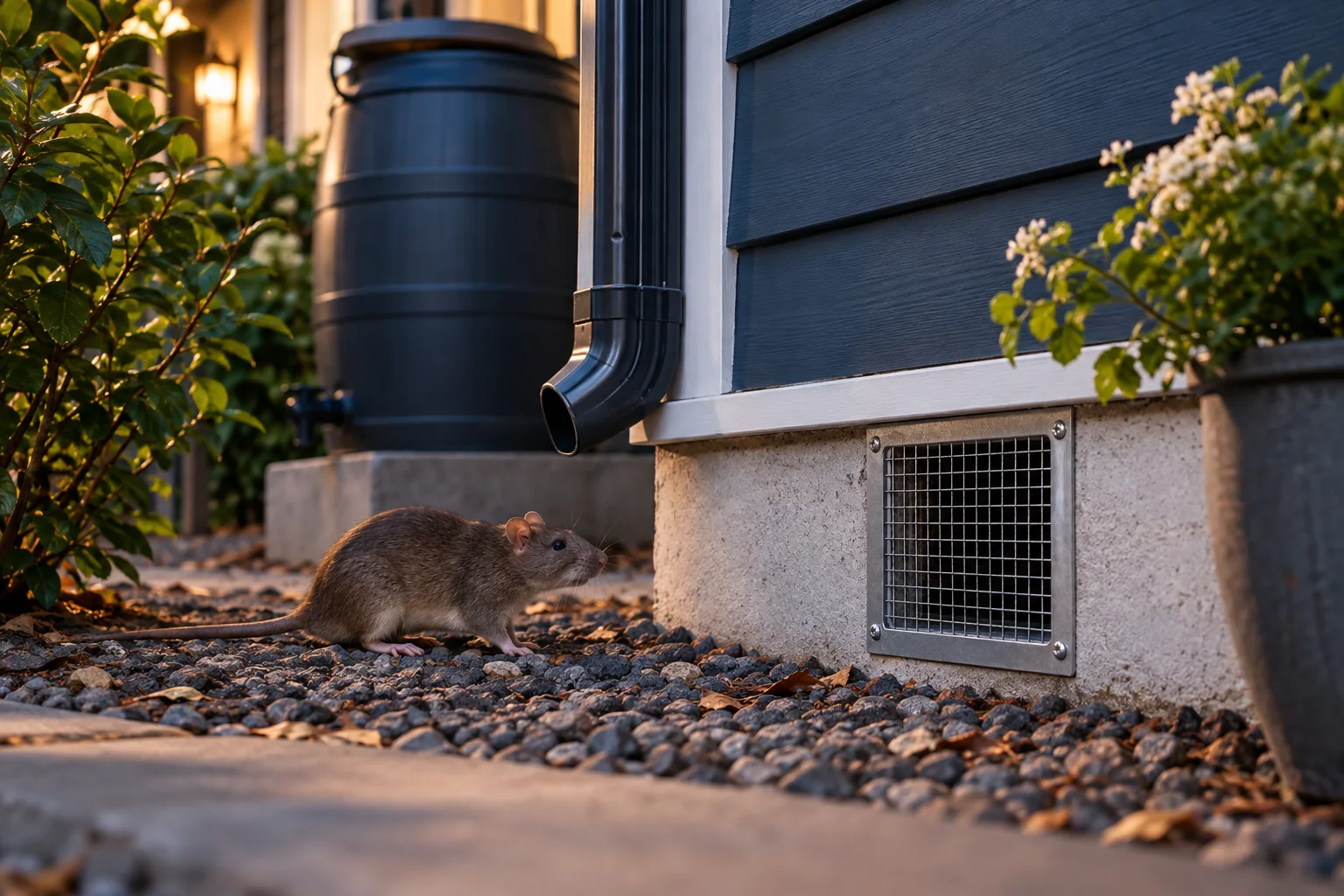
AI-generated illustration
Prevention is a property routine
Rat prevention is not one sealant tube, one ultrasonic device, or one day of yard work. It is a routine that removes the reasons rats visit and catches changes before they become an indoor problem. UC IPM frames effective rat control around sanitation, structural exclusion, and population control. For prevention, the first two do most of the work: make food and shelter scarce, then make the building difficult to enter. Monitoring tells you whether the routine is working.
Begin with a baseline inspection. Walk the outside in daylight and check foundation gaps, door bottoms, vents, eaves, utility penetrations, crawl-space access, roofline features, bins, compost, pet areas, and vegetation against the house. Take dated photos of weak points. Inside, note protected areas where droppings, gnawing, or food damage would be noticed quickly. A baseline turns seasonal checks into comparisons instead of guesswork.
Keep food from becoming a nightly reward
Use intact containers with tight-fitting lids for garbage, dry food, animal feed, and birdseed. Clean food residue from waste bins and outdoor cooking surfaces, and do not leave pet food outdoors after a meal. Collect fallen fruit and nuts if they accumulate around the house. Compost should be managed in a way that does not provide a reliable feeding site. These habits matter because a rat does not need a large pile of trash; a small, dependable source can keep it returning.
Check overlooked foods: recycling that holds drink residue, grease beneath a grill, seed under a feeder, forgotten snacks in a car, and feed stored in a garage. Do not feed wildlife near the home while you are addressing rodent activity. A prevention plan becomes fragile when one family member secures the trash but another leaves a bowl of food outside overnight. Make the routine simple enough that everyone who uses the property can follow it.
Reduce cover and travel routes
Dense shrubs, climbing vines, woodpiles, stacked boxes, unused equipment, and materials stored tight against the wall create protected routes and nesting sites. Thin or prune vegetation so the building edge is visible and maintain a clear inspection area around it. UC IPM recommends removing climbing plants from buildings and keeping tree limbs away from roofs to reduce roof-rat access. The right pruning details depend on the plant and safety conditions, especially near power lines.
Store necessary outdoor items neatly and off the ground where practical, rather than creating permanent piles beside the house. Move ladders away from the exterior when not in use. Check fences, pipes, downspouts, cables, and retaining walls that connect cover to an upper wall or eave. You do not need a bare yard to prevent rats. You need to stop hidden, uninterrupted connections that let them travel from shelter to a structural opening without crossing an exposed area.
Make durable building repairs
Inspect every likely entry point, including door sweeps, garage-door seals, crawl-space panels, vents, roof and attic screens, chimney features, and gaps around cables or pipes. UC IPM notes that rats can chew through foam, plastic, wood, and caulk, so a repair should use durable materials appropriate to the opening. A fitted metal barrier, sound screen, flashing, or proper patch often lasts longer than soft filler pushed into a hole.
Do not confuse a rodent entry with a feature the building needs. Dryer vents, combustion vents, plumbing vents, weep holes, drains, and electrical equipment have specific functions. Covering one carelessly can create moisture, fire, or ventilation problems. Use a roofer, HVAC technician, plumber, electrician, or pest-exclusion professional when the repair involves a system you do not understand. Ask for the defect to be documented before and after the repair so later checks have a reference.
Respond early to fresh signs
A rat seen once, a new gnaw mark, or fresh droppings does not deserve panic, but it does deserve prompt investigation. Compare the location with your baseline, identify the nearest food, cover, and opening, and correct what you can safely correct. CDC recommends checking for routes inside and outside the house before trapping rats that remain. Early response usually requires less cleanup and fewer traps than waiting for repeated attic noises or extensive contamination.
For confirmed indoor activity, use a planned, monitored removal method. CDC recommends rat-sized traditional snap traps placed where rodents travel and kept out of reach of children and pets. Do not use glue or live traps, which CDC advises against. Do not place poison casually as a prevention measure. Pesticide belongs only in an active, persistent infestation plan, with an EPA-registered product, a protected station, and strict label compliance. Prevention means keeping that decision unnecessary whenever possible.
Use a seasonal checklist
Reinspect after storms, roof work, landscaping changes, a new utility installation, or any event that can create an opening. Check door seals as temperatures change, look at screen attachments after wind, and examine bins after collection days. In fall, secure stored food and clean up yard harvest; in spring, look for winter damage and new vegetation bridges. The exact season matters less than making inspection a normal maintenance habit rather than a crisis response.
Keep a short record of repairs, sightings, and fresh signs. If an opening reappears or a trap catches a rat, the notes show whether the issue is recurring at the same feature. Call a professional for repeated activity, unsafe roof access, hidden voids, or suspected structural damage. A good prevention program is quiet and ordinary: closed food containers, a visible perimeter, sound repairs, and regular checks. Those small practices keep a rare visitor from becoming a permanent household problem.