
AI-generated illustration
Make a map before starting the checklist
A list of possible holes is useful only when it is tied to the building. Draw a simple outline of the house, garage, crawl space, attic, and major utility areas. Mark fresh droppings, gnawing, noises, damaged screens, exterior food sources, and each visible gap. This shows whether several clues point toward one wall or whether the problem is likely at a higher roofline route. Photograph openings before repair so a later inspection can show whether the repair held.
Do not assume the hole nearest a sighting is the entry point. Rats can travel through walls, crawl spaces, garages, and attics after entering elsewhere. CDC advises checking both inside and outside for routes before trapping rats that remain. Begin with evidence, then walk the building in sections. This approach is more reliable than filling every crack with foam and hoping the first patch was right.
Check ground-level openings and doors
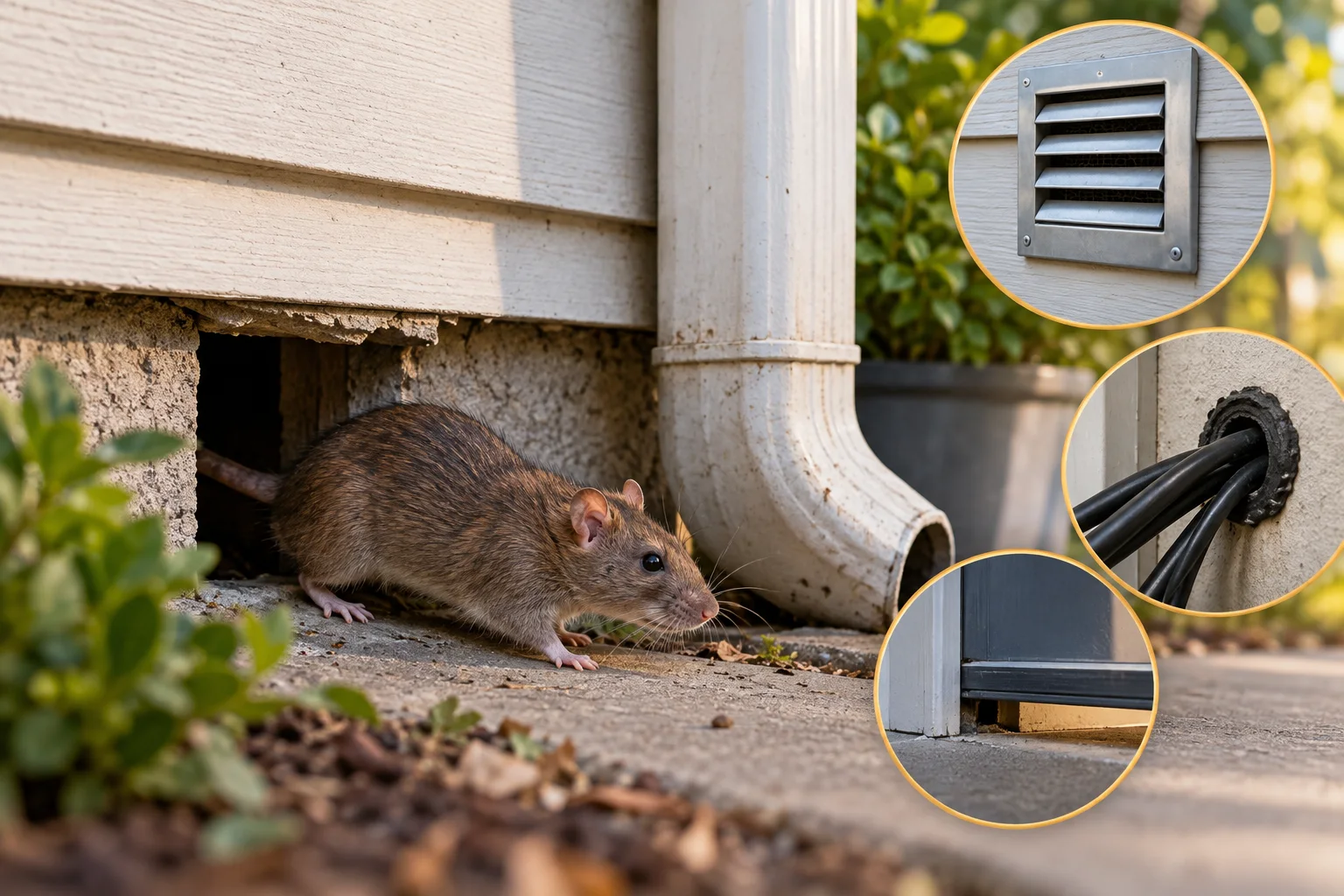
At ground level, inspect foundation transitions, crawl-space panels, basement windows, garage-door corners, exterior doors, door sweeps, utility openings, and gaps where siding meets masonry. Close doors in daylight and look for visible light at the bottom and sides. Check whether a garage door meets the slab evenly and whether an exterior service door closes without a gap. Also look under decks and around steps where a protected route can lead directly to a wall opening.
A hole near the ground can be old damage, a drainage feature, or an active route. Look for supporting evidence: fresh droppings, rub marks, gnawing, tracks in soil, repeated sightings, or a nearby burrow. Do not seal a weep hole, foundation drain, cleanout, or other functional detail without knowing its purpose. A door technician, contractor, or plumber may be needed when the repair affects a working building system.
Inspect utilities and mechanical transitions
Pipes, cables, conduits, refrigerant lines, and drains often pass through the building envelope. Check where each enters exterior walls, a garage, crawl space, attic, or utility closet. A loose line-set cover, cracked caulk around a pipe, or missing flashing can create a route into a void. Look at both ends of an accessible chase; a clean indoor cabinet does not rule out an exterior opening higher on the wall.
Separate the opening from the system. An appliance exhaust, plumbing vent, electrical disconnect, condensate drain, or gas line has a job to do. Covering it indiscriminately can cause water, airflow, or safety problems. Durable repair may require fitted metal, flashing, screening, or a properly designed penetration seal. UC IPM notes that rats can chew through foam, plastic, wood, and caulk, so soft material alone is often not a lasting barrier.
Look up as well as around
Roof rats can climb, so an inspection limited to foundations can miss the actual route. Check attic and gable vents, soffits, eaves, roof-to-wall joints, chimney features, upper cable entries, and damaged screens. Trace access from branches, vines, fences, downspouts, or utility lines to the roofline. Keep a safe distance from power lines and do not climb onto a roof without the right equipment and skill.
An upper opening should be examined for fresh damage and evidence in the attic before final closure. If rats may still be inside, coordinate removal first. Sealing the only known route too early can drive them into a wall or create odor and damage in an inaccessible place. A roofer or exclusion professional can inspect high or fragile locations safely and choose a repair that preserves attic ventilation and roof drainage.
Check interior clues without opening walls
Inside, inspect behind appliances, in cabinets near pipes, around attic hatches, under sinks, beside radiators, and at garage-to-house connections. Fresh droppings, shredded material, chewed packages, or rub marks help prioritize an exterior search. Do not cut drywall or pull insulation based only on sound. Plumbing, ducts, insects, and building movement can make similar noises, and an unnecessary opening can create a new repair and spread contamination.
If waste is accessible, do not sweep or vacuum it dry. CDC advises wetting rodent waste with disinfectant, allowing the required contact time, then wiping it up while wearing gloves. Heavy contamination, damaged insulation, a duct, or a sealed cavity warrants professional assessment. The purpose of the interior check is to locate the route and protect health, not to turn every small mark into a demolition project.
Use the checklist to plan repairs
Group confirmed openings by trade and urgency. A loose door sweep is a straightforward repair; a damaged roof vent may need a roofer; a gap around wiring needs an electrician or suitable exterior repair; a chase around AC lines may involve HVAC work. Continue temporary monitoring while removal is underway. For confirmed rats, CDC recommends traditional rat-sized snap traps in protected locations and daily checks.
After repairs, recheck each location and compare with the initial photos. CDC uses a week with no captures or fresh signs as a useful indicator that active rats are gone. Test a garage door at several points along the slab, inspect a vent screen from inside and outside where possible, and confirm that a repaired utility cover did not leave a hidden gap at its end. Secure food and garbage, reduce sheltered cover near the building, and revisit the checklist after storms, roof work, utility changes, or landscaping growth. The plural approach succeeds because it treats the house as a connected set of potential routes, not a single mystery hole.