
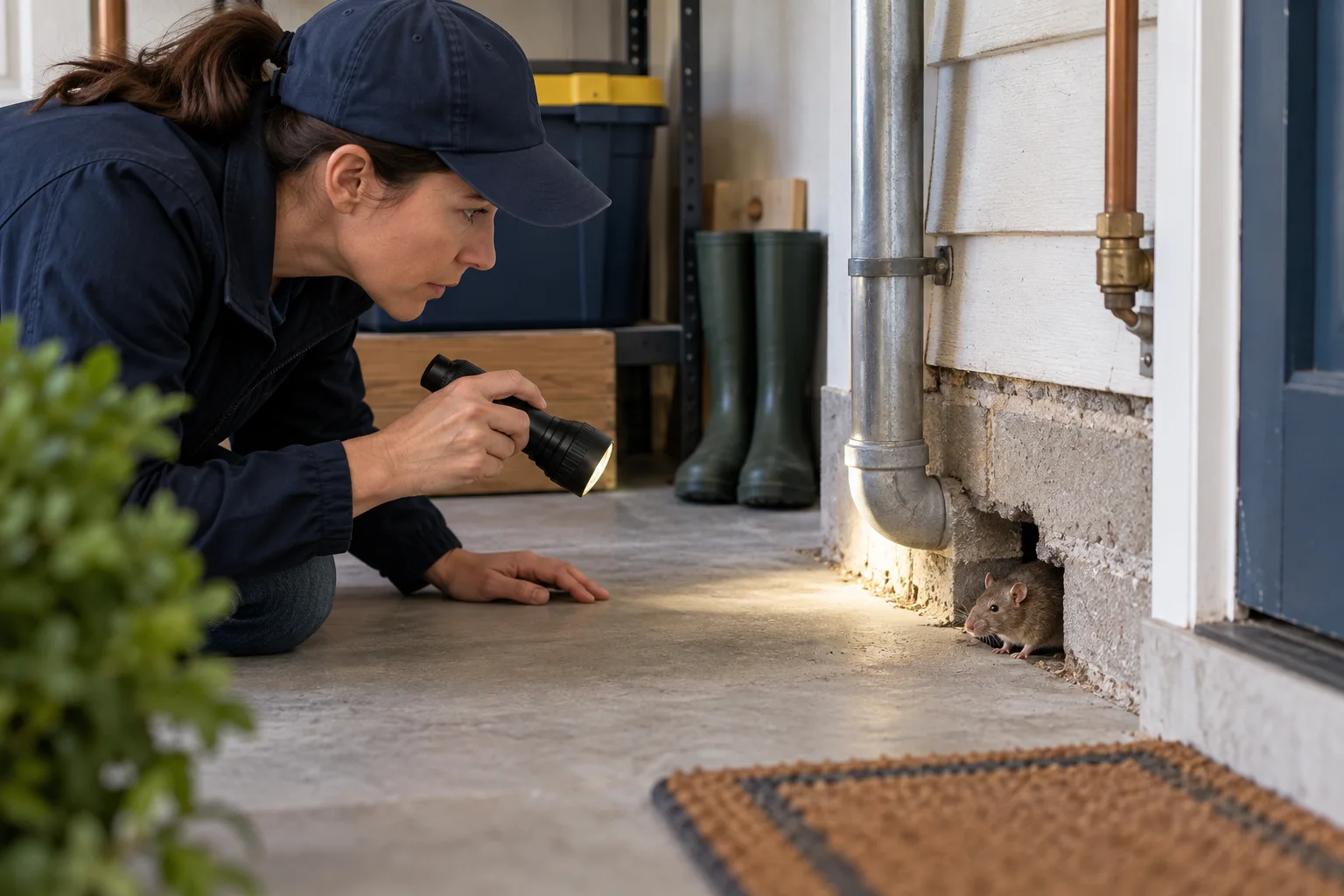
AI-generated illustration
Start with one suspected hole and test the evidence
A single crack, gap, or missing screen is not automatically the route a rat used. Begin at the suspected opening and look for evidence on both sides: fresh gnawing, rub marks, droppings, disturbed soil, tracks, shredded material, or a visible interior path. Photograph the opening with a nearby object for scale, note its location, and identify what construction feature it belongs to. This prevents a repair from being based only on an old defect.
A rat can enter elsewhere and travel through a wall, crawl space, attic, or garage before it is noticed. CDC recommends checking inside and outside for how rodents got in. Follow the likely path from food or cover to the opening and into an accessible interior area. If the route cannot be confirmed, do not punch new holes in drywall or dismantle a system. Use monitoring and inspection to narrow the question.
Decide whether activity may still be inside
Before permanent closure, determine whether fresh signs suggest active use. New droppings, recent gnawing, a rat seen entering or leaving, bait taken from an unset trap, or ongoing noise can mean removal needs to happen first. Sealing an active route can trap the animal in a wall or attic, redirect it to a new opening, or create a difficult odor problem. The right timing is part of the repair decision.
For confirmed indoor activity, CDC recommends traditional rat-sized snap traps in protected, accessible locations and daily checks. Place them where evidence shows travel, not inside the hole or somewhere that cannot be reached safely. Do not use glue or live traps; CDC advises against them. If the suspected hole serves a high roofline, wall cavity, duct, or unsafe crawl space, have a professional coordinate removal and closure.
Identify what the hole is supposed to do
A hole around a pipe may be a failed penetration seal; a hole in a vent screen may be animal damage; a gap at a door may be a worn sweep; a gap at the roofline may protect ventilation or drainage. The repair depends on the function. Check whether the opening is associated with a dryer exhaust, appliance vent, plumbing vent, chimney, weep detail, drain, electrical service, AC line, or a normal inspection access.
Do not block a functional system to stop a rat. Water, exhaust gases, combustion air, moisture drainage, and electrical service can create safety problems if treated as a simple hole. Use a roofer, HVAC technician, plumber, electrician, or qualified building professional when the feature is not clear. A proper repair keeps the system working while denying access to the animal.
Choose durable repair materials
UC IPM notes that rats can chew through foam, plastic, wood, and caulk. Soft filler may be useful as part of a repair, but on its own it may not withstand chewing, weather, or vibration. Depending on the feature, durable options can include fitted metal barriers, sound flashing, appropriate screening, a door sweep, or a correctly sealed utility penetration. Match the material to the wall, vent, door, or roof detail rather than using the same product everywhere.
The repair should be attached securely and leave no sharp edges or loose material that can damage the building. For a damaged screen, replace or repair the screen rather than stuffing material behind it. For a door gap, address alignment as well as the sweep if the door no longer meets the threshold evenly. For a pipe penetration, protect the surrounding construction from water as well as rodents. A good repair solves both functions.
Confirm the repair from both sides
After closure, inspect the exterior and accessible interior again. Make sure the patch is secure, the door closes, the vent still works, the drain still drains, or the equipment has needed service clearance. Compare the after photo with the original one. An unseen or inaccessible interior side may need a professional check, especially if the repair involved a roofline or utility chase.
Do not judge success only by whether the gap disappeared. Monitor nearby locations for fresh droppings, gnawing, reopened material, or new signs along a different route. If the same evidence returns, the original hole may not have been the only access point. Reopen the inspection calmly rather than applying more filler to the same spot.
Pair the repair with property changes
A repaired hole is easier to protect when nearby food and cover are reduced. Secure garbage, pet food, birdseed, compost, and feed; pick up fallen fruit; move stored materials away from the wall; and thin vegetation that creates a hidden approach. These steps make the opening less likely to be tested by another rat and make new damage visible sooner.
Continue checking the repair for at least a week while monitoring for fresh signs. Look specifically for chewing at the repair edge, displacement after rain or wind, and damage at the next penetration or corner along the same wall. Check whether newly trimmed vines, a downspout, or stored object now provides a bridge to the repaired location. If no catches or new evidence appear, the removal and repair sequence is working. The singular-hole question is really a decision process: verify the route, remove active rats safely, understand the feature, make a durable repair, and confirm that the house still works as it should over time.