
AI-generated illustration
Treat one catch as evidence, not an ending
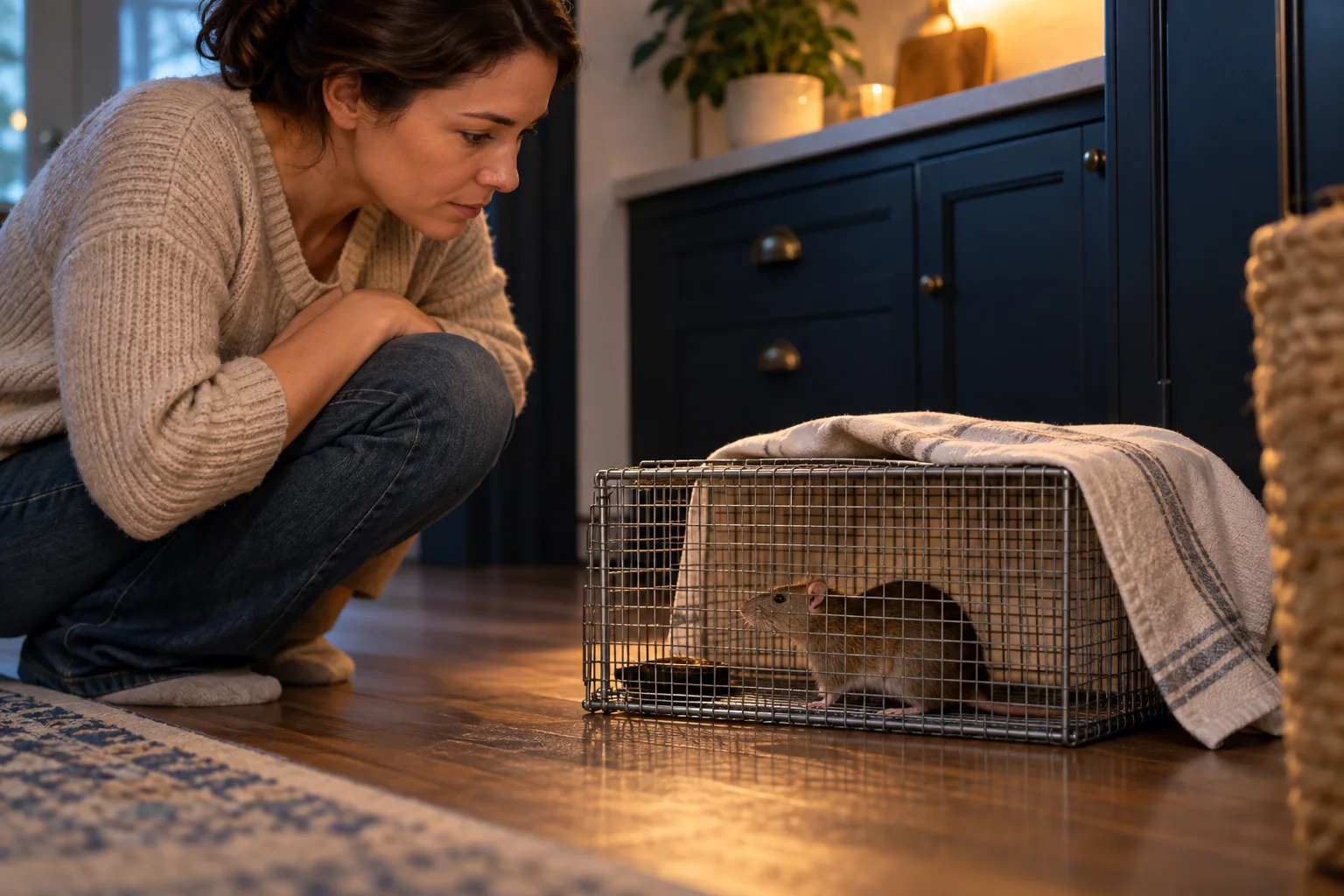
Catching a rat is useful information, but it does not answer the two questions that prevent a repeat problem: where did it enter, and what conditions supported it? Before moving the trap, note its exact location, the date, the type of trap, whether bait was taken, and nearby signs such as droppings, rub marks, food damage, or a gap. A rat caught beside a garage wall may be traveling along an edge from a door-corner gap. One caught in an attic may point to a roof-level route, but sound can travel and should not be treated as exact location evidence. Take a photo if it can be done without touching the animal. The record gives the next inspection a starting point and helps distinguish a single visitor from continuing activity. Do not assume that a capture proves there are no more rats, nor that it proves a particular hole was the only route.
Handle the trap and carcass carefully
Wear disposable or reusable gloves before handling a dead rat or a used trap. CDC cleanup guidance recommends wetting rodent waste or a dead rodent with disinfectant, allowing the stated contact time, then using paper towels to place the material in a bag for disposal. Follow local waste rules and the product label; avoid dry sweeping or vacuuming droppings and nesting material. Clean and disinfect the trap if it will be reused, then wash gloved hands before removing the gloves and wash hands afterward. A trap that is badly contaminated, damaged, or difficult to clean may be better discarded according to local rules. Keep children and pets away from the work area. If a pet may have contacted a poisoned rodent or bait, contact a veterinarian promptly and have the product label available. Do not try to diagnose an exposure from behavior alone or use an improvised treatment.
Decide whether and how to reset
Resetting the same trap makes sense only after checking why it was placed there and whether that location remains safe. A trap should be protected from children, pets, and non-target animals, and it should be accessible enough to inspect frequently. Reuse the original placement if it was along a confirmed travel edge or near fresh signs; move it if the catch was accidental to an unsuitable position or if inspection found a more likely route. Do not scatter traps throughout a room merely to increase the count. A deliberate placement plan is easier to check and less likely to create hazards. Bait should be used sparingly enough that interaction with the device remains clear. If bait disappears without a catch, inspect whether another animal can reach it, whether the trap is operating correctly, and whether the setting is appropriate for a rat rather than a mouse.
Clean the immediate area without spreading debris
The capture location may also contain droppings, urine, nesting material, or contaminated food. Remove accessible food and pet dishes from the area before cleanup. Ventilate when appropriate, follow disinfectant directions, and work from the cleaner edge toward the affected spot so shoes, tools, and hands do not carry debris elsewhere. Bag disposable cleanup material. Wash hard surfaces after the contact time specified on the disinfectant, and assess porous items individually. A cardboard box with droppings may be discarded; a hard storage bin may be cleaned after its contents are checked. Do not use fragrance to mask an odor while leaving the source in place. If the area involves extensive attic insulation, a crawl space, an inaccessible void, or heavy contamination, it may require a cleanup provider with a plan for access, containment, removal, and disposal.
Turn the catch into an entry-point inspection
The best follow-up is a focused inspection outward from the capture point. In a garage, inspect the lower door corners, weather seals, wall penetrations, storage clutter, and adjoining utility areas. In a kitchen or pantry, inspect behind appliances, around plumbing, and where cabinet bases meet service openings. In an attic, inspect vents, eaves, roof transitions, and routes from nearby trees or climbing vegetation from a safe position. UC IPM notes that rats can use small openings and recommends sealing openings larger than one-quarter inch with appropriate materials. Do not block a required vent or drainage opening; its repair needs a rodent-resistant detail that retains the function. Record the openings repaired and keep one or more monitored locations in place during follow-up, particularly if the building has several connected voids.
Use follow-up checks to decide when to stop
For the next several checks, look for fresh rather than historic evidence. New droppings, recent gnawing, moved bait, sounds, and camera observations are more useful than old staining or an odor that has not dissipated. Record the result even if nothing is found. A series of checks without fresh signs after entry repairs supports stopping active trapping; a new capture or new signs support a reassessment of access and sanitation. Review food storage, garbage lids, pet feeding, leaks, fallen fruit, and dense cover near the building. Those conditions may explain why an exterior population keeps testing the structure. If an inspection cannot safely reach the suspected route, or if wiring, roofing, plumbing, or a large amount of contamination is involved, bring in the qualified trade. The catch becomes a solution only when it leads to cleanup, exclusion, and evidence-based follow-up.