
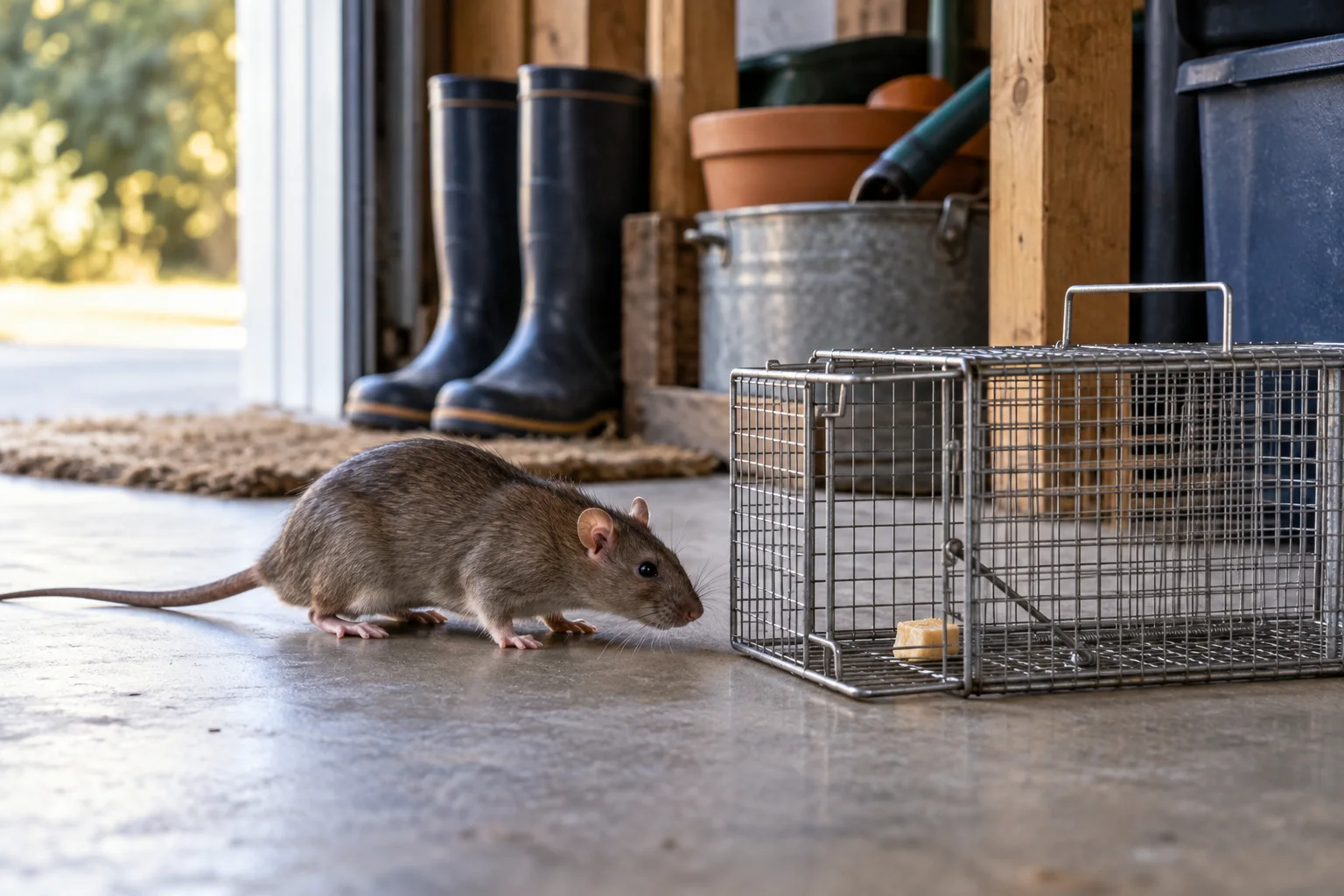
AI-generated illustration
Catching a rat begins with finding its route
A rat trap works best as part of a plan, not as a surprise object placed wherever a rat was last seen. Before setting one, look for fresh droppings, gnaw marks, nesting material, food damage, rub marks, and the likely route between cover, food, and shelter. Check behind appliances, along protected wall edges, in accessible attics or crawl spaces, and outside around bins, pet-food areas, vegetation, and utility openings. The goal is to place a trap where a rat already feels secure moving.
Also inspect how the rat entered. CDC recommends checking inside and outside the home for the route before trapping the animals that remain. That does not mean sealing a rat inside. It means planning removal and exclusion together. If you catch one rat but leave a broken vent screen, a half-inch door gap, or a climbable route to an eave untouched, you have only interrupted one night of activity.
Choose a rat-sized snap trap
CDC recommends traditional snap traps to reduce rodents around the home and says to use the type made for the animal you have; rat traps and mouse traps are not interchangeable. A trap designed for a rat has the size and force needed for the job. Read the instructions before handling it, and use it only where children, pets, and non-target animals cannot reach it. A covered station or protected placement can be useful where people or pets use the area.
CDC advises against glue traps and live traps. A caught live rodent may become frightened and urinate, which can raise the chance of illness. Glue traps also create a difficult, poorly controlled situation and may catch pets or wildlife. Avoid improvised traps that can injure a person, leave an animal inaccessible, or create a spill or electrical hazard. A straightforward rat-sized snap trap that can be checked and cleaned is easier to manage and gives you clear evidence of whether the plan is working.
Use a small bait and let a cautious rat learn
Rats may avoid a new object for days. CDC recommends pre-baiting: put bait on an unset trap until you see it has been eaten, then set the trap. This is not wasted time. It converts a suspicious object into a familiar food stop and may prevent a rat from becoming trap-shy after a failed encounter. Note the date, bait, and location so you can tell whether a particular route is active instead of moving everything each morning.
Use a small amount of bait that stays on the bait pan. CDC identifies chunky peanut butter or mutton fat as options, and UC IPM notes that a pea-sized amount is sufficient. The purpose is to draw the rat onto the trigger, not feed it nearby. In a setting with food allergies, pets, or young children, choose the placement and station with extra care. Do not leave food loose around the trap; it competes with the bait and can attract more activity to the wrong place.
Place traps along protected travel paths
Rats commonly move beside walls and other objects. CDC recommends setting a snap trap on the floor against the wall with the baited end next to the wall, making a T shape. Place it where you found evidence: behind a refrigerator, along a protected utility run, in an attic near a documented route, or beside a known entry area. Avoid placing traps in the middle of a room, on unstable surfaces, or where a child, pet, or visitor can encounter one.
One trap in a large infestation is usually more of a test than a removal plan. Use enough protected traps to cover the routes you have identified, but do not scatter them randomly. UC IPM notes that placement is often more important than trap style and that heavily infested homes may require numerous traps. For roof-rat activity, elevated protected routes such as ledges, shelves, or beams may be relevant, but roof work and inaccessible spaces are better handled by a professional. Never compromise a roof or use an unsafe ladder setup to set a trap.
Check daily and clean a catch safely
Check active traps every day. Prompt checks prevent an odor or insect problem, show where activity continues, and let you reset equipment while the route is still useful. Wear rubber or plastic gloves to handle a catch. CDC advises spraying a dead rodent, nest, or contaminated surrounding area with disinfectant and letting it soak for five minutes or for the product's label time. Put the rodent and used trap in a plastic bag, seal it, then place it in a second sealed bag before disposal in a covered garbage container.
A traditional snap trap can be reused if it is disinfected correctly. CDC describes soaking the trap and rodent in disinfectant, then releasing the rodent into a bag, rinsing the trap, and allowing it to dry. Wash gloved hands before removing gloves and wash bare hands afterward. Do not vacuum or sweep dry droppings around the trap. Wet and disinfect them first, then wipe them up with paper towels.
Know when trapping has succeeded
Continue trapping until there are no more captures and no fresh signs. CDC says that a week without captures or new evidence is a useful indication that rats are gone. During that week, inspect the areas that originally showed activity rather than relying on a quiet kitchen alone. Fresh droppings, new gnawing, urine spots, or bait disappearing from an unset trap mean there is still a route or a population to address.
If you catch nothing but signs continue, reconsider the diagnosis and placement. A rat may be traveling above the floor, may be avoiding a new object, or may be using a different entry. Check the bait and its position, then revisit the outside inspection for an overlooked gap or food source. If there is recurring activity in a wall, high roofline, duct, or inaccessible crawl space, a pest professional can place equipment and coordinate exclusion without turning the problem into a series of blind repairs.
Close the entry and maintain the result
After confirmed activity stops, repair the entry points that the inspection identified. UC IPM recommends durable exclusion around cracks, utility lines, vents, doors, and other openings, and it warns that rats can chew through soft materials such as foam, plastic, and wood. Do not block a working vent or other building system without knowing its purpose. Use an appropriate trade professional for roof, electrical, plumbing, chimney, or HVAC work.
Then make the area less attractive. Keep garbage closed, store feed and food securely, pick up fallen fruit, remove outdoor pet food after meals, and reduce dense vegetation and clutter near the house. This is the part that turns trapping from a repeating chore into a successful repair. Keep a few traps available for future monitoring, but let exclusion and ordinary sanitation do the long-term work.