
AI-generated illustration
Begin with the correct animal and trap size
A snap trap is a spring-powered device designed to kill quickly when the trigger is activated. It is not interchangeable with every small-rodent trap. A small mouse trap may be inadequate for a rat, while a large trap placed where mice travel may not answer a mouse problem. Confirm the evidence before buying equipment: size and shape of droppings, gnawing, travel marks, location, and, when possible, a clear sighting. UC IPM notes that roof rats and Norway rats often use different parts of a property, which changes where investigation should focus. If the animal cannot be identified, a professional inspection can prevent a trap purchase from becoming guesswork.
CDC recommends traditional rat-sized snap traps for rats around a home. That recommendation centers on a method that can be placed deliberately, checked daily, and gives a known result. “Rat-sized” should be read on the package and instructions, not guessed from a product photo. A humane outcome depends on a suitable device, correct use, and daily checks. It is not achieved by an undersized trap, a damaged mechanism, or leaving equipment outside of supervision.
Know the basic design families
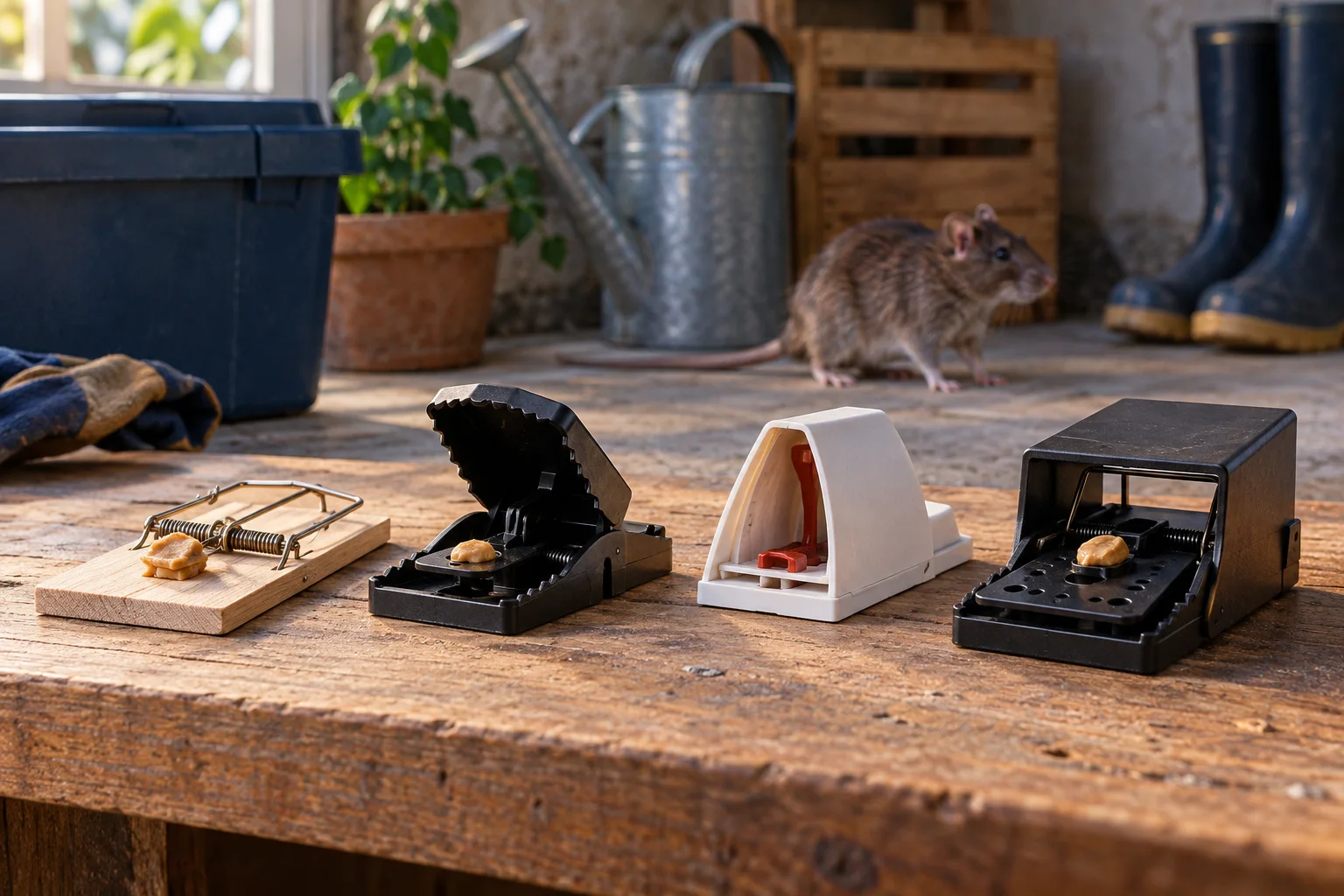
Traditional wooden-base traps use a wood platform, metal spring bar, and trigger or bait pedal. They are simple, inexpensive, and often reusable when cleaned according to public-health guidance. Plastic or composite snap traps package the same spring action in a molded body that may make them easier to set or rinse. Some have enclosed bait cups; others use a removable trigger. A covered trap station is not a different killing mechanism by itself. It is a protective housing that can keep a trap out of reach of children, pets, and non-target animals while allowing an inspection route.
Electronic products, glue boards, and live cages are separate categories, even if they are sold beside snap traps. This article is about mechanical snap traps. CDC advises against glue and live traps because frightened rodents can urinate, and an electronic device should be evaluated by its own safety instructions rather than assumed to be a snap trap substitute. Avoid novelty devices that make broad claims without explaining the target species, protection needs, cleaning instructions, and daily-check requirement. The useful comparison is practical: can the device be set safely, protected at the site, inspected, and cleaned after a catch?
Placement determines whether a design can work
Rats commonly use protected edges and familiar runways, so a trap belongs where current evidence shows travel, not in the center of an open room. CDC advises putting the baited end close to a wall so the trap forms a T with the wall. In an attic, garage, crawl-space access point, or behind stored materials, choose an accessible location that can be checked every day. Do not put a trap where a child, pet, or wildlife can reach it, or where shifting storage can knock it loose. In a home with pets or children, a purpose-built protective station may be necessary.
A new object can be avoided at first. CDC suggests pre-baiting an unset trap until the bait is taken, then setting it. Use a small amount of bait suited to the device’s bait cup or trigger; too much can be taken without activating the mechanism. Read the product instructions before setting any trap, keep fingers clear of the trigger path, and use a model you can set without forcing or modifying it. If the area is unsafe to access daily, it is not a good DIY trap location.
Choose features for the situation
A homeowner who needs multiple traps in an accessible but dry area may prefer a basic reusable model. Someone working in a protected station may need a trap that fits that station exactly and can be removed for inspection. A molded trap with a bait cup can reduce the chance of loose bait falling away, but it does not remove the need for correct placement. A wooden model can work well, but it should be dry, functional, and discarded if its mechanism is corroded or unreliable. Product claims about “instant,” “no touch,” or “guaranteed” do not replace inspection.
Do not alter a trap to increase force, tie it open, add loose poison to it, or place it in a container that prevents it from operating as designed. Keep the equipment label and note where each trap is set. A simple map prevents a forgotten trap in an attic or shed and helps show whether activity is confined to one route. If non-target access cannot be controlled, choose a different site, a protective station, or professional help. The right feature is the one that lets the household use the device safely and consistently.
Check, clean, and reset safely
Check active traps daily. A caught rat should be approached with gloves, not bare hands. CDC’s cleanup guidance says to spray a dead rodent and surrounding area with disinfectant, allow the required soak time, place the animal and any used trap in a plastic bag, seal it, place that bag in a second bag, and dispose of it in a covered garbage container as local rules allow. For a reusable traditional snap trap, CDC describes disinfecting it with the rodent still attached, removing the rodent over a bag, rinsing the trap, and allowing it to dry. Follow local disposal rules if they differ.
Do not sweep or vacuum nearby droppings dry. Wet them first with disinfectant, wait the label’s contact time, and wipe them up. Wash gloved hands before removing gloves and then wash bare hands. Reset only a clean, dry, functioning trap. If a trap has sprung repeatedly without a catch, bait disappears, or fresh signs continue, do not simply keep adding traps. Reassess the travel route, food source, and entry point. Equipment results are information, not a reason to ignore the building.
Finish with exclusion and evidence
Snap traps remove individual rats; they do not seal a broken vent, align a garage door, or secure birdseed. Inspect outside and inside before and during trapping. CDC recommends looking for the routes rodents use and then sealing them with appropriate durable materials. UC IPM notes that rats can chew soft materials, so a repair needs to match the construction feature. Do not block an appliance vent, drain, chimney, or other functional opening without knowing how it must operate.
A reasonable stopping point is a week without catches or fresh signs, followed by a recheck of the original route. Remove traps when the plan is complete rather than leaving them as permanent clutter. Keep food in containers, clean spilled feed and garbage, reduce protected cover near the building, and repair the entry point. The best snap-trap choice ends up being the one that helped reveal a route and supported a controlled removal plan, not the one with the loudest package claim.