
AI-generated illustration
There is no single irresistible rat bait
The best bait is usually a food the rats are already finding in that location, used in a very small amount on a properly placed trap. Rats do not respond to a universal magic flavor. A food that works in a garage may not interest an animal feeding on fallen fruit, bird feed, pet food, or garbage elsewhere. Start by looking for the food source that is actually available, then remove or secure that larger source so the trap has a reason to compete.
UC Integrated Pest Management lists foods such as nuts, dried fruit, bacon, and dry pet food as potential rat-trap baits, and it notes that soft bait can also be used. The useful lesson is variety and context, not a shopping list. Choose one modest attractant, place it only where evidence shows rat travel, and observe the result. Repeatedly changing flavors can hide the more important problem: the trap may be in the wrong place or rats may still have easier food nearby.
Use less bait than you think
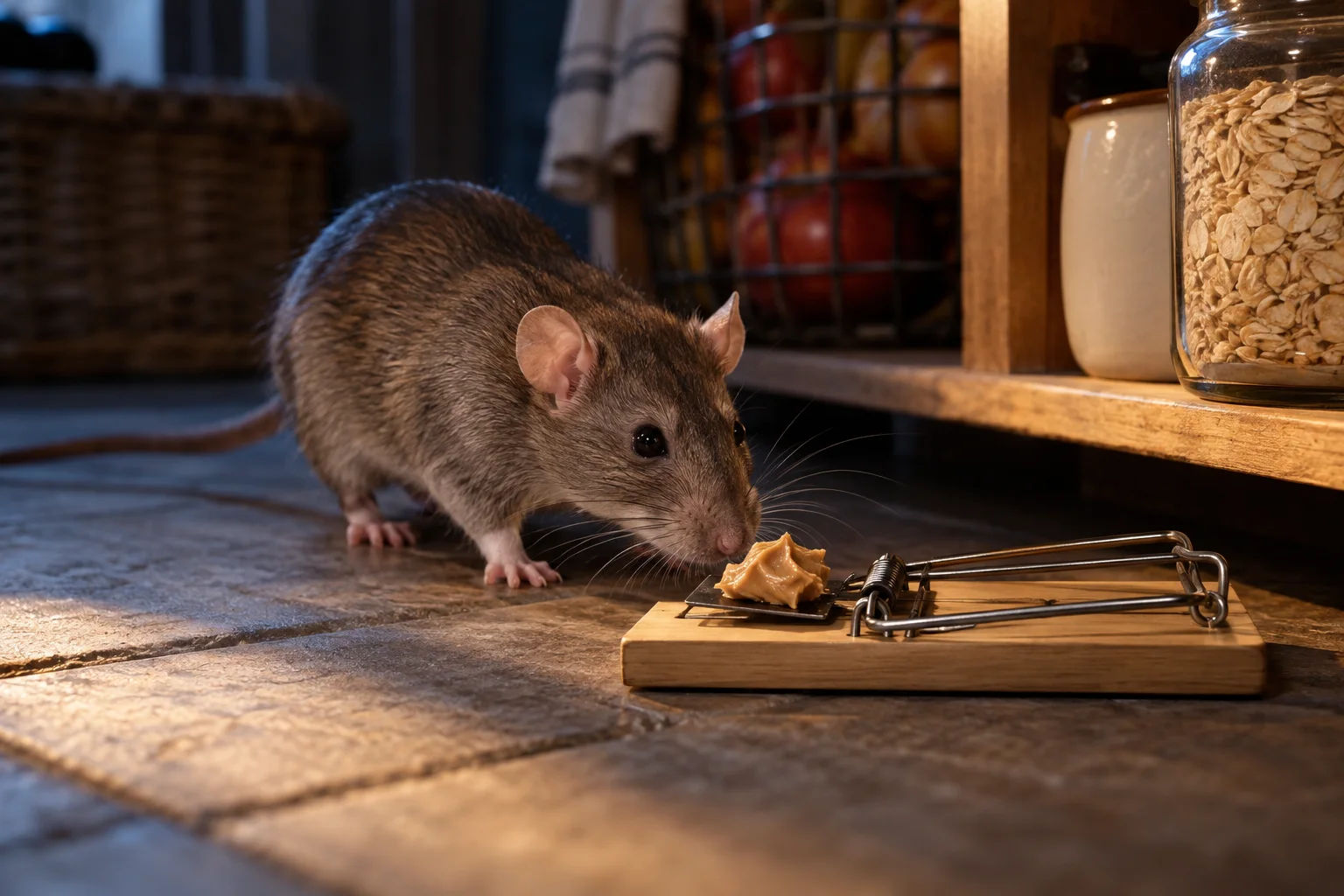
A large mound of food lets a rat investigate without committing to the trigger. UC IPM recommends a pea-sized amount for a trap. A small amount gives the animal a reason to contact the trigger while reducing food waste and unwanted attention from insects or other animals. If you use a dry food, secure it lightly to the trigger so that an animal trying to take it must work against the trap mechanism rather than simply carrying it away.
Do not leave loose bait scattered around the trap as a welcome mat. That can train an animal to feed near the equipment without interacting with it. It also makes it hard to tell whether the bait was eaten by a rat, a mouse, an insect, or a pet. Keep the bait on the trap, use protected placement where children and pets cannot reach it, and record which trap received attention. Clean, limited bait is evidence you can use.
Placement decides more than the flavor
A trap should meet a rat on a route it is already using. Look for droppings, gnawing, rub marks, damage, or a protected path between cover and food. UC IPM recommends placing Norway-rat traps close to walls, behind objects, in dark corners, and near signs of activity. Positioning matters because rats commonly travel along edges. A beautifully baited trap in the center of a room is often less useful than a plainly baited one placed on a real runway.
Roof rats may travel above the floor on ledges, shelves, beams, pipes, fences, or branches, so a ground-only plan can miss their route. Secure a trap so it cannot fall or shift, and keep it inaccessible to children, pets, and wildlife. Do not place traps where a person may step on them in the dark. A targeted placement uses the building and the rat evidence together, rather than treating every room as the same kind of trapping location.
Prebait when rats avoid new objects
Rats can be cautious around unfamiliar equipment. If you see evidence but bait remains untouched, prebaiting may help: place the baited trap in the intended spot without setting it, then wait until the bait has been taken more than once before setting it. UC IPM describes this approach as a way to reduce trap shyness. It is not a reason to leave an unmonitored food source indefinitely. It is a short observation step that gives the animal time to accept the object in a controlled location.
During prebaiting, keep the rest of the area less rewarding. Store feed and food securely, clean spills, and remove fallen fruit or other obvious attractions. If bait disappears from an unset trap but activity continues after the trap is set, reconsider the placement and equipment rather than adding a large pile of food. A rat that triggers a trap without being caught may become harder to catch, so set the trap carefully and make sure it functions as intended before putting it on an active route.
Match the trap to the animal and setting
Confirm that you are dealing with a rat rather than a mouse before choosing equipment. UC IPM notes that mice and small juvenile rats may not activate a rat snap trap. Size matters, but so does the protected location and the way the trap is set. Use equipment designed for rats, follow its instructions, and inspect it regularly. A trap is not a stand-alone answer if a rat can keep entering through a broken vent, door gap, or utility opening.
Avoid turning bait selection into a reason to use unsafe controls. Do not place unprotected traps where children, pets, or non-target animals can reach them. Do not use loose toxic bait merely because food bait on a trap has not worked; rodenticides have their own label restrictions and risks. If the activity is in a wall, ceiling, duct, roofline, or another inaccessible area, a qualified professional can assess the route and build a removal plan around it.
Judge success by evidence, not empty bait
Check traps on a regular schedule and record the location, bait condition, and any capture. An empty bait spot is not automatically success. It may show that a trap was accepted, that another animal visited, or that the bait dried out or fell away. Fresh droppings, new gnawing, and ongoing sounds in the same area are stronger reasons to continue investigating. Once a trap catches a rat, dispose of the carcass and clean the area safely according to public-health guidance.
The end point is not finding a bait that disappears. It is stopping fresh signs after removal, sanitation, and exclusion have all been addressed. Reinspect the original route, repair entry gaps with durable materials, and keep food sources controlled. A small amount of suitable bait can make a well-sited trap more effective. It cannot compensate for an open building, an accessible food supply, or an uninspected route that lets the next rat arrive.