
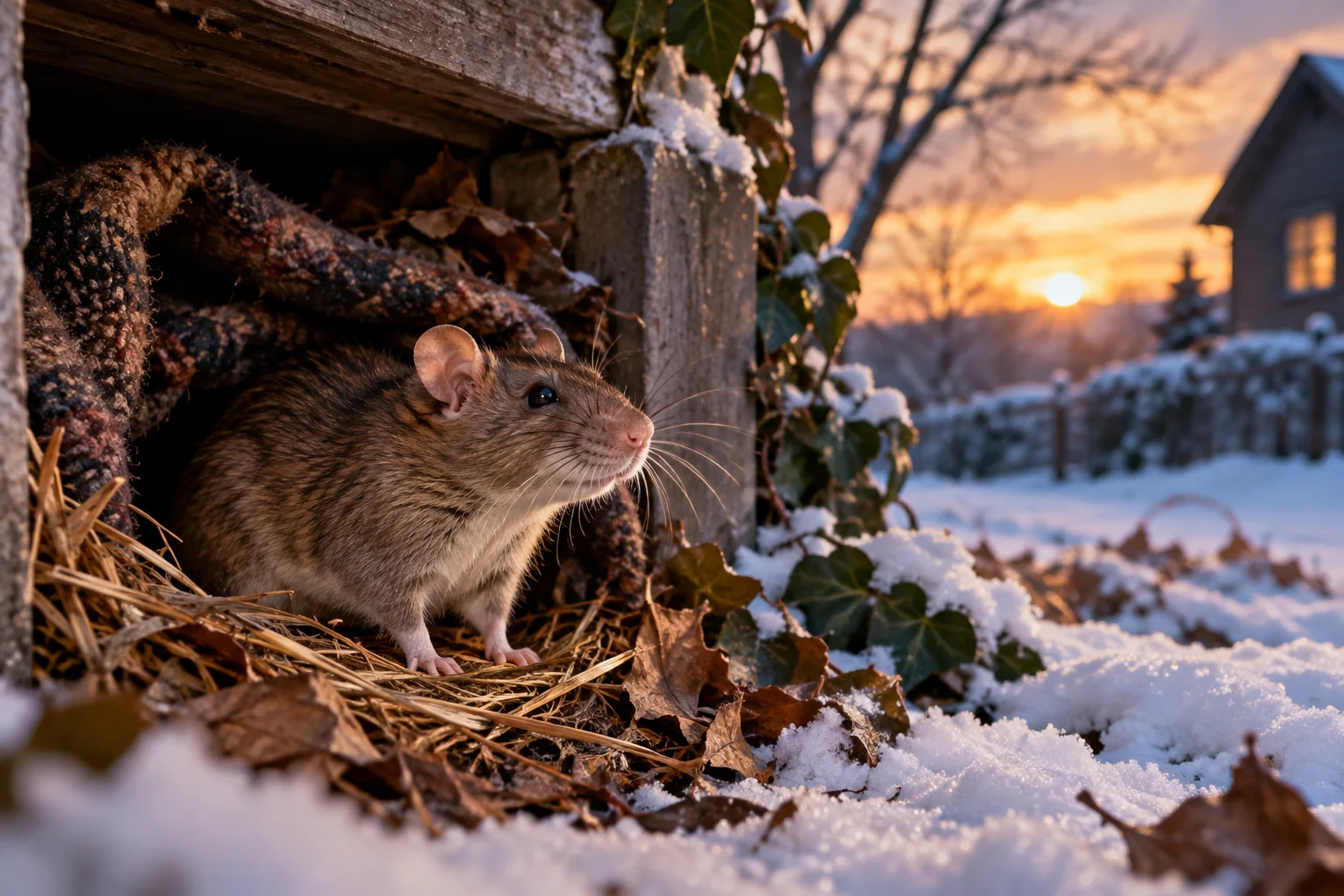
AI-generated illustration
Winter does not make a rat problem vanish
Rats do not solve a cold season by hibernating until spring. They continue looking for food, water, and shelter, and a building can become especially attractive when weather reduces outdoor comfort and food. CDC notes that rodents move in search of food, water, and shelter after environmental disruption; winter is another condition that can make those resources around a home more valuable. A quiet yard in January is not proof that the rats are gone.
A rat may die in harsh weather, as any animal can, but that is not a control plan and does not reliably reduce an indoor or sheltered population. Protected sites such as wall voids, garages, crawl spaces, sheds, and attics buffer weather. If a property offers food and a route inside, the population can persist through winter. Focus on evidence and access conditions rather than waiting for a freeze to end the problem.
Cold weather changes the inspection priorities
In winter, inspect the building envelope closely: door sweeps, garage seals, crawl-space access, vents, roofline screens, utility gaps, and areas where pipes enter. Warm air leaks can make a small defect more attractive, while snow, rain, or frozen ground may change outdoor travel routes. Look for fresh droppings, gnaw marks, nesting material, and tracks in protected areas. Do not assume all signs are new; clean safely, then watch for recurrence.
Check winter food sources that are easy to overlook. Birdseed, pet food, stored feed, garbage, food waste in a garage, and fallen fruit that remains under snow or leaves can sustain activity. Keep containers closed and clean spills. If outdoor water sources freeze, leaks, crawl spaces, or pet-water areas can become more important. Prevention is not about denying every drop of water; it is about not providing a dependable sheltered meal beside a building gap.
Warmth alone is not the attraction
A warm attic or garage can be inviting, but food, cover, and access are usually the complete story. Do not try to make a room unpleasant with smoke, chemical repellents, mothballs, or extreme heating. These actions do not repair the route and can create safety or health problems. UC IPM says repellents and frightening devices do not provide lasting rat control. A stable repair and sanitation routine remains more effective than an attempt to chase animals with temperature or odor.
Winter also makes hidden systems more important. Rats may use insulation and stored material for nesting, and they may gnaw wiring or other materials in a protected attic. Do not handle electrical damage or piles of insulation casually. An electrician, roofer, HVAC technician, or pest professional may be needed depending on what the inspection finds. The cold weather does not change the safety rules for ladders, roofs, or utilities.
Remove confirmed indoor activity
CDC recommends traditional rat-sized snap traps for household rodent removal, placed where signs show travel and kept out of reach of children and pets. In a cold-season garage or attic, choose a protected, accessible location that can be checked daily. Rats may avoid a new trap at first; CDC suggests pre-baiting an unset trap until bait is taken. This is more useful than constantly moving equipment after each quiet night.
Do not use glue or live traps, which CDC advises against, and do not scatter poison as a response to winter sightings. If poison is considered for a persistent infestation, use an EPA-registered product exactly as labeled, with the required protection from children, pets, and wildlife. Recognize that a poisoned rat can die indoors in an inaccessible void. For difficult locations, a professional plan is often safer than a wintertime do-it-yourself attempt in a cramped attic.
Do not seal rats inside
Exclusion is vital, but its timing matters. Do not close an active entry route while rats may still be in the house. That can lead to chewing, odors, or a carcass in a wall. First document activity and remove rats that remain, then complete durable repairs once evidence is gone. CDC treats a week without captures or fresh signs as a useful indication of success. Use that period to plan door, vent, eave, and utility repairs rather than patching blindly.
Choose materials that withstand chewing and weather. UC IPM notes that rats can chew through soft foam, plastic, wood, and caulk. A winter repair also needs to manage water and airflow correctly. Do not block dryer vents, combustion vents, drains, or plumbing features without professional guidance. A good seal keeps rodents out without causing moisture, ventilation, or equipment problems during the season when the house is closed up.
Use winter as a maintenance check
Winter can be a good time to notice a loose door sweep, a damaged vent screen, or a garage gap because the contrast between inside and outside makes air leaks and use patterns more apparent. Recheck repairs after storms and snow removal, and clear stored materials away from walls so the perimeter remains visible. Keep a short note of sightings and fresh signs; it helps compare what changes as weather improves.
When spring arrives, do not stop prevention because outdoor activity becomes less visible. Continue securing food, trimming cover, and inspecting the roofline and foundation. The important difference is not whether rats can survive winter—they can. It is whether your property gives them a safe place to do so. Regular exclusion and sanitation make seasonal shifts less relevant to your home.