
AI-generated illustration
Size and shape give clues, not certainty
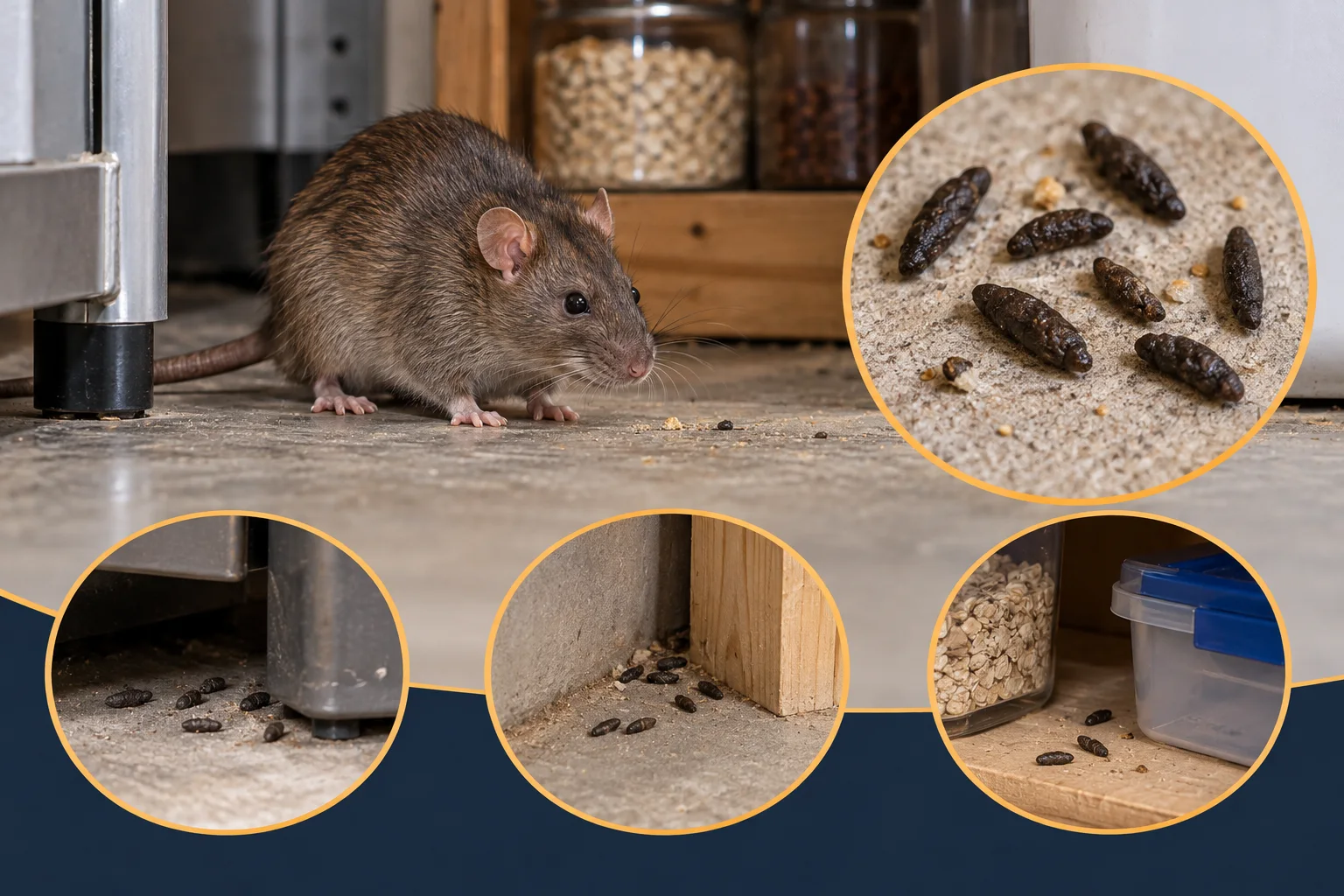
Rat droppings are generally larger than mouse droppings, but one pellet is not enough for a confident identification. CDC training material illustrates average Norway-rat droppings as about three-quarters of an inch and blunt, roof-rat droppings as about one-half inch and pointed, and house-mouse droppings as much smaller and pointed. Those are useful reference patterns, not a substitute for examining the whole evidence picture.
Droppings can break, dry, get wet, be moved by cleaning, or be confused with waste from another animal. A juvenile rat can complicate the comparison. Instead of using one piece of waste as a verdict, note size range, shape, amount, and where it appears. Pair it with gnaw marks, tracks, nests, food damage, and the kind of opening nearby. A professional can help when identification changes the equipment or repair plan.
Location is often more informative
Rat droppings commonly appear along protected travel routes and near food, water, or nesting cover. Find them behind appliances, in garages, around feed containers, along attic beams, near plumbing entries, and beside outdoor bins or burrows. Roof-rat signs may be higher in a structure, while Norway-rat activity may appear closer to lower levels and burrows, but either species can use several areas. The pattern tells you where to inspect next.
A line of droppings at a door threshold can point to a poor door sweep. Waste near pet food can point to an overnight food source. Droppings beside an eave or attic hatch can point to a roofline route. Do not reach into a wall or roof feature to follow the trail. Photograph the evidence and inspect connected exterior features from a safe position. The objective is to find the route, not collect a specimen.
Freshness is not a precise clock
CDC describes fresh droppings as usually moist, soft, shiny, and dark, becoming dry and hard after a few days. This change is affected by temperature, humidity, sunlight, and the surface where the material lands. Do not say a rat was present 'last night' based on appearance alone. An old dropping in a damp garage can look different from one in a dry attic, and a fresh sign can be missed under stored items.
The better test is to clean the location safely and recheck it. If new droppings appear, activity is current. CDC notes that cleaning up rodent signs and finding them again indicates an active rodent presence. Keep dates and photos of the same route. This avoids overinterpreting old evidence and gives you a clear reason to set traps, repair an opening, or request professional inspection.
Handle every suspected dropping safely
Do not pick up droppings bare-handed or sweep or vacuum them dry. CDC says dry actions can create contaminated airborne particles. Wear rubber or plastic gloves, spray the material until very wet with disinfectant, wait five minutes or label contact time, then wipe it up with paper towels. Disinfect hard surfaces afterward and wash hands after gloves are removed. Keep pets and children away until the area is clean.
If waste is in a food cabinet, discard food that may have been contaminated, clean hard shelves, and move remaining food to secure containers. If it is in a car, attic, wall, duct, or insulation, the cleanup method and scope may differ. CDC recommends special precautions for heavy infestations and professional help for rodents in heating and cooling systems. Do not turn an identification question into a risky cleanup project.
Use the evidence to choose equipment
Mouse and rat traps are not interchangeable. CDC says to choose the right snap trap for the rodent, and UC IPM notes that mice and small juvenile rats may not trigger a rat trap. If the signs are ambiguous, avoid buying a collection of random traps. First document the route, compare evidence, and consider a professional assessment. Equipment that is the wrong size or placed in the wrong path will not solve a species-identification problem.
For confirmed rats, CDC recommends traditional rat-sized snap traps in protected locations where evidence indicates travel. Rats may be cautious around a new object, so CDC suggests pre-baiting an unset trap until bait is taken. Keep traps inaccessible to children and pets and check them daily. Do not use glue or live traps. If the suspected route is high, behind a wall, or near electrical equipment, use a professional rather than hiding equipment where it cannot be monitored.
Finish by repairing the entry
After activity stops, repair the physical route that allowed it. Inspect doors, garage edges, vents, utility penetrations, crawl-space panels, eaves, and roofline screens. UC IPM warns that rats can chew foam, plastic, wood, and caulk, so use a durable repair appropriate to the feature. Do not block a required vent, drain, or appliance exhaust without professional guidance.
Keep food, garbage, feed, and birdseed secured and reduce dense cover close to the house. That lowers the chance that a new dropping becomes the first sign of another infestation. The important result is not a perfect field identification from one pellet. It is a clean area, no fresh evidence, and no accessible route for rodents to return after repairs and regular inspections. If the signs do not match a rat or mouse pattern, ask a local professional before selecting a trap or sealing a feature that another species may use.