
AI-generated illustration
Start by separating domesticated and wild rats
A pet rat obtained from a responsible domestic source is not interchangeable with a wild rat found in a garage, wall, or yard. Wild animals may be frightened, bite when handled, carry parasites or germs, and need specialized assessment. A wild rat inside a home is an exclusion and removal issue, not an opportunity to acquire a pet. Never introduce a wild rat to a pet rat or hold one close to a household cage.
Prospective owners should identify a small-mammal veterinarian before adoption and learn local rules, likely expenses, daily care needs, and a plan for travel or a move. Merck Veterinary Manual notes that information from wild and laboratory rats does not always translate directly to pets. A pet’s health is assessed as an individual household animal. Responsible ownership begins with accepting that regular observation and veterinary care are part of the commitment.
Housing is a health requirement
Merck describes a suitable rat cage as escape proof, well ventilated, easy to clean, and large enough for exercise, feeding, nesting, and extra space when rats live together. A solid floor helps prevent foot and leg injuries associated with wire mesh. Wood cages are a poor choice because urine can soak in, ammonia can build up, rats may chew through the material, and splinters can injure them.
An aquarium is also a poor rat home because airflow is inadequate. Select a secure enclosure with good air exchange, safe resting areas, and room for movement. Place it away from direct heat, drafts, household fumes, dogs, cats, and other animals that may create stress. The environment should let an owner see each rat and clean safely without dismantling the entire cage every day.
Food, water, and dental needs
Domesticated rats need a balanced diet rather than a bowl of selected seeds. Merck recommends commercially prepared rat food that supplies needed nutrients and includes pellets firm enough to help wear continuously growing incisors. Seed mixtures can encourage selective eating, leaving balanced pellets behind. Fresh vegetables, fruit, and seeds may be treats in limited amounts; fatty treats can contribute to obesity, especially in older rats.
Fresh water should always be available in a stable bottle or container that is cleaned regularly. Remove uneaten food before providing fresh food and clean food and water containers daily. Introduce a diet change gradually because rats can avoid unfamiliar foods. Do not use human snack foods as the main diet or assume a rat’s interest in a food proves it is nutritious. Ask the veterinarian about diet choices for an individual animal with a health condition.
Social behavior and enrichment
Rats are social animals and grooming is an affiliative behavior. Merck emphasizes that social housing and enrichment matter, while also noting that unfamiliar adults may fight. Young compatible rats can develop social affiliation; a sudden introduction of solitary or unfamiliar animals needs careful planning. Sex, age, history, health, and veterinary or rescue advice all matter. Do not crowd animals together because a cage looks large enough at first glance.
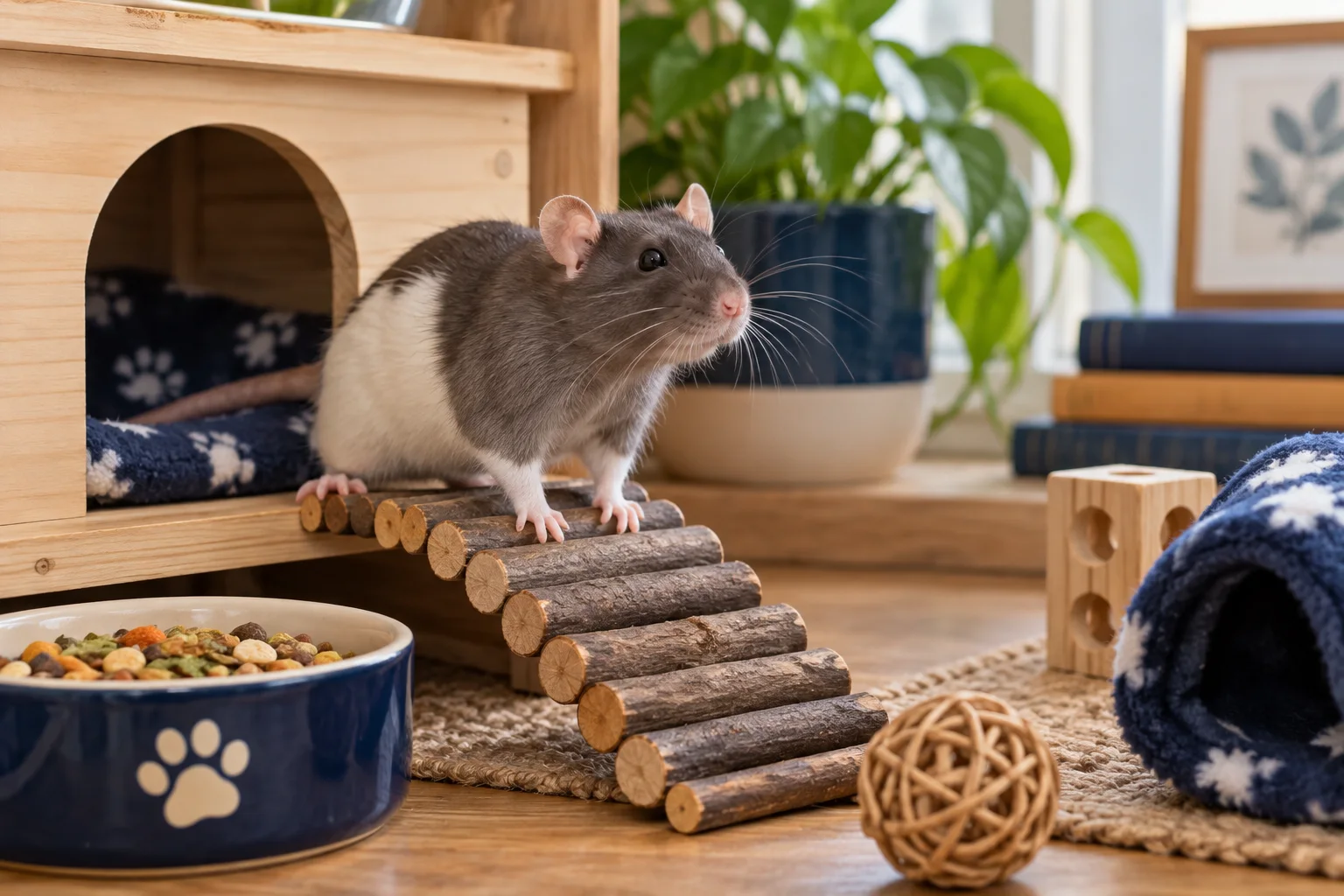
Provide safe opportunities to climb, explore, nest, chew, and exercise. Merck describes smooth-surfaced exercise wheels, tubes, ladders, and climbing blocks as useful enrichment; a wheel should be large enough for the animal and should not trap toes. Rotate safe enrichment thoughtfully and observe how the rats use it. Enrichment is not just entertainment. It supports movement, curiosity, and species-typical behavior in an animal that is active and social.
Hygiene and health monitoring
Cleanliness protects respiratory health. Merck advises regular cage cleaning and bedding changes to reduce ammonia buildup from urine. Choose bedding that is safe and not overly dusty or irritating. Untreated wood products can contain volatile chemicals that irritate the respiratory tract. Maintain low enough density and appropriate ventilation instead of masking odor with fragrances.
Observe every rat daily. Changes in appetite, water use, breathing, posture, movement, coat, wounds, droppings, or interaction with cage mates can be important. Merck identifies skin disease, respiratory infections, and tumors among common problems in pet rats and mice. Do not diagnose from a photo, give human medication, or use a pest-control product on a pet. Contact the veterinarian promptly when a rat appears ill, injured, depressed, or has breathing difficulty.
Handling and human health
Handle pet rats gently and allow a cautious animal to approach. Support the body instead of grabbing from above or waking it abruptly. Rats can bite if they are frightened, painful, or restrained. Children should have close adult supervision, and a household should consider whether every caregiver can follow handwashing and handling rules consistently.
CDC explains that rat-bite fever can follow exposure to rodents and that rodents carrying the relevant bacteria may look healthy. Wash hands after handling rats, bedding, food, or cages; keep rats away from food-preparation areas; and avoid kissing them. If a person is bitten or scratched, gently wash with soap and running water and promptly seek medical guidance. A pet-rat health question and a human exposure question may need different professionals.
Decide whether the pet fits
Pet rats can be engaging companions when their needs are met, but they are not effortless starter pets, pest-control tools, or a substitute for adult responsibility. Consider the cost of suitable housing, food, bedding, enrichment, veterinary care, and a knowledgeable caregiver during travel. Consider whether nocturnal activity will disturb a bedroom and whether other household pets can be safely separated.
The right household can provide a stable enclosure, compatible social care, nutritious food, daily observation, hygiene, and veterinary attention. If those needs cannot be met, choose a different pet or wait. If the original issue is a wild rat in a building, do not confuse care information with control advice: address entry routes, food sources, and safe removal separately.