
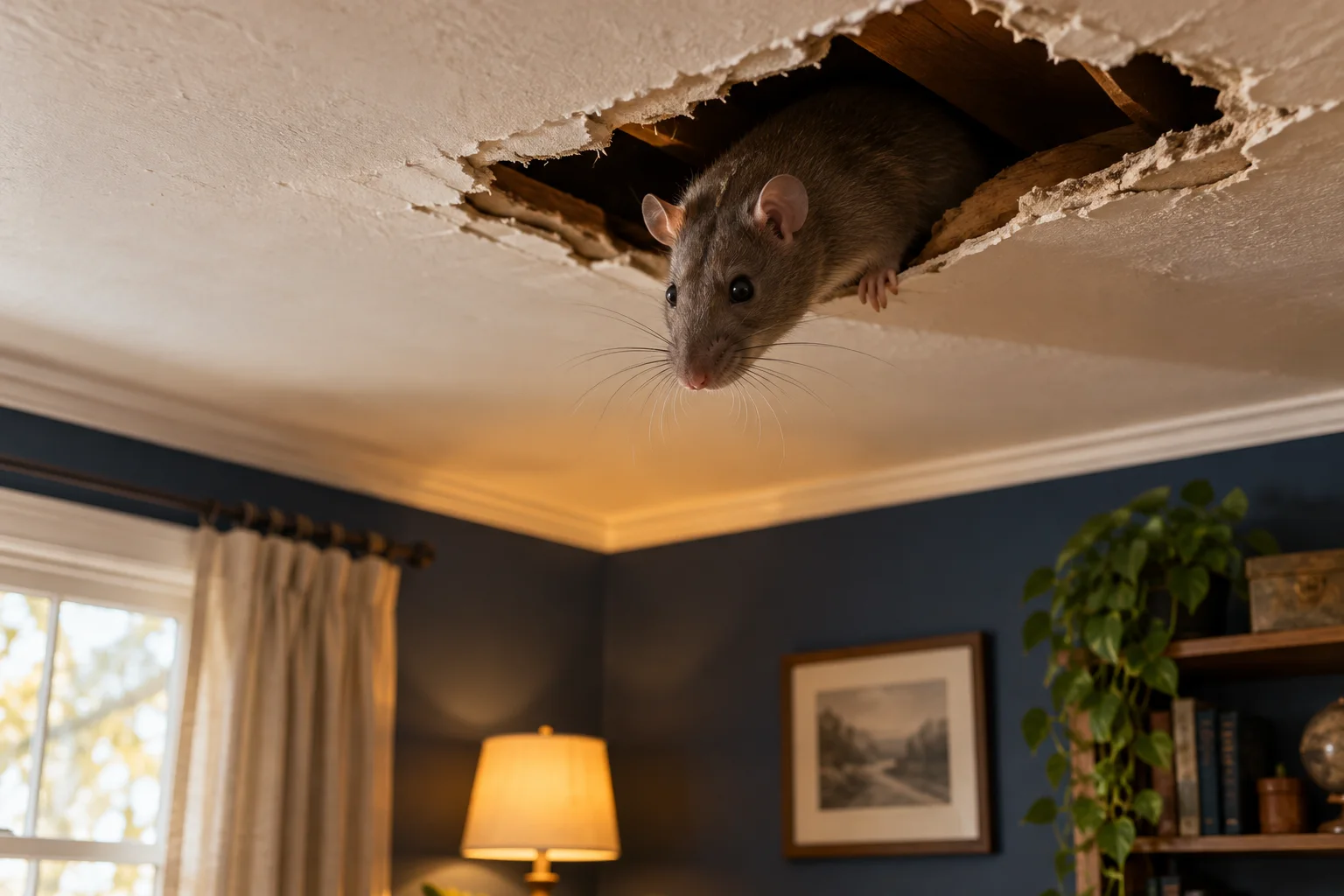
AI-generated illustration
A ceiling is rarely the first barrier breached
A rat can gnaw building materials and may damage a ceiling from an attic or ceiling void, but it usually reaches that space through an exterior defect, wall void, roofline opening, or another existing route. A new hole, stain, scratching sound, or droppings below a ceiling should prompt an inspection of the route—not a guess that the rat came straight through finished drywall. UC IPM notes that roof rats can favor attics and ceiling voids and can shred insulation for nests.
Do not cut into a ceiling based only on a noise. Plumbing, ductwork, electrical wiring, birds, insects, and building movement can produce similar signs. Record the room, time, sound, and any related evidence. Look in accessible attic space and along the corresponding exterior wall first. A small access opening may later be necessary, but a planned opening is safer and cheaper than opening several sections based on where sound seems loudest.
Look for evidence above and below
If the attic is safely accessible, inspect from a stable walkway or framing, never by stepping between joists. Use a flashlight to look for fresh droppings, chewed insulation, nesting material, damaged ductwork, rub marks, and visible gaps at eaves or vents. Photograph the area and stop if you see damaged wiring, unstable flooring, or heavy contamination. Do not poke through insulation with bare hands or drag it around to search for every mark.
From the room below, check for a localized stain, sagging drywall, a damaged light fixture, or a new hole. A water stain can be a roof or plumbing problem, and a sagging ceiling may be unsafe regardless of rodents. If the ceiling is wet, structurally compromised, or near electrical equipment, contact the appropriate building or utility professional promptly. Rodent control should not delay a repair that protects the house and its occupants.
Remove active rats before final repair
If fresh signs point to rats in the attic or ceiling void, do not immediately seal the suspected exterior hole. Active animals can be trapped inside and may chew elsewhere. CDC recommends identifying how rodents got into the home and trapping those that remain before final exclusion. Use rat-sized traditional snap traps only in protected, accessible areas where they can be checked daily. A loose trap in insulation or a sealed void is not a responsible setup.
Do not use glue or live traps, which CDC advises against, and do not scatter poison in a ceiling cavity. An inaccessible poison carcass can create odor and cleanup problems while leaving the entry route uncorrected. A pest professional is appropriate when evidence is in a high attic, a wall or ceiling cavity, or an area near electrical or HVAC systems. They can coordinate removal, access, cleanup, and repair rather than treating each as an unrelated job.
Treat wiring and insulation as separate risks
Rats can chew wiring insulation and shred ceiling insulation for nesting. UC IPM warns that attic rat activity can create electrical safety concerns. Do not pull on a wire, reconnect a chewed cable, or cover damaged wiring with insulation. An electrician should assess electrical damage before the ceiling is closed. An HVAC professional may be needed if ducts are chewed or contaminated, and a roofer may need to repair the exterior opening that allowed access.
Contaminated insulation should not be dry-vacuumed. CDC advises wet cleanup for rodent waste and recommends bagging exposed insulation contaminated with urine and droppings for removal. Large areas of loose insulation, a strong odor, or widespread nests require a cleanup or insulation professional with a dust-control plan. Coordinate this work so the repair is not closed over contaminated material or damaged systems.
Open drywall only with a target
A small, planned access opening may be justified for a confirmed carcass, nest, electrical repair, or contamination that cannot be reached from the attic. Before cutting, identify utilities and framing, decide how the opening will be repaired, and ensure the source route is being addressed. Do not open a ceiling merely to see whether a rat might be there. Each unnecessary cut creates another finish repair and can expose residents to dust or insulation.
When material is removed, follow CDC's wet disinfecting guidance for droppings and nests. Wear gloves, wet material fully, wait five minutes or the label time, then collect it with paper towels or the appropriate controlled-removal method. Keep the work area contained and do not let children or pets enter. A professional restoration plan is sensible for major contamination, water damage, or an opening near wiring and ducts.
Finish with roofline exclusion and monitoring
After active signs stop, repair verified eave, vent, roof, wall, or utility gaps with durable materials appropriate to the feature. Do not block a required vent or drain. Trim vegetation and branches that lead to the roofline, secure outdoor food and garbage, and keep attic access closed. These steps reduce the chance that another animal will reach the same ceiling void after the drywall has been repaired.
Continue checking the attic and the room below for new signs. A week without captures or fresh evidence is a useful CDC indication that the removal phase succeeded. If a sound or stain returns, investigate the building system and exterior route again instead of assuming the previous ceiling repair failed. The goal is an intact ceiling because the route above it is closed and the material behind it is safe.