
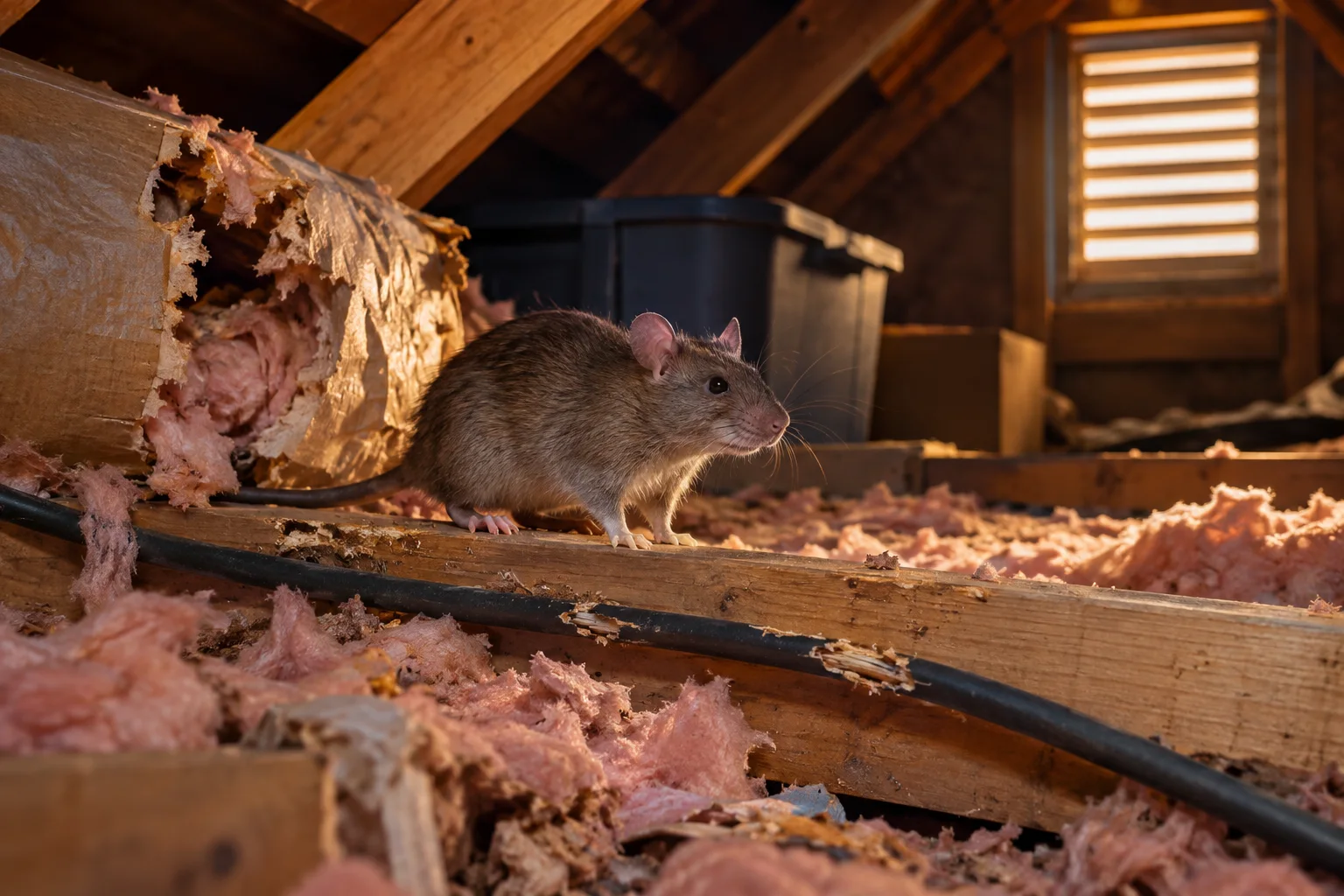
AI-generated illustration
An attic concentrates several kinds of damage
An attic gives rats cover, nesting material, and access to building systems. UC IPM notes that roof rats favor elevated enclosed spaces and can cause significant attic damage, including electrical safety concerns, through gnawing and nesting. The visible droppings are only one part of the issue. Insulation may be shredded, vents may be damaged, stored belongings may be contaminated, and a nearby wire or duct may be affected. An inspection should look at all of those categories.
Do not assume an attic noise is a rat or that a nest tells you which hole is active. Document evidence: photographs of droppings, gnawing, disturbed insulation, damaged screen, rub marks, and daylight at a roofline. Note the exact part of the attic and the nearest exterior feature. This record helps distinguish an old problem from current activity and gives a roofer, electrician, or pest professional a clear starting point.
Start with safe access
Enter only if the attic has stable access, safe flooring or a walkway, adequate light, and no obvious structural or electrical danger. Stay on framing, not between joists, and do not move insulation around wiring. A flashlight and camera are better inspection tools than bare hands. If the attic is extremely hot, cramped, contaminated, or filled with damaged wiring, stop and arrange professional help. A rodent problem does not justify a fall, heat, or electrical injury.
Look from the exterior too. Check attic vents, roof vents, eaves, soffits, chimney features, plumbing penetrations, and where cables or pipes meet the building. Roof rats can climb, so branches, vines, fence connections, and utility routes can be part of the access path. An attic repair that ignores the outdoor approach may close one opening while leaving another route open above the ground.
Electrical and duct damage need trade inspection
Rats may gnaw electrical insulation and nest around wiring. Do not touch exposed wires, pull a cable from a nest, or cover damage with insulation. An electrician should evaluate suspicious wiring and state whether any circuit or component needs repair. If a duct has nesting material, holes, or contamination, an HVAC professional can determine what must be cleaned or replaced. A roof or siding professional may be needed where weather damage created the original opening.
Keep the work sequence clear. Make unsafe utilities safe, remove active rats, clean contaminated material, then close the entry route and restore insulation or finishes. A quick patch over a chewed vent or new insulation placed before a route is closed can waste money. Ask each professional to document the problem and repair so later work does not cover an unresolved electrical or ventilation issue.
Clean waste without spreading dust
CDC says not to vacuum or sweep rodent droppings, urine, or nesting material dry. For a small accessible area, wear gloves, spray the material with disinfectant until wet, wait five minutes or the label contact time, then wipe it up with paper towels. Hard surfaces can be disinfected afterward. A dead rodent or nest should be wet, bagged, sealed in a second bag, and disposed of in a covered garbage container.
Attic insulation and heavy contamination need special consideration. CDC advises bagging exposed insulation contaminated with urine and droppings for removal and describes additional precautions for heavy infestations. Do not rake loose-fill insulation into a pile or push it through an attic hatch. A qualified cleanup or insulation contractor can control dust, remove affected material, and keep the living space below protected. That is particularly important when the insulation has absorbed urine over a wide area.
Remove rats from accessible routes
For confirmed indoor activity, CDC recommends traditional rat-sized snap traps in areas where rats travel and can be monitored. In an attic, that means a protected, stable location that can be checked daily, not a trap buried in insulation or placed on a precarious roof. Rats may avoid unfamiliar traps initially, so CDC suggests pre-baiting an unset trap until bait is taken. Keep children, pets, and wildlife from accessing any trap.
Do not use glue or live traps, which CDC advises against, or scatter loose poison in insulation. A poisoned or trapped animal in an inaccessible void adds odor and cleanup difficulty. When activity is near a high roofline, duct, electrical system, or unreachable cavity, use a professional who can place equipment safely and coordinate the plan with the final exclusion work.
Restore and maintain the attic
After no captures or fresh signs for a week, repair verified openings with durable material appropriate to the feature. UC IPM notes that rats can chew foam, plastic, wood, and caulk, so soft fillers alone are not reliable. Do not block functional ventilation or drainage. Replace or repair insulation only after the route is closed, and have any electrical or duct repair completed before materials conceal the area.
Keep attic storage in sealed containers rather than cardboard, and avoid using the space as a forgotten pile of fabrics and paper. Outside, secure food, garbage, and feed; remove fallen fruit; and trim vegetation that reaches the roofline. Reinspect vents and eaves after storms and roof work. A well-maintained attic is quieter and safer because rats have neither a route in nor materials and food that encourage them to stay, helping prevent recurring attic damage in future seasons.