
AI-generated illustration
Coverage is a policy question
There is no universal answer to whether homeowners insurance pays for rat damage. Coverage depends on the actual policy, endorsements, exclusions, the kind of damage, and the cause the insurer determines. A homeowner should not assume that a broad phrase such as pest damage settles the matter. Damage from gradual deterioration, maintenance problems, or an infestation can be treated differently from a sudden resulting loss. The policy language and the insurer's written claim decision control, not a contractor's opinion or a general article. Read the declarations page and relevant exclusions, then contact the insurer or agent with factual details before making a claim decision based on hearsay.
Document before changing the scene
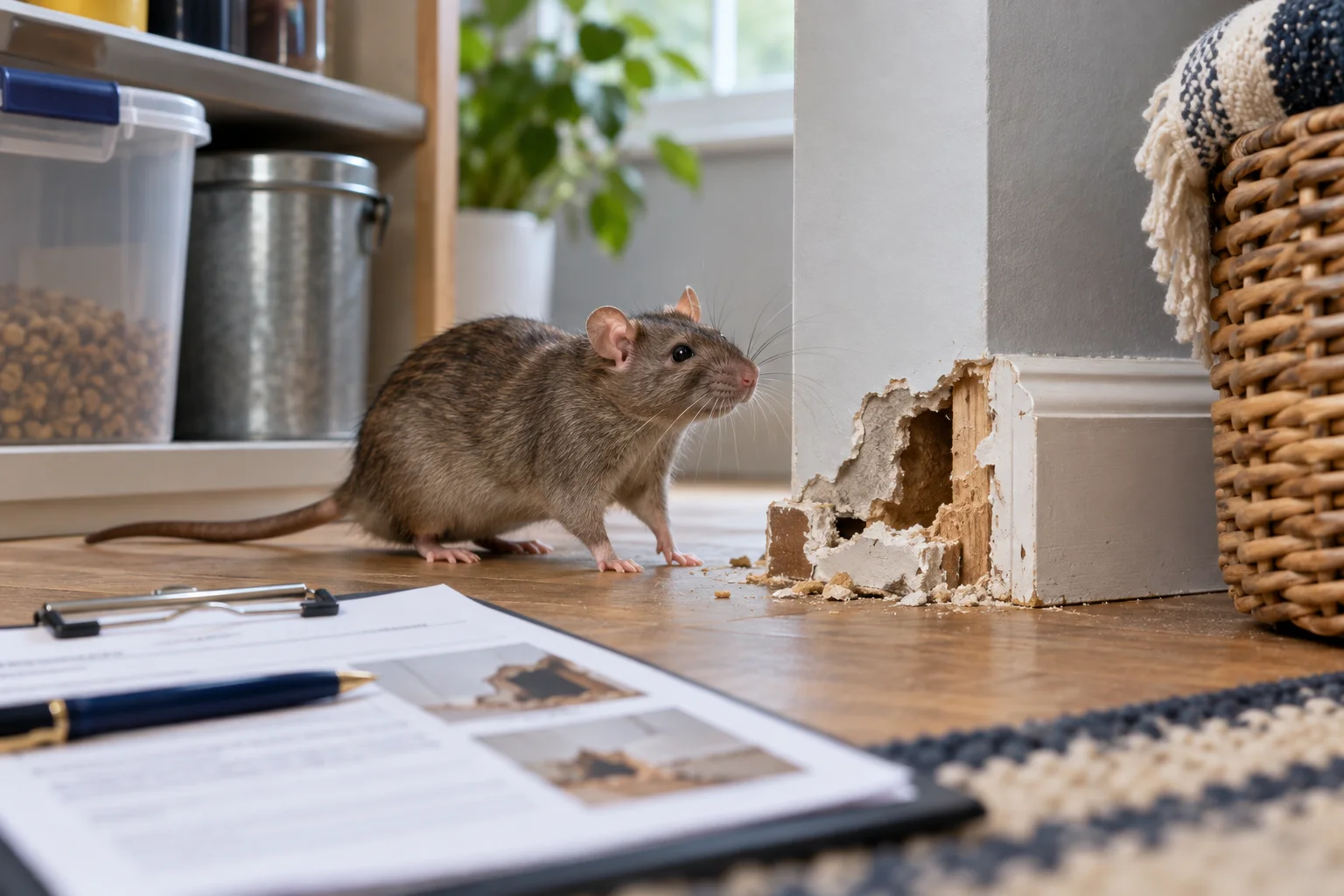
If you find chewed wiring, damaged insulation, spoiled food, a leak, or a hole associated with rat activity, document it safely. Take dated photographs of the damage and the surrounding area, retain invoices, and write down when the condition was discovered. Do not touch exposed wiring or enter an unsafe attic to improve photographs. If an urgent step is needed to prevent additional damage, such as securing a dangerous area or arranging an electrical assessment, ask the insurer how it wants mitigation documented. Necessary safety work and a full restoration scope are different questions. Keep samples or removed materials only if the insurer or qualified professional asks; retaining contaminated waste is usually not helpful.
Ask focused questions
When speaking with the insurer, ask whether a claim can be opened, what policy provisions may apply, whether an inspection is required, and what documentation it needs. Describe what is known without estimating the number of rats or stating a cause that has not been established. Ask whether inspection, pest removal, exclusion repairs, cleanup, electrical work, and resulting water or fire damage are evaluated separately. Request the answer or claim determination in writing. An agent may help explain a policy, but the claims process determines a particular loss. If the decision refers to an exclusion or limitation, ask for the specific policy language and how it was applied to the documented facts.
Do not delay safety repairs
Insurance uncertainty should not lead a homeowner to ignore an immediate hazard. Exposed or damaged electrical components need assessment by a qualified electrician. A compromised roof, plumbing line, or combustion vent may require prompt building repair. Rodent waste should not be dry swept or vacuumed; CDC cleanup guidance describes wetting waste with disinfectant and following product directions before removal. These actions address safety and further damage. They do not decide coverage. Before discarding substantial damaged material, take photographs and ask whether the insurer needs to inspect it. Keep itemized invoices that distinguish emergency stabilization, cleanup, rodent control, and permanent repair.
Avoid bundled assumptions in estimates
A pest-control proposal may combine inspection, trapping, exclusion, cleanup, insulation work, and repair. That can be a useful service plan, but it may not match the way an insurer evaluates a loss. Ask for a clear scope: what was observed, which openings will be repaired, which materials will be removed, and what follow-up is included. Separate line items make it easier to understand the work and provide documentation if requested. Do not ask a contractor to characterize damage as covered or promise a claim result. Their useful role is to describe the evidence, the repair need, and the work performed. The insurer determines whether the policy pays for any part of it.
Keep prevention records after the claim
Regardless of the outcome, address the access conditions that allowed the problem. Inspect door seals, vents, service penetrations, garage edges, waste storage, water leaks, and accessible roofline defects. Keep photographs of completed repairs and future maintenance. That record can help if a later issue must be explained, and it gives the property a better chance of remaining rodent-resistant. If you disagree with a coverage decision, use the review, appeal, complaint, or professional-advice options available in your jurisdiction and policy. The practical goal is twofold: understand the insurer's decision from the actual contract, and restore the home in a way that does not leave the same route open for another rat.
Keep the file organized
A claim file works best when it records events in order. Save the policy version in force, photographs before and after emergency work, the date each person inspected the home, itemized estimates, receipts, and the insurer's letters. If new damage is discovered during repair, document it and ask how it should be presented rather than folding it silently into an invoice. Do not delay an urgent electrical or building repair merely to wait for a coverage answer, but communicate the safety reason and preserve the evidence you can safely preserve. This approach does not guarantee payment. It does give both the homeowner and the insurer a clearer record of what happened, what was done to prevent further loss, and which costs relate to pest control, cleanup, or structural restoration.
A practical standard
Keep a written chronology of the loss and each safety measure. It helps explain the condition to the insurer, supports future repairs, and makes later maintenance decisions based on facts rather than recollection.
Read the decision carefully
When the insurer responds, compare its explanation with the policy language and the documented facts. If a term is unclear, ask for clarification in writing and retain the response with the claim file.