
AI-generated illustration
A rat problem is a building problem too
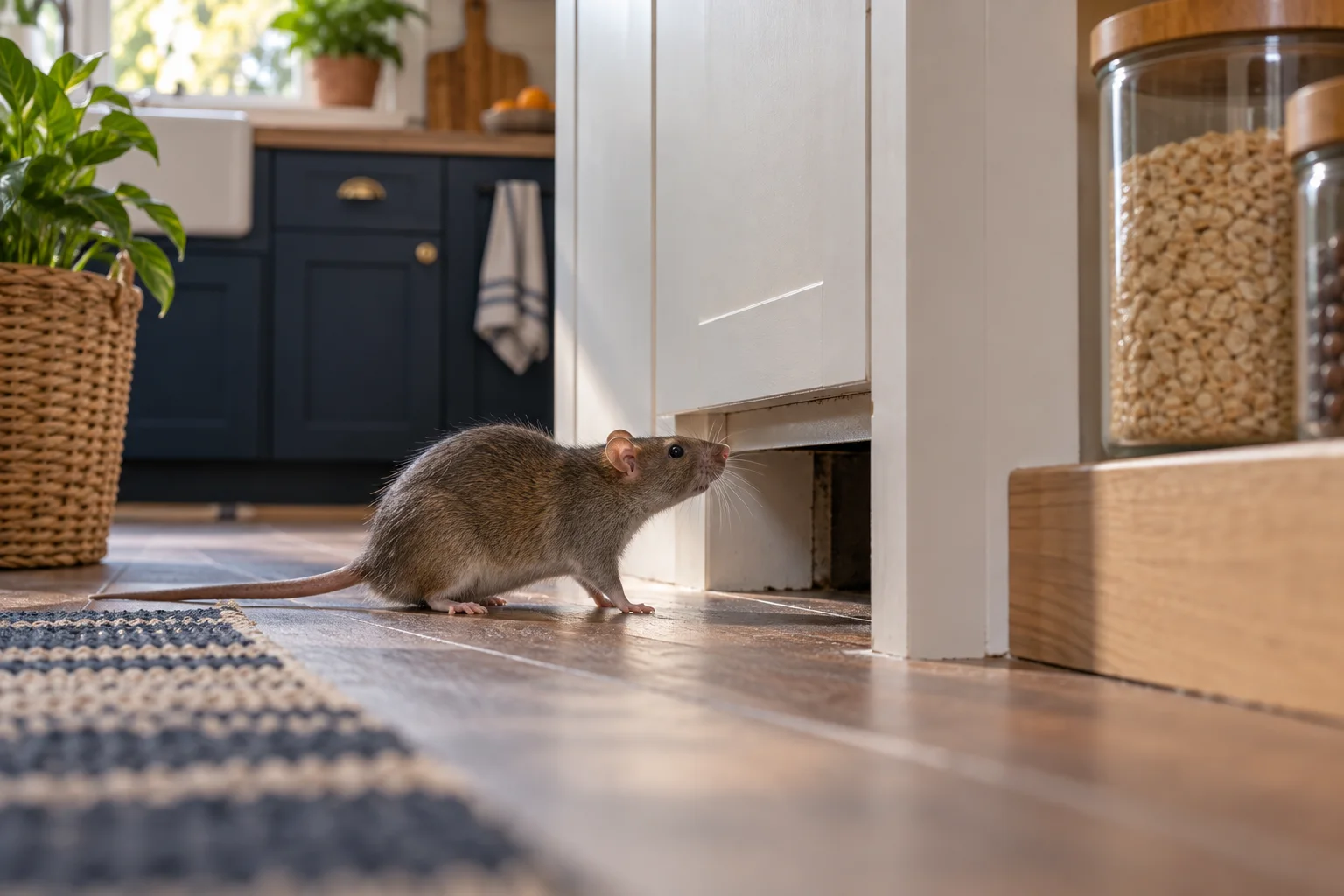
A rat seen in a house is not just an animal to remove. It is evidence that food, shelter, an entry route, or a connected void made the building usable. The first response should protect the household and preserve useful observations. Keep children and pets out of the immediate area, do not chase an animal through rooms, and note the time, location, direction of travel, sounds, droppings, gnawing, or food damage you can see from a safe distance.
One sighting may be enough to justify action, but it does not identify every route or tell you how many animals are present. A rat can travel through walls, pipe chases, attics, garages, basements, and shared spaces. Begin a simple log and take photographs where safe. This gives a pest professional or landlord something more useful than a general report that there was a noise somewhere in the house.
Protect food, pets, and occupied rooms
Put food and feed into durable containers, clean spills, secure garbage, and remove pet bowls after meals when feasible. Check less obvious sources such as seed, grilling grease, pantry bags, and recycling residue. Keep pets away from areas with active signs and from any control devices. If an animal has access to a kitchen or food-preparation surface, do not assume a quick wipe is enough; inspect for contamination and follow appropriate cleanup guidance.
Avoid loose poison or improvised chemicals in an occupied home. Products can create direct hazards for children and pets and may leave a dead rodent inside a wall or ceiling void. A calm response is more useful: limit access to the affected area, arrange a focused inspection, and choose control methods that can be protected and monitored. The aim is to interrupt the route, not to make the animal move unpredictably through the building.
Find the route without tearing into finishes
Inspect exterior doors, garage seals, service penetrations, vents, foundation edges, roof transitions, and areas where additions meet the original structure. Indoors, compare signs with plumbing, appliance, and wall-cavity connections. Sound is a weak locator because framing can carry it. Do not cut into a wall simply because scratching seems loud there. Look for supporting evidence and use a qualified inspection when the route is inaccessible.
A rat can enter by climbing, gnawing, jumping, or using a broken drain or sewer connection. The pattern differs by species and property. Norway rats often use ground-level burrows and lower areas, while roof rats commonly use elevated routes. The inspection should follow actual evidence. A good report identifies confirmed openings, possible openings, inaccessible areas, and the repairs needed to keep the building system functioning.
Coordinate removal and exclusion
Do not seal every suspected opening without considering whether an animal is still inside. The appropriate timing depends on the route, evidence of nesting, and access to the interior. Use a plan that combines removal with repairs and monitoring. A durable repair might involve door hardware, metal flashing, proper mesh, or a building-specific repair. It should not block required ventilation, drainage, or utilities in the effort to stop rodents.
For confirmed indoor activity, CDC recommends traditional snap traps and advises against glue traps and live traps. Use equipment sized for rats, in protected locations that children, pets, and non-target wildlife cannot reach. Check it regularly and record results. If you are unable to do that safely, use a qualified provider. The trap is one visible part of a plan; the route and food access are what determine whether activity returns.
Handle contaminated material carefully
Do not dry sweep or vacuum droppings, urine, or nesting material. CDC advises wetting the material with disinfectant, waiting for the label-specified contact time, then removing it with appropriate precautions. Extensive contamination in insulation, ducts, crawlspaces, or areas with damaged wiring calls for professional assessment. It is reasonable to keep out of a space that is hot, unstable, contaminated, or difficult to enter.
Cleanup comes after removal and exclusion are under control. Otherwise new activity can contaminate the area again and make it difficult to tell whether signs are fresh. Ask the provider to distinguish removal, cleanup, odor work, insulation replacement, and electrical or building repairs. Each may involve a different scope and cost. Clear documentation prevents a vague promise to solve the rat problem from leaving important repair work undone.
Verify instead of guessing
After the first work, continue the log. Look for new droppings, food damage, gnawing, sounds, camera activity, or captures. Inspect completed repairs for gaps or loose edges. A single quiet day does not prove success, especially where rats are mostly active at night. Repeated checks without fresh evidence give a stronger basis for removing traps or concluding that the route has been controlled.
If signs return, compare them with the original map. They may show a missed entry point, a repair failure, a new defect, or a nearby food source that still draws animals toward the home. This is why records matter. They let a homeowner, tenant, manager, or provider discuss a specific route and result rather than starting over from a frightening sighting. A rat problem becomes manageable when the building conditions are made visible and corrected. Keep the reports, photographs, and completed-repair details together. They establish what changed and help the next inspection concentrate on a real difference rather than repeat the first general search.