
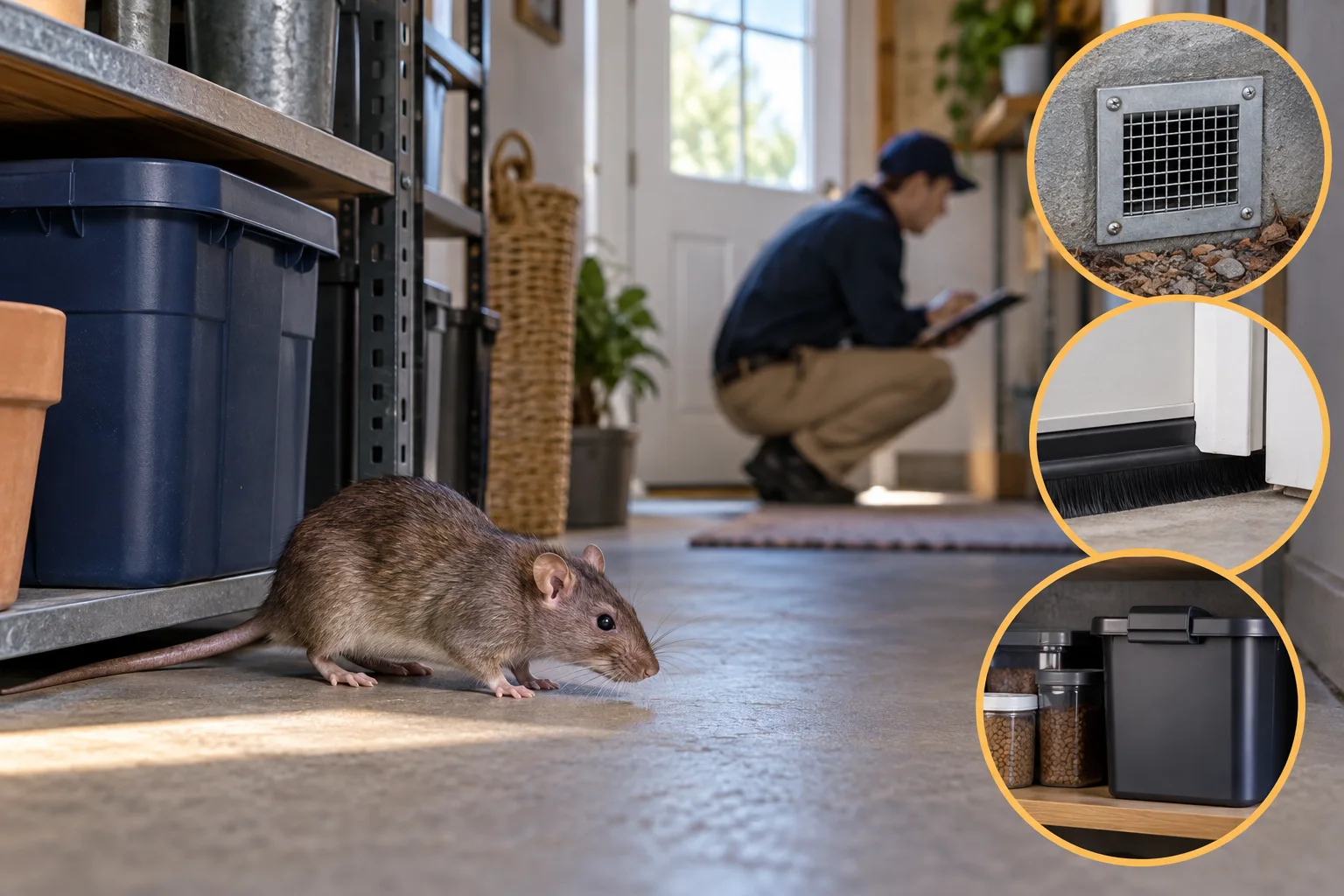
AI-generated illustration
Pest control begins with a diagnosis
Pest control for rodents is not a product category; it is a sequence of decisions. The first decision is whether the evidence actually points to rats, mice, or another animal. Droppings, gnawing, sounds, damaged packages, burrows, and camera observations have different value depending on where and when they are found. Record fresh signs by location before moving stored items or starting treatment. That record gives a technician a baseline and prevents a single old dropping from becoming a reason to treat an entire building.
The second decision is what supports the activity. A rat using a dumpster enclosure, a mouse nesting beside a warm appliance, and an animal entering an attic from a tree route do not call for identical work. Identify food, water, cover, travel routes, and entry points. A useful pest-control proposal explains which observations support its diagnosis, what it will change, and how progress will be checked. It should not imply that a trap, bait, or spray can replace inspection of the building.
Use sanitation to change the food calculation
Rodents use food that people often overlook: spilled bird seed, pet bowls left overnight, open refuse, grease around outdoor cooking areas, fallen fruit, animal feed, and food stored in thin bags. Put food into durable containers, clean spills promptly, repair leaks, and use refuse containers that close properly. Outdoors, reduce dense clutter and keep stored materials away from walls where practical. These are management steps, not punishment for a housekeeping failure. They reduce the reward that keeps an animal returning to the same route.
Sanitation does not mean that an occupied home has to become sterile, and it does not prove that a resident caused the problem. Rodents can exploit structural defects and neighborhood food sources. Its value is that it narrows the options available to them. In a multi-unit building, the relevant food and shelter conditions may be in a shared basement, waste room, courtyard, or adjoining unit. The plan should identify who controls each condition instead of asking one tenant to solve a building-wide route.
Exclude without damaging the building
A careful exterior inspection often finds worn door sweeps, gaps around utility penetrations, damaged vents, loose access panels, foundation defects, or roofline openings. Repairs need materials and attachment methods that suit the wall, roof, drainage, or ventilation system. Filling every visible opening without understanding its purpose can block required air flow, combustion venting, or drainage. Electrical, plumbing, roofing, and structural defects may require the appropriate trade as well as pest-control advice.
Coordinate sealing with removal. An animal already inside can remain in a wall, attic, crawlspace, or appliance void if an active route is closed abruptly. The right sequence depends on the species, layout, season, and signs of nesting. Keep photos of completed repairs and inspect them again after weather or building work. A repair is successful when it remains sound and fresh activity has stopped, not merely when a gap is covered on the day it is installed.
Select removal tools that can be monitored
For a confirmed indoor rat or mouse problem, protected snap traps in active travel areas give a visible result that can be checked. CDC recommends traditional snap traps and advises against glue traps and live traps. Size matters: a mouse trap is not a rat trap, and a trap must be inaccessible to children, pets, and non-target wildlife. Check it regularly, remove captures safely, and adjust placement from actual signs rather than scattering devices throughout a room.
Rodenticides require particular care. EPA advises using products only as directed by their current labels and protecting children, pets, and wildlife with the required tamper-resistant stations. Baiting may have a role in some settings, but it does not show where an animal dies and can leave a carcass in an inaccessible void. Ask a provider where every station will be located, who will service it, how non-target exposure will be prevented, and what will trigger a review of the method.
Make monitoring part of the service
A pest-control visit should leave more than a receipt. It should show the findings, actions, materials used, trap or station locations, and next review point. Map observations by room or exterior side, and distinguish old evidence from new evidence. A quiet night is encouraging, but several checks without fresh droppings, captures, gnawing, or camera activity are more useful evidence that control is working.
Reassess if activity continues. The cause may be an unsealed route, a food source that was missed, a trap placed where the animal does not travel, a neighboring source, or a mistaken identification. Repeating the same treatment without answering those questions can turn pest control into a permanent subscription. The durable outcome is a property with fewer accessible resources and fewer routes in, supported by records that make any future change easy to investigate.
Know when the work exceeds a routine visit
Extensive droppings, urine contamination, damaged insulation, compromised wiring, inaccessible carcasses, large burrow systems, and recurring activity in shared buildings can require more than a basic trap placement. CDC gives specific guidance for wetting and disinfecting rodent-contaminated material and cautions against dry sweeping or vacuuming it. A qualified provider should describe what they can do, what needs another trade, and what a resident should avoid handling.
Ask for an estimate that separates inspection, removal, exclusion, cleanup, and follow-up. That makes two proposals comparable and avoids assuming that a low initial price includes repairs or return visits. Pest control works best when each party knows the scope: the resident reports fresh evidence, building management addresses common conditions, and the provider documents the actions and limits. Clear roles turn a frustrating animal sighting into a manageable property problem.