
AI-generated illustration
Treat a nest as evidence of an access problem
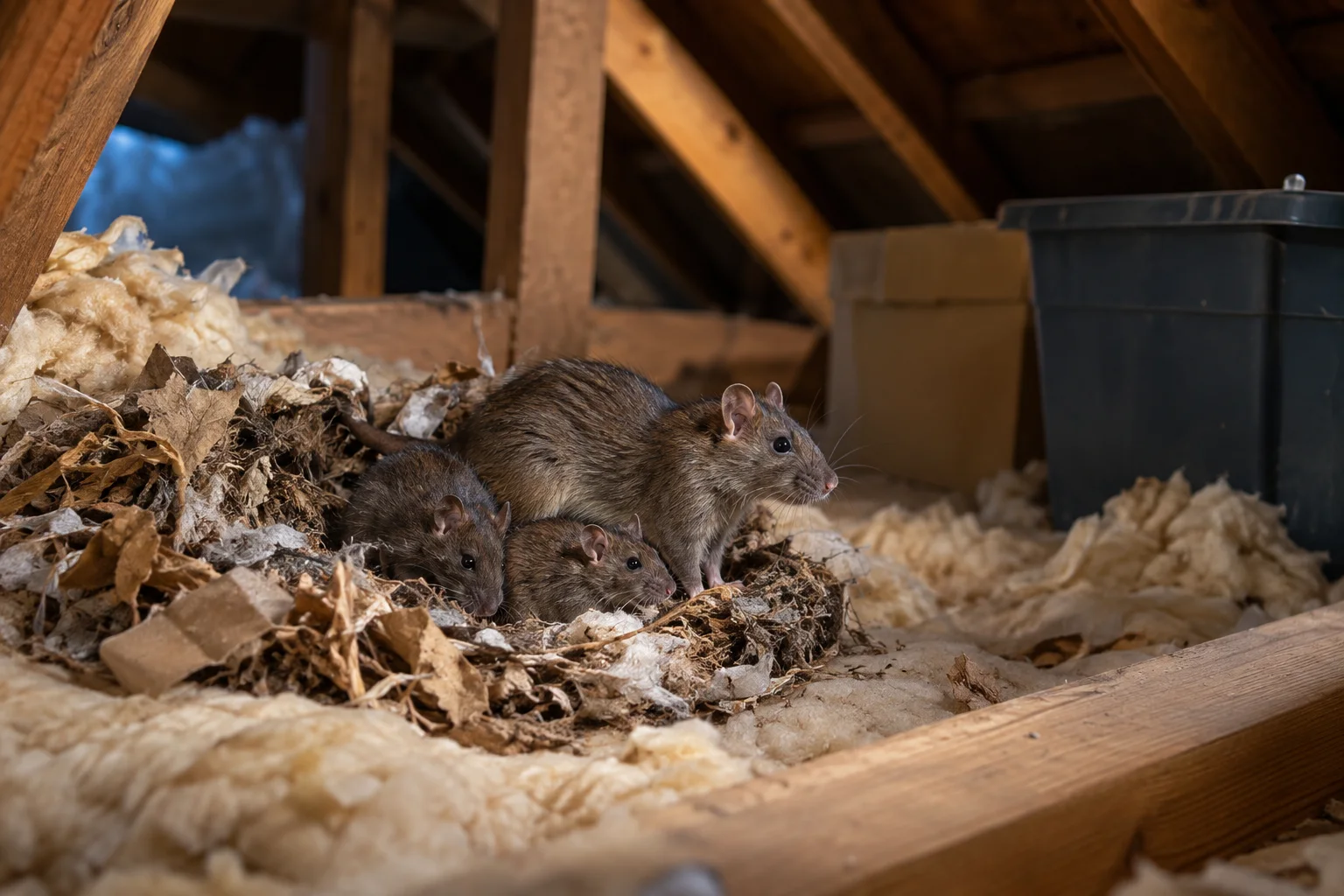
A rat nest in an attic is not just a pile of insulation or paper. It shows that the animal found a way through the building envelope and a protected place to stay. UC IPM notes that roof rats may favor attic spaces, walls, false ceilings, and cabinets indoors. Do not pull the nest apart immediately to see what is inside. First document its location, nearby droppings, damaged insulation, gnawing, and any daylight visible at roofline features.
Use the nest as a starting point for a route map. A nest near an eave can point toward a soffit, vent, roof gap, or utility penetration, but it does not prove which opening is active. Look at the entire attic and exterior path before deciding on a repair. A one-room ceiling sound or a single nest does not rule out other entry points, especially when landscaping or wires give rats an elevated route to the roof.
Inspect the attic without creating hazards
Enter only if the attic has safe flooring, usable lighting, sound access, and no obvious electrical or structural danger. Stay on framing or a designated walkway, not between joists. Avoid stepping on or disturbing insulation around wiring. Look for fresh droppings, tracks on dusty surfaces, gnaw marks, chewed duct material, and concentrated nesting material. Take photographs so a professional can assess the location without relying only on a verbal description.
Do not dry sweep or vacuum droppings and nest material. CDC advises wet cleanup because dry disturbance can put contaminated particles into the air. If there are piles of waste, many nests, dead rodents, a strong contamination pattern, or damaged electrical equipment, stop and call for help. A professional inspection can identify whether the space needs controlled removal, cleanup, electrical repair, insulation work, or roofline exclusion before anyone starts moving materials.
Remove active rats before final sealing
Do not close the first roof gap you find while there may be active rats in the attic. That can leave animals inside a cavity or send them toward another room. A useful plan identifies the active route, how activity will be monitored, where protected equipment can be placed, and when each opening will be repaired. CDC recommends checking how rodents entered before trapping so that new animals cannot keep arriving through the same defect.
Avoid dumping loose bait, repellent powder, or chemicals into insulation. These products do not repair an opening, can make cleanup harder, and may leave a carcass in an inaccessible space. If trapping is used, equipment should be appropriate for rats, placed where evidence indicates travel, and protected from children and pets. Attics can have high beams, ducts, and electrical hazards, so a qualified pest professional is often the sensible choice when access is difficult.
Clean nest material after activity is addressed
For accessible cleanup, CDC says to wear rubber or plastic gloves and wet droppings, nests, and dead rodents with disinfectant before removal. Let the product sit for its stated contact time, then use paper towels or appropriate tools to lift material into bags. Do not dry brush insulation. Exposed insulation visibly contaminated with urine and droppings may need to be bagged for removal; hard surfaces can be cleaned and disinfected according to the product label.
Separate what is accessible from what needs a contractor. A small area of loose nesting material is unlike insulation saturated with waste, duct damage, or an attic with widespread contamination. Preserve safe photographs of the original condition and keep receipts for professional work. Cleaning should restore a safe attic, but it cannot solve the infestation unless the exterior route and food or shelter conditions around the property are dealt with too.
Repair the attic route and verify it
Inspect roof vents, attic vents, gables, soffits, chimney flashing, roof penetrations, and openings around service lines. UC IPM advises giving upper-level entry points careful attention where roof rats are a concern. Use a repair material suited to the feature and local building requirements. Do not block appliance vents, plumbing vents, or required attic ventilation without understanding the system. A roofing, HVAC, or exclusion professional may need to make the final repair.
After repairs, keep the exterior visible: trim vegetation that bridges to the roof, clear vines that hide defects, and monitor the attic access area for fresh signs. Recheck after wind and rain because loose screens and flashing can reveal themselves then. A nest may be old, so verify with fresh evidence rather than repeatedly disturbing it. The goal is an attic that is dry, safe to inspect, and no longer connected to a rat travel route.
Protect the rooms below the attic
While a nest is being assessed, keep food and personal items stored, avoid opening ceiling finishes, and do not run fans that might disturb debris from an accessible opening. If a ceiling has staining, sagging, a leak, or damaged electrical fixture, treat that as a building concern that needs prompt evaluation. A rat nest may be one issue among several in an attic.
After work is complete, inspect rooms below for any new stain, odor, or evidence around ceiling penetrations and stored goods. This follow-up is not a reason to repeatedly enter the attic. It confirms that cleanup and roofline repair did not leave a separate interior problem and gives the homeowner a clear record if conditions change later.