
AI-generated illustration
Humane is a process, not a package label
A trap marketed as humane is not automatically a humane outcome. Welfare depends on whether the device matches the animal, whether it is placed safely, how often it is checked, how a captured animal is handled, and what happens next. A live cage can cause prolonged stress, dehydration, temperature exposure, injury, and difficult release decisions. A poorly placed killing trap can also cause suffering or harm a non-target animal.
The right question is not only “does this trap kill?” or “does it keep an animal alive?” Ask whether the approach minimizes avoidable distress and risk while actually resolving the problem. In a home, that includes the people and pets who may encounter an animal, the wildlife that may reach the equipment, and the next rat that will enter if food and access are left unchanged.
Why live capture is not a simple answer
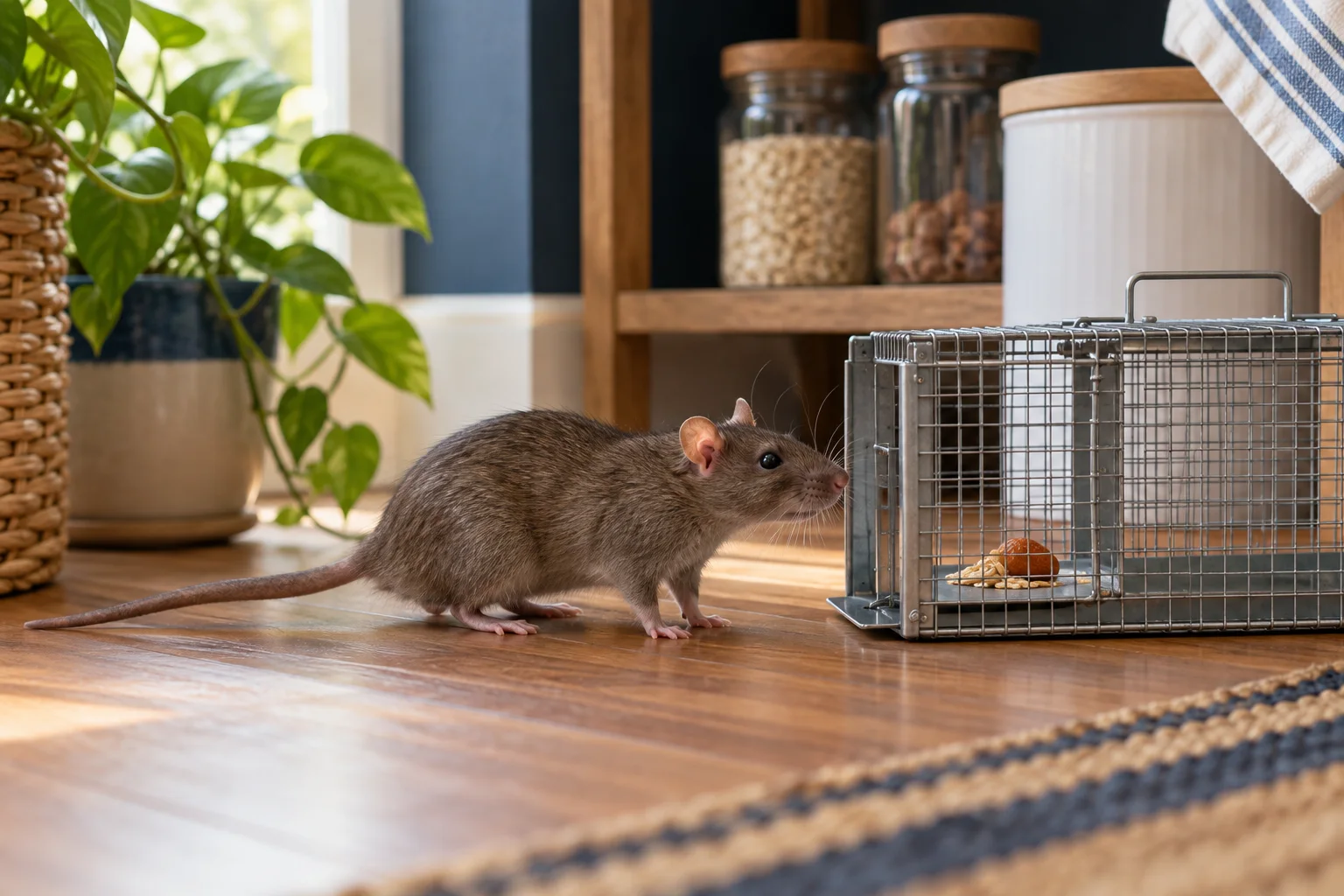
Live trapping sounds gentler because the animal is alive at the moment of capture. It creates responsibilities immediately. The trap must be checked often enough to avoid prolonged confinement, protected from weather and non-target animals, and handled without putting a person at risk of a bite. A frightened rat can struggle, injure itself, urinate, or become difficult to transport safely.
Release is also not a universal humane solution. Laws differ by place and species, and release can be restricted. UC IPM says live trapping of rats is not recommended for nonprofessionals and notes that trapped rats may legally need to be humanely euthanized or released immediately at the capture site in its context. Releasing a commensal rat elsewhere can transfer the problem, expose it to an unfamiliar environment, and leave the home’s entry route open.
Public-health guidance matters
CDC recommends traditional snap traps for rats and advises against glue traps and live traps. Its concern is practical as well as welfare-related: frightened rodents caught in glue or live traps can urinate, increasing the chance of exposure. A homeowner should not read this as permission for casual killing. It means that an enclosed household problem requires a method that is controlled, checked, and paired with safe cleanup and exclusion.
Glue traps present particular welfare and non-target problems. They can immobilize an animal without resolving the situation quickly, can trap pets or wildlife, and are difficult for an untrained homeowner to manage responsibly. Do not set them outdoors or treat them as a low-maintenance option. A device that cannot be inspected and resolved promptly is not a humane choice.
If using a snap trap
For confirmed rats, a correctly sized traditional snap trap in a protected, accessible setting is the method CDC recommends. Read the manufacturer’s directions, use a rat-sized model, place it only where evidence shows travel, keep it away from children and pets, and check it daily. A purpose-built protective station may be needed where non-target access cannot otherwise be controlled.
Avoid modifying the mechanism, setting it in a place where it can be disturbed, or leaving a catch for hours or days. Wear gloves for removal. CDC advises disinfecting a dead rodent and surrounding area, allowing the appropriate contact time, bagging the material, then placing that bag into a second bag for disposal in a covered trash container as local rules allow. Humane management includes competent cleanup.
Use prevention to reduce the trapping burden
The least stressful capture is often the one that becomes unnecessary because the animal cannot access the building. Secure food, feed, and garbage; remove outdoor pet food after meals; reduce sheltered cover; and inspect doors, vents, crawl spaces, roofline features, and utility penetrations. This is not a substitute for removing rats already inside, but it prevents an endless cycle of capture and release.
Do not seal a route abruptly if active rats may still be using an interior void. Coordinate removal with final repair. Use durable materials suitable to the feature, and do not block drains, vents, chimney systems, or appliance exhausts without understanding their function. Humane intent should not create a building-safety problem or trap animals in inaccessible spaces.
Know when to hand the work over
Use professional assistance if you are uncomfortable handling a trap, cannot inspect it reliably, have a live animal already captured, face a route in a high attic or wall, or need to understand local rules. Ask how the professional will identify the animal, protect pets and wildlife, monitor equipment, handle a capture, clean contamination, and close the route.
A professional answer should not promise that live trapping alone is humane. It should explain the full decision and the constraints of the site. This is especially important where a homeowner wants to avoid personally handling an animal but also wants an outcome that is lawful, controlled, and less likely to create another rat problem.
Measure the outcome honestly
A humane rat-control plan reduces prolonged distress, avoids unprotected non-target exposure, limits direct contact between people and rats, and closes the conditions that made the home accessible. It does not depend on a reassuring product label. Keep a simple record of the evidence, equipment, catches, and repairs so the result can be evaluated rather than assumed.
CDC uses a week without captures or new signs as a useful indication that rats are gone. If signs continue, revisit the route, food source, and identification rather than adding more traps indiscriminately. The most responsible approach is the one that combines welfare-aware decisions with practical follow-through: monitored control, safe handling, lawful choices, and a house that no longer invites another animal inside.