
AI-generated illustration
Define the outdoor problem before choosing a method
A rat outside is not automatically an indoor infestation, but it is worth investigating when it repeatedly uses food, shelter, or an opening near the house. Start with the evidence and the setting. Is there a burrow beside a compost area, droppings under a deck, damage around a garbage bin, a route up a vine or fence, or a rat entering a garage? An animal glimpsed crossing a yard does not tell you where it lives or whether it is the cause of a chewed package indoors. Take photos, mark locations, and inspect in daylight. This prevents an outdoor control effort from becoming a series of random products.
The title of this problem often encourages a single goal: kill the visible animal. That can be a short-lived result if food and access remain. CDC and UC IPM emphasize inspection, sanitation, exclusion, and monitored removal. They fit together because a rat population can rebound where food, cover, and entry points are unchanged. An outside plan should protect nearby people, pets, and wildlife at every step. It should also avoid turning a yard into a place with inaccessible poisoned carcasses or unattended traps.
Remove food and shelter first
Secure garbage in intact containers with tight lids, clean spills and grease, store feed and birdseed in sturdy containers, bring in pet food after meals, and collect fallen fruit or nuts when they accumulate. Check compost, grills, recycling, outdoor refrigerators, and vehicle interiors for forgotten food. Rats can use small, dependable food sources, so a clean trash area matters as much as a dramatic yard cleanup. Do not deliberately feed wildlife close to the house while dealing with rat activity; food intended for another animal can support rats too.
Make the building edge easy to inspect. Move stored materials, unused pots, firewood, and dense ground cover away from the foundation. Prune vegetation that contacts the structure or creates an easy route toward a roofline, while following safe pruning practice and avoiding power lines. This does not require stripping the whole yard. It means removing hidden routes between a shelter and an opening. Do not flood, smoke, burn, or pour chemicals into a burrow. Those actions can harm non-target animals, damage soil or utilities, and leave the actual food source or structure route untouched.
Close access to the house
An outdoor sighting matters more when it connects to an entry route. Check door sweeps, garage-door seals, crawl-space access, vent screens, pipe and cable penetrations, foundation gaps, siding transitions, and roofline features. CDC advises looking both inside and outside to find how rodents got in. Repair verified gaps with materials that suit the feature. UC IPM cautions that rats can chew through soft materials such as foam, plastic, wood, and caulk, so a lasting repair usually needs a more durable barrier or a proper construction fix.
Timing is important. Do not seal the only known route while rats may still be using a wall, attic, or crawl space; doing so can drive damage somewhere else. Coordinate removal and final exclusion when activity is confirmed inside. Also do not cover a drain, dryer exhaust, combustion vent, weep hole, or utility feature merely because it looks like an opening. Its function has to be preserved. A roofer, plumber, electrician, HVAC professional, or exclusion specialist can make the right repair when the feature is outside normal homeowner knowledge.
Choose removal that can be monitored
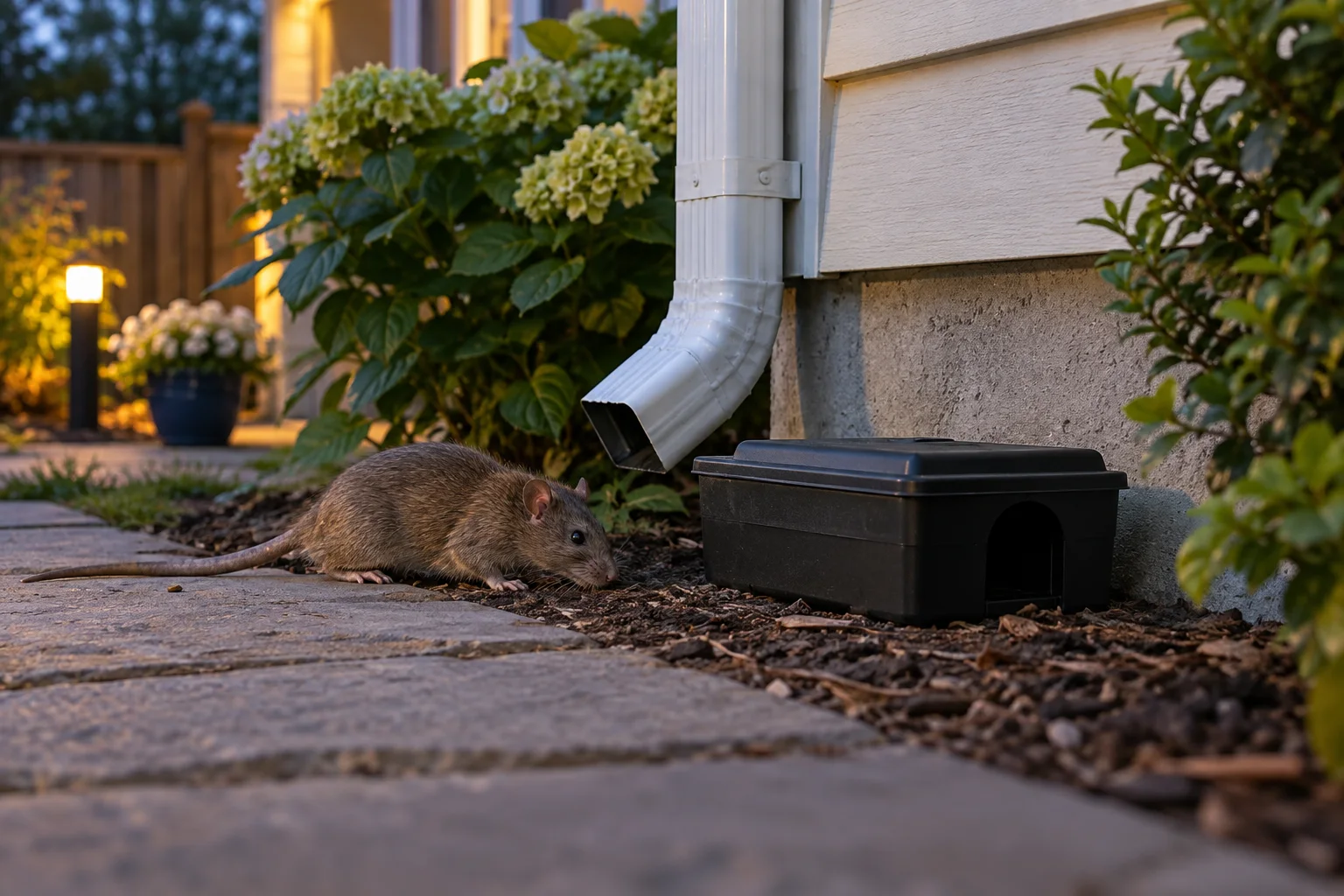
For confirmed activity, use a method that can be checked rather than a hidden, improvised one. CDC recommends traditional rat-sized snap traps and advises positioning them where rodents travel, protected from children and pets, and checked daily. In an outdoor setting, protection is critical because a trap set loosely beside a compost bin, shed, or bird feeder can catch or injure another animal. Place equipment only where evidence shows rat travel and where its access can be controlled. Follow the manufacturer’s directions and remove catches using gloves and the wet cleanup process.
Do not use glue traps or live traps as a casual yard solution. CDC advises against both, noting that frightened rodents can urinate. Live capture also creates a handling, legal, and release problem without fixing the site that attracted the rat. If you do not want to set or empty traps, hire a qualified professional. Ask how they will identify the activity, protect non-target animals, inspect equipment, retrieve dead rodents, and complete exclusion. Those questions turn “get rid of it” into an accountable plan.
Treat poison as a restricted tool, not yard treatment
Rodenticides are pesticides, and the product label governs where and how they can be used. EPA says consumer rat and mouse poison products are sold in ready-to-use bait stations, not as loose bait for scattering. A product can harm pets and wildlife directly or indirectly if they eat a poisoned rodent. That makes an open yard, pet area, wildlife feeder, or place where carcasses cannot be found a poor setting for casual bait use. Never pour bait into a burrow, leave it on the ground, or make a homemade poison mixture.
If a persistent infestation leads you to consider a pesticide, read the exact label before purchase and decide whether you can meet its placement, protection, inspection, storage, and disposal requirements. A professional may be the better choice when the site is complex or non-target exposure cannot be controlled. Keep a record of station locations and check the surrounding area as required. If the route to the house remains open or food remains available, adding more bait is not a solution. Reinspect the property instead.
Clean up and prove the result
Use gloves to handle a dead rodent or contaminated trap. CDC recommends wetting the rodent, nest, or surrounding material with disinfectant, allowing the required contact time, placing it in a bag and then a second bag, and disposing of it in a covered garbage container as local rules allow. Do not dry sweep droppings around a shed, patio, or garage. Wet and wipe them up first. This cleanup protects the person doing the work and prevents the old evidence from being mistaken for new activity later.
Keep monitoring for a week without fresh droppings, new gnawing, reopened burrows, sightings at the same food source, or catches. If signs persist, expand the inspection to nearby properties or shared conditions rather than repeating the same trap placement. A property with secured food, reduced cover, repaired access points, and no fresh evidence is the meaningful outcome. It protects the house while avoiding the false confidence of having removed one rat from a yard that still welcomes the next one.