
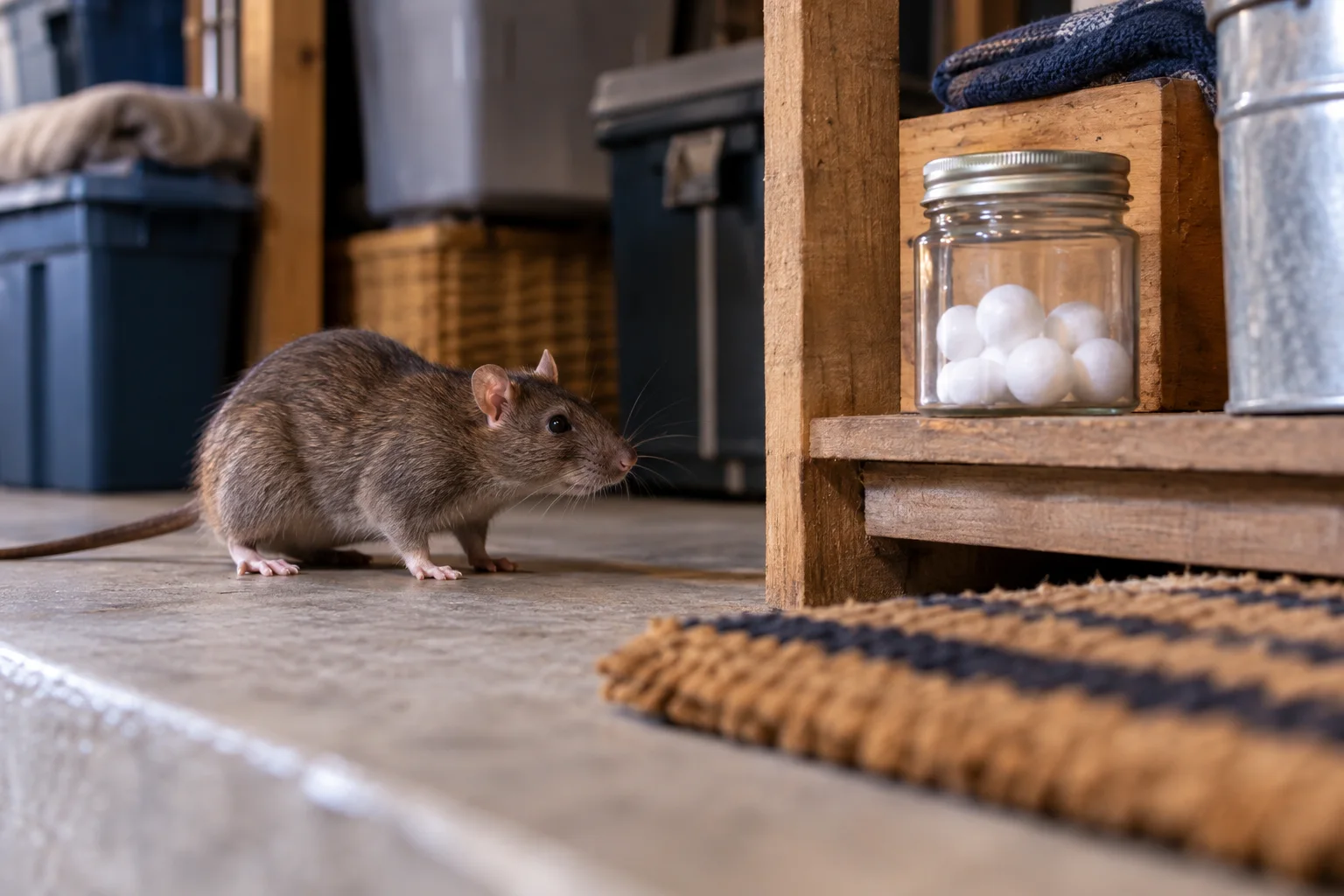
AI-generated illustration
Mothballs are not a rat-control plan
Mothballs are often suggested as a way to drive rats from an attic, crawl space, shed, or garden. That is poor advice. A mothball product is a pesticide intended for a specific labeled use, not a general household animal repellent. The U.S. Environmental Protection Agency explains that registered mothball products specify use in airtight containers and storage closets. Scattering them around a home, fence line, or burrow changes both the site and the exposure in ways the product label does not authorize.
Even if a rat notices a new odor, smell alone does not repair the gap it used, remove a food source, or prevent a different route. An attic or crawl space may have several entry points, and the odor will not travel in a controlled, durable way through a structure. The right question is not whether mothballs smell strong. It is whether the use is labeled, appropriate to the space, and capable of solving the access conditions that support rat activity.
Read the product label before doing anything
The label is part of the product’s directions for legal, safe use. EPA states that using a registered pesticide in a manner inconsistent with its labeling is a federal violation, subject to limited statutory exceptions. Its mothball guidance specifically gives a fence-line animal-repellent scenario as an example of an unlawful use because the site is outside the locations named on mothball labels. An attic, crawl space, yard, or garage should not be treated as interchangeable with an airtight storage container.
Do not rely on a product name, an old family tip, or an online video in place of the actual label on the package in hand. Product formulations and directions can differ. If the label does not clearly authorize the target site and use, do not invent an application method. Do not crush mothballs, place them in vents, scatter them in wall cavities, mix them with other cleaners or pesticides, or put them near food, children, pets, or areas where people spend time.
Why open-area use is a bad fit
A rat problem around a home is usually about access, shelter, food, water, or a combination of those conditions. Mothballs cannot identify which opening is active, protect a damaged vent screen, or make a loose door sweep fit properly. Open-area placement also makes it difficult to control who or what is exposed. A child, pet, visitor, or non-target wildlife may encounter the product, and the material can be displaced by weather, cleaning, or animal activity.
The odor can create a false sense that action has been taken while evidence of activity remains hidden. Powdery or chemical products spread along a wall can obscure tracks and complicate inspection. A homeowner may keep adding product because the smell fades, rather than documenting fresh droppings, gnawing, disturbed soil, or a gap at a utility line. This delays the physical repair that would actually change the building’s accessibility to rodents.
Handle a suspected rat route directly
Start with a calm inspection. Check door bottoms, garage edges, foundation gaps, crawl-space access panels, vent screens, roofline defects, and openings where plumbing, wiring, cable, or gas lines enter. CDC recommends looking both inside and outside around these features. Photograph an opening before repair, then decide what durable material and building method are appropriate. Larger gaps often require a physical barrier such as metal, hardware cloth, cement, or sheet metal rather than a loose filler that can be moved or gnawed.
Keep necessary building functions in mind. Do not block an active vent, drain, appliance exhaust, or utility opening without understanding its purpose. A qualified professional should assess inaccessible areas, utility penetrations, roof defects, or signs of damage near electrical equipment. That is a better use of effort than trying to make an unpleasant smell fill a concealed space. A proper repair should exclude rodents while preserving ventilation, drainage, and safe operation of the building.
Remove the reasons rats stay nearby
Once likely access has been addressed, reduce what makes the location attractive. Use trash containers with intact, tight-fitting lids; clean food residues from bins and outdoor cooking areas; put away pet food; and store animal feed and dry goods in suitable closed containers. Keep vegetation, clutter, and ground-level storage from creating hidden travel routes or protected nesting areas near the building. These actions do not claim that rats will vanish overnight. They make the property less rewarding and make fresh evidence easier to see.
Use monitoring that gives useful information. Recheck repairs after weather changes and normal daily use. Look for fresh signs in the same protected areas instead of counting old evidence. If a hole reopens, a door sweep is chewed, or new droppings appear, record the location and investigate the route. This produces a clear next step: repair a missed access point, improve waste handling, or seek professional help. Reapplying mothballs only repeats a method that does not tell you what is still wrong.
Choose help based on the problem
Contact a pest professional when there is active indoor activity, repeated evidence after repairs, inaccessible space, or a need for a coordinated removal and exclusion plan. Ask what evidence supports the assessment, how access points will be found, and how the work will be checked afterward. For a structure, roof, sewer, electrical, or ventilation issue, the repair may also require a qualified trade professional. Clear roles make it less likely that a pest product is used as a substitute for building maintenance.
If mothballs have already been placed in an unapproved location, do not add more to solve the problem. Review the product label and follow applicable local disposal guidance or seek local product-safety advice for the situation. Keep children and pets away from the area while you resolve it. The practical conclusion is simple: mothballs belong only where their label permits. Rat prevention works by finding the route, reducing food and shelter, making durable repairs, and verifying that fresh signs have stopped.