
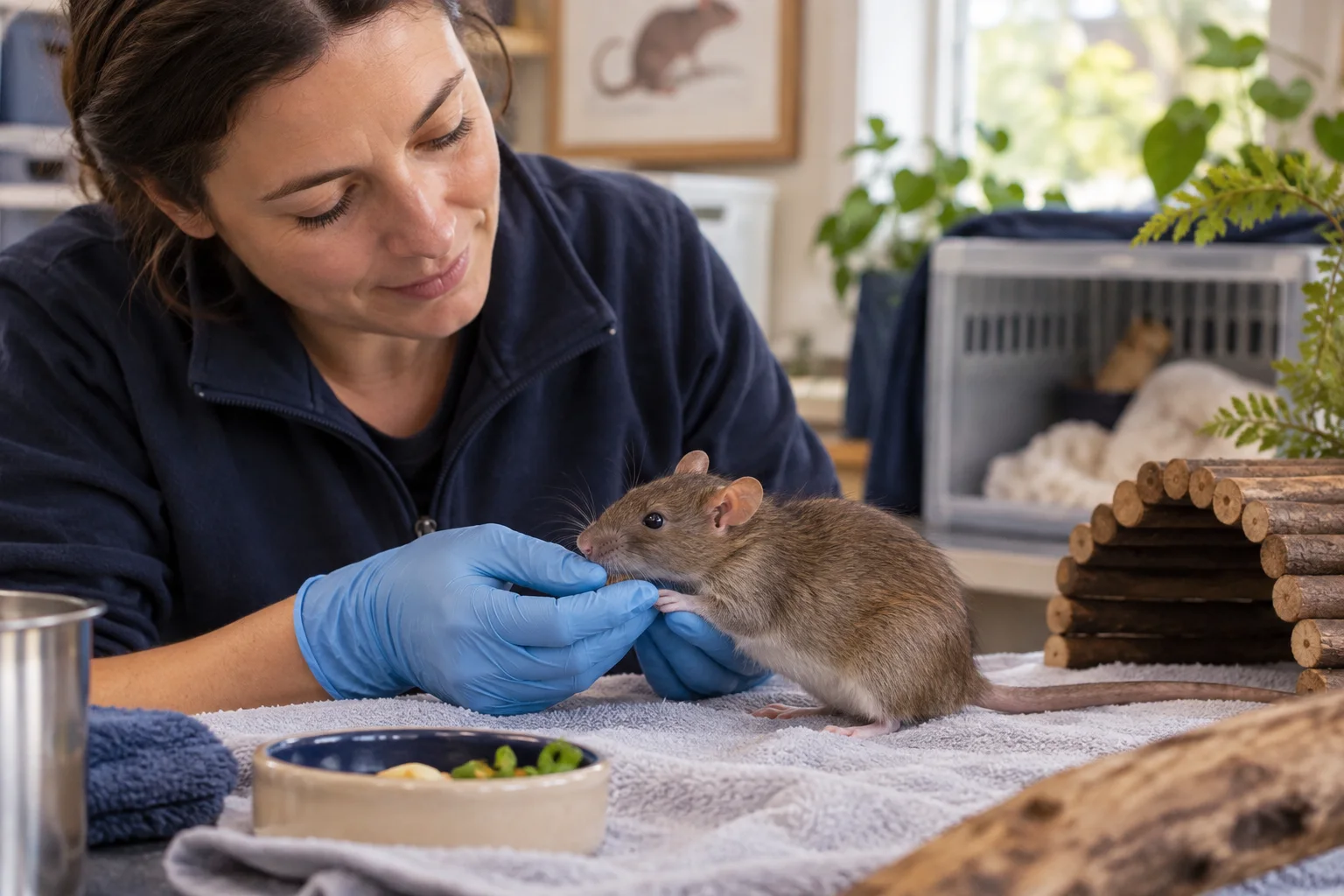
AI-generated illustration
Rehabilitation begins with identification and lawful intake
Wildlife rehabilitators do not simply keep every small mammal someone brings them. Their work is governed by local law, permits, training, facility capacity, species, and the animal's condition. A rat found outdoors may be a native rodent, a commensal Norway or roof rat, or a different small mammal entirely. The legal status and appropriate care can differ. A finder should not assume that a nearby rehabilitator accepts rats or that a service can promise intake before speaking with them.
The first task is therefore low-contact observation. Note where the animal was found, whether it appears injured or orphaned, whether a predator or pet was involved, and whether it is in immediate danger. Take a photograph only if it can be done without approaching or handling the animal. Contact a licensed wildlife rehabilitator, local wildlife agency, or animal-control service for current instructions. Follow their advice about transport, containment, or leaving the animal in place.
Why handling can make things worse
A frightened rodent can bite and can be injured by incorrect handling, overheating, dehydration, unsuitable food, or a container with poor ventilation. Very young animals have needs that are easy to misjudge, and feeding an inappropriate liquid or food can cause aspiration or digestive problems. Do not attempt to syringe-feed, give cow's milk, medicate, bathe, or diagnose a wild rat from online instructions. Do not separate young from a nest simply because they look small unless a qualified authority directs it.
Keep children and pets away. If the animal is in an unsafe place and a professional advises temporary containment, use the method they specify and minimize handling. Do not use glue traps, poison, or improvised traps on an animal you think might need rehabilitation. If a person is bitten or scratched, wash the area promptly and seek appropriate health advice. If a pet catches or mouths the animal, contact a veterinarian, especially if the animal is injured or there may have been a toxin exposure.
Rehabilitators assess condition before treatment
At an authorized facility, the animal may be assessed for species, age, body condition, wounds, dehydration, parasites, neurologic signs, and evidence of a cat or dog encounter. The rehabilitator may provide warmth, quiet, species-appropriate housing, nutrition, fluids, wound care, or veterinary treatment as indicated. The details are not a home recipe; they are adjusted to the animal and delivered under protocols, permits, and professional oversight.
Stress reduction is part of care. Wild animals can be harmed by excessive handling, noise, incompatible companions, and human habituation. A rehabilitator aims to keep the animal stable while preserving behavior that allows a safe outcome. That may lead to release, transfer, long-term placement where lawful, or humane euthanasia when injuries or disease make recovery impossible. A finder cannot reasonably predict the outcome from a single photograph.
Release decisions are biological and legal
Release is not simply opening a box in a convenient park. A rehabilitator considers whether the animal is healthy, independent, able to move and feed normally, and appropriate for release under local rules. Site choice, season, species, disease considerations, and habitat all matter. Moving commensal rats or releasing trapped animals without guidance can be unlawful in some places and can create a problem for another property. It also may not address the original entry point that allowed an animal into a building.
For a rat found inside a home, separate the wildlife question from the building question. Even if a professional handles the animal, the property still needs inspection for food access, shelter, and openings. Coordinate removal with exclusion so another animal does not use the same route. The aim is not to solve a structural infestation by repeatedly transporting animals elsewhere.
Help by giving accurate information
When calling, provide the location, date, approximate size, visible injury, circumstances, contact with a pet, and whether the animal is in a nest, dumpster, road, wall, or living space. Ask whether the organization is licensed for that species and whether it can accept the animal. If it cannot, ask for the correct public agency or referral rather than traveling with the animal from place to place.
A careful finder protects both people and animals by avoiding improvised care. Rehabilitators contribute specialized assessment and treatment when their authority and capacity allow it. Homeowners contribute by making the building less accessible afterward: secure food and waste, repair confirmed entries, and document fresh signs. That division of work respects wildlife care while preventing the next indoor encounter.
Keep the handoff within each service's scope
Wildlife rehabilitation, pest control, and building repair are separate kinds of work. A person authorized to care for a permitted wild animal may not be the person to inspect a roofline or correct a sewer defect, and a pest provider may not be authorized to rehabilitate native wildlife. Ask each service about its actual scope and keep a record of the contact and instructions received.
Do not carry an animal loose or put it in a vehicle passenger area. If a professional authorizes transfer, follow its directions about a secure container, temperature, and destination, then go directly there. If no transfer is authorized, leave the animal undisturbed while the correct service is identified. A clear handoff prevents repeated handling and conflicting advice.