
AI-generated illustration
Keep distance and secure the area
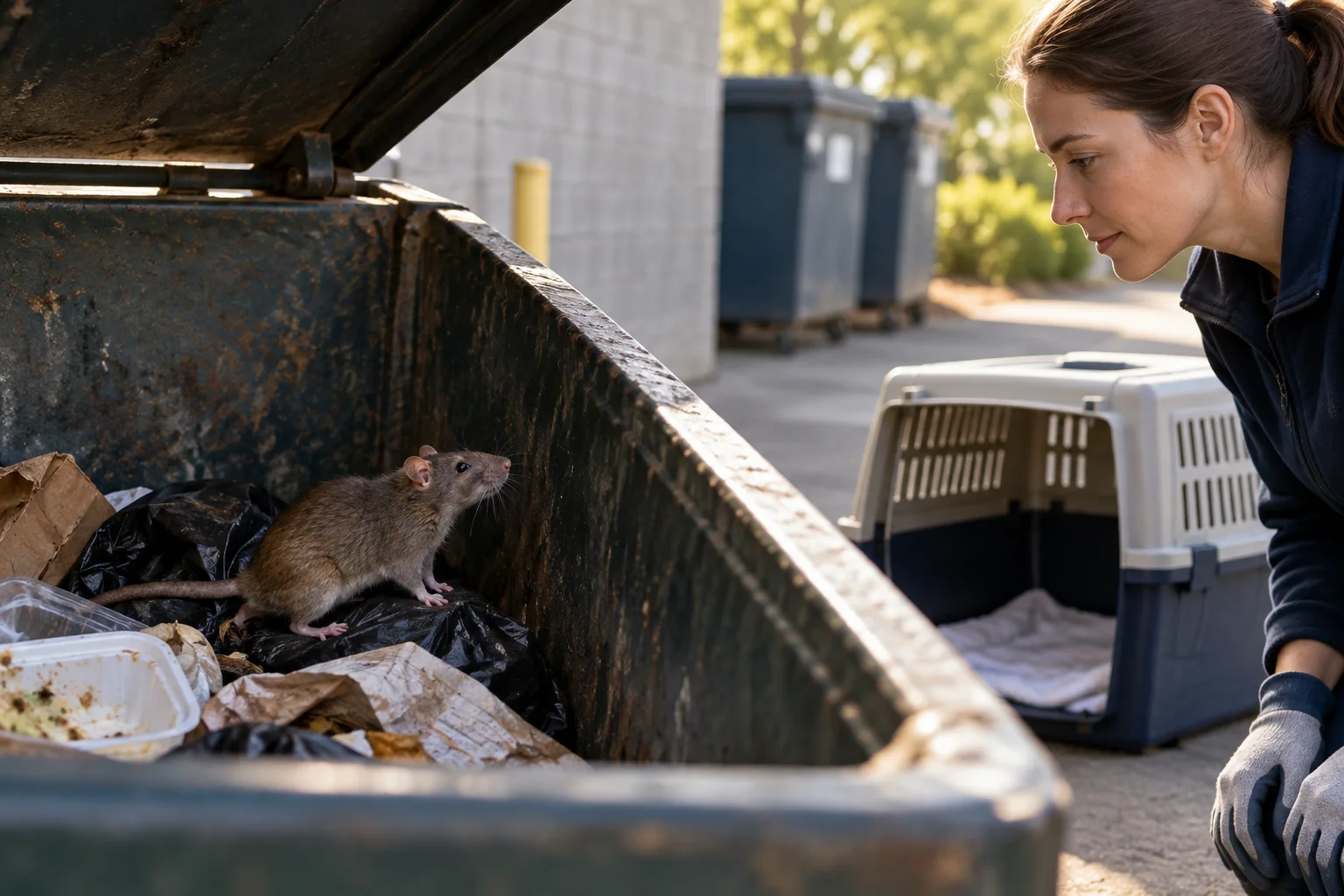
A rat that appears stuck in a dumpster may be frightened, injured, exhausted, or simply unable to climb the smooth interior. Do not lean into the container, climb on it, reach toward the animal, or try to grab it by the tail. Dumpsters have sharp edges, unstable lids, compacted waste, contaminated surfaces, and sometimes mechanical collection hazards. A cornered rodent can bite, and close contact can create an unnecessary exposure risk.
Keep children, pets, and bystanders away. Note the exact dumpster location, whether it belongs to a private business, building, or public facility, and whether collection is scheduled soon. If the container is on private property, contact the owner, manager, or waste provider. If it presents an immediate public-safety concern, use the appropriate local service channel. Do not assume a wildlife rehabilitator, city department, or pest company is universally available or responsible; local systems vary.
Do not turn a rescue into a second hazard
It can be tempting to lower boards, nets, buckets, food, or improvised ramps. These attempts can fall into the container, injure the animal, trap another animal, contaminate the waste stream, or put a person at risk when retrieving them. Do not add poison, chemicals, smoke, water, or adhesive devices. A dumpster is already a contaminated setting, and forcing an animal to move can make handling and eventual cleanup harder.
A trained responder or property representative can assess the container condition and choose an appropriate action. If a service person opens or moves the dumpster, they should account for the animal and work safely around the equipment. Your valuable role is accurate reporting: the animal's condition if visible, the address, access constraints, waste overflow, and whether people or pets can reach the area. Clear information reduces unsafe repeated visits by concerned neighbors.
The dumpster condition is the prevention clue
A stuck rat is also evidence that waste storage may be providing a food source or shelter. Check whether lids close, whether bags or food residue are left beside the container, whether overflow is routine, and whether dense debris or burrows occur around the enclosure. The solution is not simply to remove the one rat. Waste needs a container capacity, collection schedule, cleanup routine, and placement that reduce open food access.
Clean the exterior area according to the property's procedures after the animal issue is resolved. Do not dry sweep rodent droppings or nesting debris. CDC advises wetting rodent-contaminated material with disinfectant, allowing label contact time, and removing it with appropriate precautions. If contamination is extensive or the enclosure includes damaged surfaces, drains, or large burrows, a professional cleanup or maintenance plan may be needed.
Avoid assumptions about species and disease
A rat in a dumpster may look very large because its fur is wet, fluffed, or seen against a confined space. Do not identify it from a distance, and do not treat every small mammal as a commensal rat. Native wildlife can enter waste containers as well. This matters because local wildlife rules and appropriate responses can differ. A photograph taken safely from outside can help a qualified responder assess the animal without direct contact.
If a person is bitten, scratched, or has direct contact with an animal or contaminated material, wash the area promptly and seek appropriate medical advice. If a pet has contact or ingests something from the container, contact a veterinarian. Keep any relevant product information if poison or another material may be involved. Do not wait to identify the species perfectly before getting health guidance for a meaningful exposure.
Make the next incident less likely
Ask the property manager or waste provider to review the container and surrounding conditions after the response. A tight lid, adequate capacity, timely pickup, cleaning, and a clear enclosure can reduce opportunities for rodents. Nearby food waste, pet feeding, bird feeding, fallen fruit, and clutter may also need attention. Repairs to holes around a dumpster pad or building foundation should preserve drainage and access for collection equipment.
The humane practical outcome is fewer animals drawn to the dumpster in the first place. That requires ordinary waste management more than a dramatic rescue. Treat the event as a maintenance report with a location, condition, response, and follow-up date. A property that removes accessible food and shelter is safer for people and animals and less likely to create another trapped-rodent emergency.
Give collection staff the information they need
If collection is imminent, tell the property or waste contact that an animal is visible so staff can evaluate the container before moving it. Do not enter a service area, climb into the dumpster, or try to stop collection equipment yourself. Falls, sharps, shifting waste, and unexpected collection create risks far greater than the benefit of an improvised escape attempt.
After maintenance, inspect the ground around the container as well as the interior. Burrows, chewed openings, loose enclosure panels, or food residue beside a closed bin can keep attracting animals. Record the specific improvement so routine staff can maintain it. A low-contact report protects the person who noticed the animal while giving trained personnel the details needed to choose a safe response.