
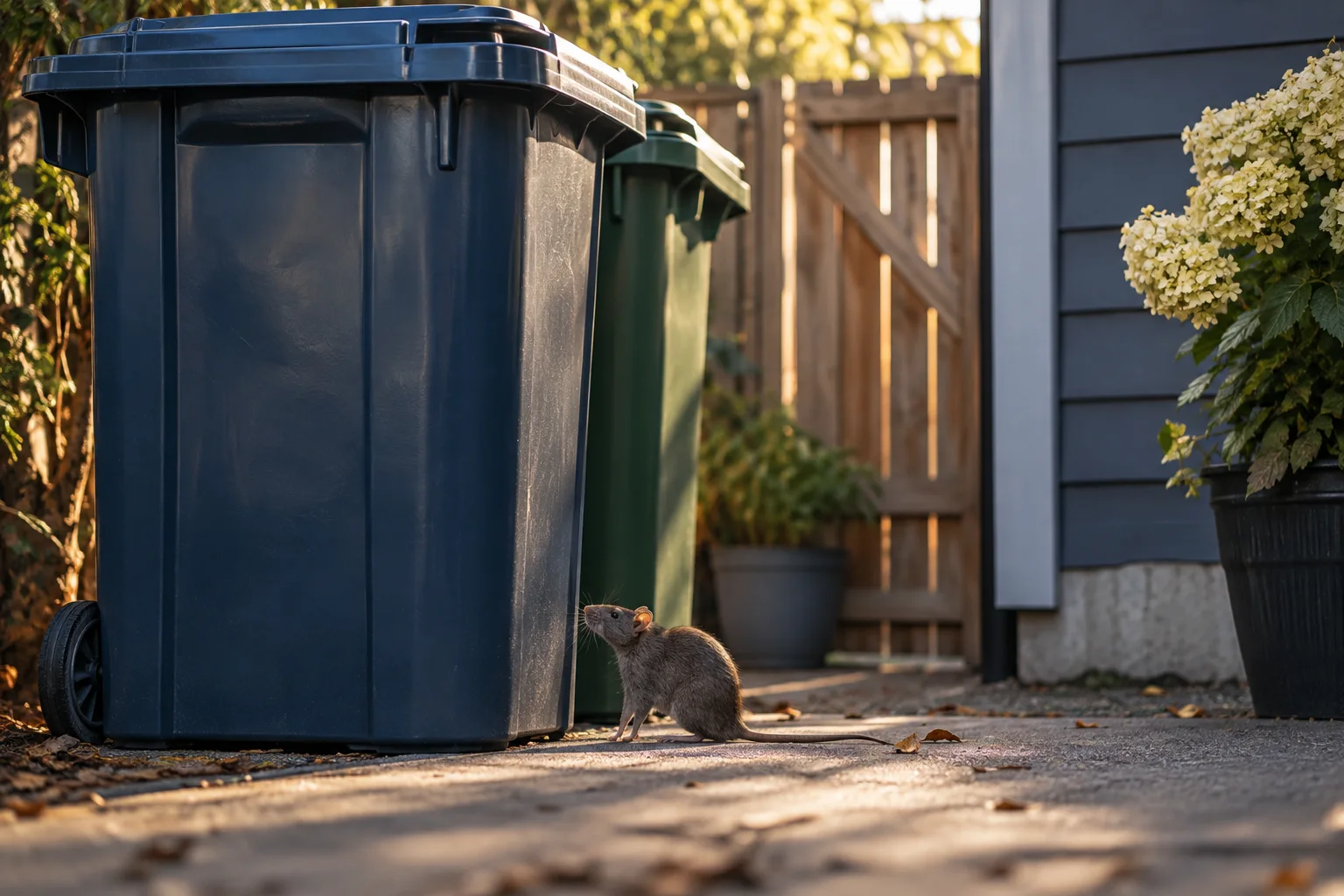
AI-generated illustration
Trash is a food source, not just a nuisance
Rats do not need a dramatic infestation to start using a trash area. A loose lid, grease on the outside of a bin, torn bag, spilled birdseed, or pet-food residue can turn a container into a predictable meal. Once a rat has a reliable food source near the building, it is more likely to explore foundation gaps, garage edges, and roof access routes. Solving the trash problem means managing both the container and the food residue around it.
Start by observing safely at daylight. Check for gnawed lids, holes at the base, torn bags, droppings around the bin, burrows under a nearby structure, and tracks in loose soil. Look under decks, beside compost, and around stacked materials that create shelter near the waste area. Do not reach into a bin where you suspect a rat is present. Photograph the damage and note collection-day patterns. That can reveal whether the issue is a damaged container, a spill after pickup, or a neighbor's unsecured food source.
Use containers rats cannot easily exploit
Use a rigid container with an intact, tight-fitting lid and keep it closed between pickups. UC IPM recommends tight covers and cleaning food residue from garbage receptacles whether they are full or empty. A lid that sits askew, a missing wheel, or a crack at the bottom is a maintenance issue, not something to solve with extra bags piled on top. Contact the waste hauler for replacement or repair if the bin is damaged beyond a secure fit.
Bag waste securely before it goes into the container, and do not leave loose food scraps or bags beside a full bin. Rinse or wipe out grease and food residue when practical, allowing the container to dry before use. Keep the bin on a stable, accessible surface where the lid can close fully. If local collection rules allow a lid lock or weight, choose one that can be removed for service and does not create a hazard for sanitation workers. A clean, working bin is the primary barrier.
Break the feeding routine
Food outside the trash can matters as much as trash inside it. Bring in pet-food bowls after meals, store seed and feed securely, clean grills and outdoor eating areas, and pick up fallen fruit and nuts. Compost needs its own rodent-resistant system; do not assume an open pile with food scraps is separate from a rat problem. If a rat is using the area because of a feeder or spill, replacing a garbage can alone will not stop the visits.
Avoid deliberately feeding wildlife near the house while you are trying to end rodent activity. Food intended for birds, squirrels, feral cats, or other animals can be found by rats as well. Do not scatter poison around a garbage area. It exposes non-target animals, provides no information about the entry route, and can leave a poisoned rodent in an inaccessible place. First make the food source unavailable, then assess whether removal is still necessary.
Remove shelter beside the bins
A bin tucked into dense shrubs, next to a woodpile, or behind stacked construction materials gives rats cover while they approach and retreat. Clear a visible inspection zone around the waste area. Move lumber, unused pots, and stored items away from the building and elevate items that must remain. Trim ground-hugging vegetation so you can see the base of the container and any disturbed soil. This does not require stripping a yard bare; it requires eliminating hidden, permanent runways next to food.
Inspect fences, pipes, retaining walls, and vegetation that connect the trash area to the house. A roof rat may use a vertical or elevated route while a Norway rat may use ground cover and burrows, but either can exploit a cluttered perimeter. If you find a burrow near a bin, do not pour chemicals or water into it. Remove the food and cover, document its location, and seek local professional advice if activity persists. The underlying route needs assessment before a hole is closed.
Use removal tools only for current activity
After the area is cleaned and the container is secured, decide whether signs show an active rat population. Fresh droppings, regular bait removal from an unset trap, repeat sightings, or reopened ground disturbance can justify a monitored removal plan. For indoor or protected structural activity, CDC recommends rat-sized snap traps and advises placing them where rodents travel. A trap should be protected from pets, children, and wildlife and checked every day; a trap left beside an outdoor bin is likely to create a non-target risk.
If poison is considered for a persistent infestation, use only an EPA-registered product exactly as its label directs and keep the station protected. EPA notes that consumer products are sold in bait stations and that pets and wildlife can be harmed by poison directly or through poisoned rodents. For many homes, repairing the bin setup and adding temporary professional monitoring is more sensible than turning a waste area into a pesticide site. Never use loose bait or homemade poison mixtures.
Keep the improvement through collection days
Collection day often exposes a weak point: a bin that stays open too long, loose bags beside the curb, or spilled material left after pickup. Set bags out as close to collection time as local rules allow, return bins promptly, and inspect the pavement or pad afterward. If the hauler leaves a spill, clean it up rather than waiting until the next round. The feeding opportunity may be brief for a person but enough for a rat to learn a reliable schedule.
Recheck the area for a few weeks. The signs that matter are new damage, fresh droppings, bait taken from a monitor, or repeated sighting at the same time. A clean bin will not make every rat in a neighborhood disappear, but it removes the reason for a rat to visit your property night after night. If the same evidence continues after container repair and sanitation, expand the inspection to adjacent food sources and entry points or ask a qualified professional to assess the site.