
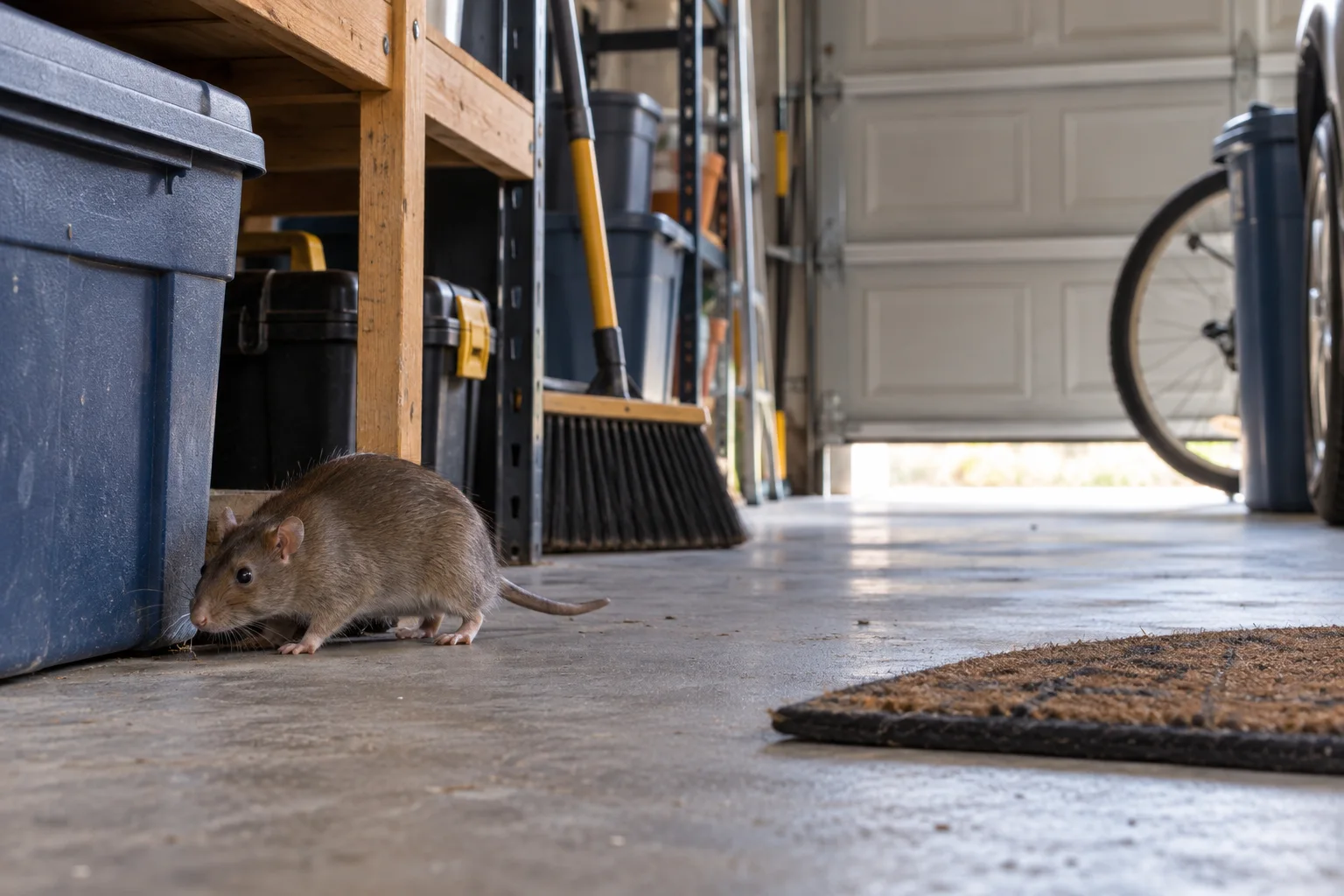
AI-generated illustration
Why garages become rat shelters
A garage can offer exactly what a rat wants: stored feed or birdseed, cardboard, quiet corners, a warm engine, and a door that does not seal tightly at the ground. The space may also connect to the house through utility chases, wall voids, or an interior door. Treat it as part of the building, not a separate shed. A rat seen in the garage is a prompt to check the shared wall and attic paths before it becomes a kitchen or ceiling problem.
Begin with a calm inventory. Look behind shelves, beside the water heater, near the garage-door track, around stored pet food, in wall corners, and under workbenches. Fresh droppings, gnawing, greasy rub marks, shredded material, and chewed packages provide more useful information than one glimpse of movement. Do not sweep or vacuum dry waste. Photograph evidence, then clear only enough clutter to inspect safely. An organized garage is easier to protect and makes fresh activity obvious.
Take away food and nesting material
Move feed, seed, dry food, and snacks into sturdy containers with tight lids, and clean spilled food from shelves and floors. UC IPM recommends tight garbage covers and limiting outdoor pet feeding; the same logic applies to a garage. Cardboard boxes are easy nesting and chewing material, especially when they sit undisturbed against a wall. Use sealed plastic or metal containers for stored goods where appropriate, and discard boxes that are contaminated with rodent waste rather than transferring that material deeper into the garage.
Do not rely on fragrance, mothballs, ultrasonic devices, or a cat to change a garage that still supplies food and cover. A rat can ignore an unpleasant odor if it has a protected route and regular meals. Remove old piles of fabric, paper, and loose packing material, but avoid stirring up droppings. If there are only a few accessible droppings, use disinfectant and the wet cleanup method. Heavy contamination, a long-vacant garage, or nests in a car engine calls for a more controlled cleanup plan.
Find the door and wall gaps
Close the garage door in daylight and look for light along the bottom, side seals, and corners. Check whether the bottom seal touches the slab evenly, whether the door sits squarely in its track, and whether an exterior pedestrian door has a working sweep. Also inspect openings around pipes, cables, conduits, vents, and the garage-to-house wall. A garage-door adjustment may be more important than a dozen traps if the same ground-level gap opens each night.
Repair durable exterior defects once removal is underway and you know the route is not trapping animals inside. UC IPM notes that rats can chew soft materials such as foam, plastic, wood, and caulk. Use fitted metal, proper screening, or a well-made building repair where appropriate. Do not fill a required vent, drainage point, or utility opening without understanding its job. For a damaged door, a door technician can correct alignment and replace the seal; for utilities, use the relevant trade professional.
Use monitored traps in protected locations
For confirmed indoor rats, CDC recommends rat-sized traditional snap traps. Place them in sheltered paths where signs are present, such as along a wall behind stored items, but only after moving items enough to check the trap every day. Keep traps inaccessible to children and pets, and do not place one loosely under a vehicle or in a place where it can be disturbed. Put the baited end close to the wall so the trap makes a T shape with the wall, as CDC advises.
A garage rat may be cautious when the space is suddenly cleared or rearranged. Pre-bait an unset trap until bait is taken, then set it. Do not use glue or live traps; CDC advises against them because a scared rodent may urinate. Do not place poison where a pet, child, or wildlife can reach it, and do not use it as the first response to a garage with obvious entry gaps. Check active traps daily and disinfect and dispose of a catch using CDC's wet cleanup guidance.
Protect vehicles and work areas
Rats may nest in a vehicle engine bay or chew wiring, particularly in a vehicle that stays parked for long periods. Before starting a seldom-used vehicle, inspect under the hood and around the air intake for nesting material. CDC advises ventilating and inspecting a vehicle before cleaning it, and it warns against vacuuming or high-pressure spraying rodent waste before disinfecting it. If wiring, filters, or mechanical components may be affected, use a qualified mechanic rather than pulling material from an area you cannot see clearly.
Keep vehicle interiors free of food and do not use a parked car as extra storage for feed, snacks, or garbage. UC IPM mentions a weighted car cover as one way to discourage access to the engine, but it works only as part of wider rat management. A car cover cannot fix a garage door gap or secure an open bag of birdseed. After removal and repair, keep the floor visible beneath vehicles so you can spot new tracks, droppings, or nesting material quickly.
Verify the garage stays quiet
Continue monitoring until you have a week with no captures and no fresh signs. Check the door seal in the morning, inspect protected corners, and compare with the photos or notes you took at the start. If bait disappears from an unset trap, new droppings appear, or a repair is gnawed, there is still an active route. Reopen the inspection from outside to inside instead of moving a trap at random.
Call a professional if rats are entering through a shared wall, ceiling, utility chase, or inaccessible void; if there is significant waste; or if a vehicle's wiring may be damaged. The garage should finish as a clean, inspectable storage area with sealed food, secure garbage, a tight door, and no hidden animal route into the home. That outcome is more valuable than catching a rat in a cluttered garage while conditions remain unchanged.