
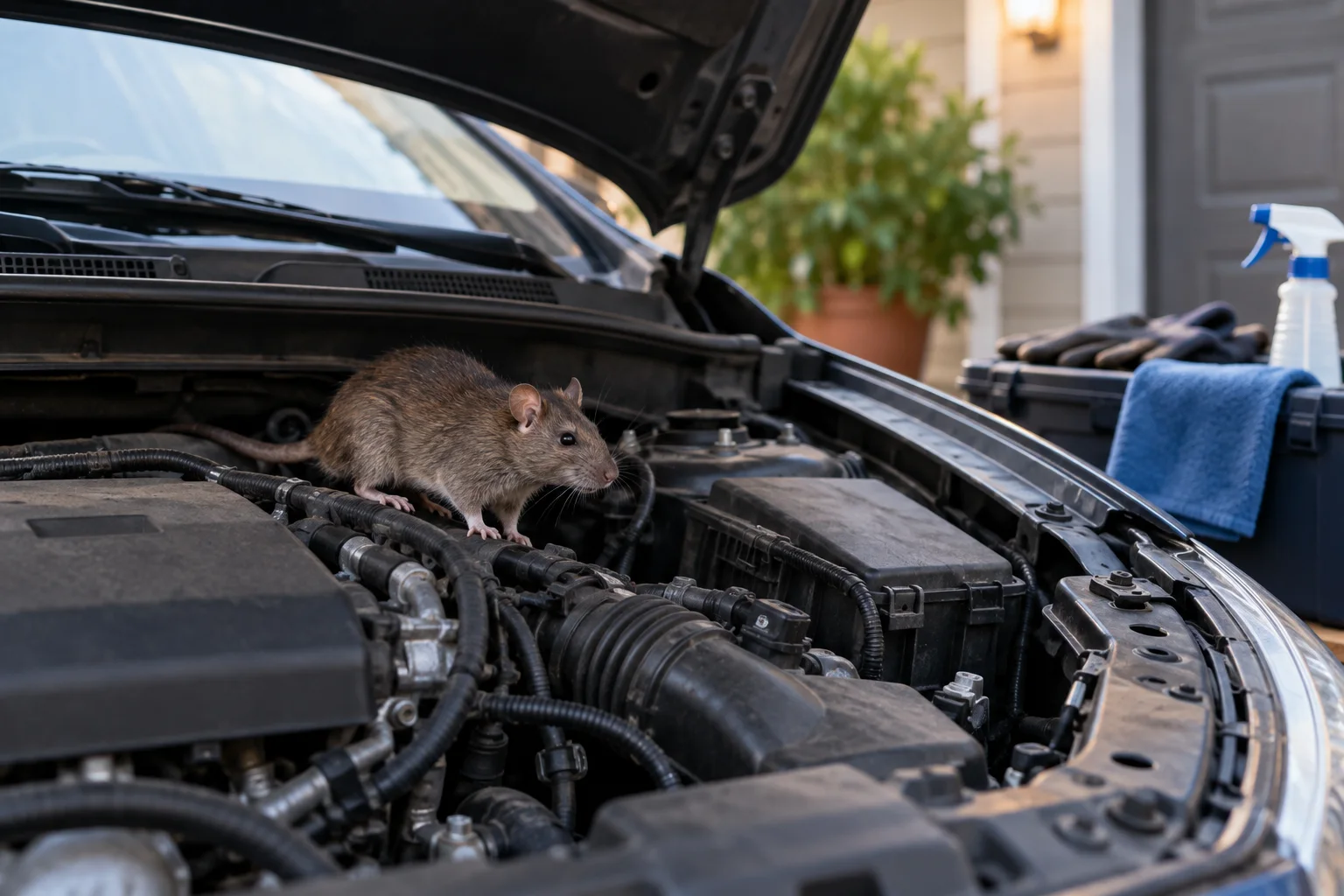
AI-generated illustration
Treat a car as a safety issue first
A rat in or around a vehicle can create more than an unpleasant smell. Nesting material can obstruct an air intake, and gnawed wiring or hoses can affect how the vehicle operates. Do not start a car that has been sitting for a long time before looking under the hood and around the passenger compartment. Check for shredded material, droppings, chewed insulation, food wrappers, or an unusual odor. If you see obvious wiring damage, do not assume the vehicle is safe to drive.
Park in a well-ventilated place before inspecting. CDC advises airing out a vehicle that has been idle and checking the air intakes and filters before starting the engine. Open the hood, doors, and trunk so the space can ventilate. Keep the engine off and cool. Follow the vehicle manufacturer's safety guidance; have a mechanic handle battery isolation, electrical components, and any hybrid or electric-vehicle system. A mechanic is the right resource when you cannot clearly identify what has been chewed or moved.
Find the evidence without spreading it
Do not vacuum or use a high-pressure spray on droppings, urine, or nests before they have been disinfected. That can turn localized waste into airborne material or spread it through the cabin. Wear plastic or rubber gloves and a long-sleeved shirt. From a safe view, check seats, floor mats, trunk compartments, glove box, spare-tire wells, the engine bay, and the air intake. Take photos of nesting material or chewed parts before removal, especially if you may need a mechanic or insurance documentation.
Not every chewed object is proof of a rat. Squirrels and mice can also enter vehicle areas, and normal aging can resemble gnawing from a distance. What matters is a pattern: fresh waste plus shredded nesting material, bite marks, or repeated food damage. Keep food and scented trash out of the vehicle while you investigate. A forgotten snack, dog treat, or takeout bag can be the reason an otherwise well-maintained car becomes part of a rodent's nightly route.
Clean the vehicle with disinfectant first
CDC recommends spraying rodent waste and nesting material until fully soaked with disinfectant, then letting it sit for five minutes or for the time specified on the product label. Use paper towels to pick up the material and put it into the garbage. After the waste is removed, clean the rest of the affected hard surfaces with disinfectant. Wash gloved hands before removing gloves and wash bare hands with soap and warm water afterward. Do not mix bleach with other cleaners.
If nesting material is in the air intake system, CDC advises removing the material and the air filter, discarding the material, and fitting a replacement filter. For an extensive interior contamination, a strong odor, or material deep in a dash or ventilation system, seek a professional who understands both the cleanup and the vehicle. Do not keep running the heater or air conditioner in an attempt to blow out a smell. That can spread debris through parts of the system you cannot see.
Have wiring and mechanical parts checked
Rodents can chew the insulation on engine wiring, and UC IPM notes that this damage can cause expensive malfunctions. Visual inspection is useful, but it is not a substitute for a qualified mechanic if wires, hoses, belts, insulation, or filters look damaged. Tell the mechanic what you found and share photographs. Ask whether the vehicle should remain parked until the repair is completed, whether diagnostic testing is needed, and whether an air filter or other component should be replaced.
Do not wrap a visibly damaged wire with household tape and assume the job is finished. Modern vehicles contain sensors, high-temperature areas, and electrical circuits that need a correct repair. Also avoid chemical repellents in an engine compartment unless they are designed and labeled for that use. An odor product may contaminate components or merely mask evidence. The practical goal is a mechanically safe car, not an engine bay that smells different.
Fix the parking-area conditions
A car is usually visited because the parking space offers shelter, food, or a travel route. Inspect the garage, driveway edge, carport, nearby trash, compost, pet-food area, birdseed, and vegetation. Secure food and feed, clean spills, close garbage containers, and remove clutter near the vehicle. If the car sits in a garage, check the door seal and openings around utility lines. A vehicle repair alone will not stop repeat nesting if the garage remains an easy rodent shelter.
UC IPM notes that a weighted car cover can discourage access to the engine when it touches the ground and seals around the vehicle. Consider that only after the surrounding food and shelter have been addressed; a cover is not a trap and cannot repair an open garage. For outdoor parking, do not leave boxes, tarps, or stored items beneath the car. Keep the ground around it visible so fresh droppings, tracks, or nesting material are easier to notice.
Monitor and know when to ask for help
For several weeks, inspect the same areas before driving a car that was recently affected. New material in the engine bay, repeat droppings, chewed food, or recurring odor means there is still an active source nearby. Use protected monitoring in the garage or building where evidence supports it, not loose traps under a vehicle. CDC recommends rat-sized snap traps in places rodents travel, kept out of reach of children and pets and checked daily.
Call a pest professional when activity continues despite cleaning the parking area, when the route is inside a garage wall or ceiling, or when a vehicle cannot be inspected safely. Call a mechanic promptly for possible damage to wiring, air intake components, or any system that could affect driving. The result you want is simple: a clean engine bay and interior, a safe vehicle, and a parking area that no longer supplies rodents with food, cover, or an easy way inside.