
AI-generated illustration
Make the vehicle safe before inspecting
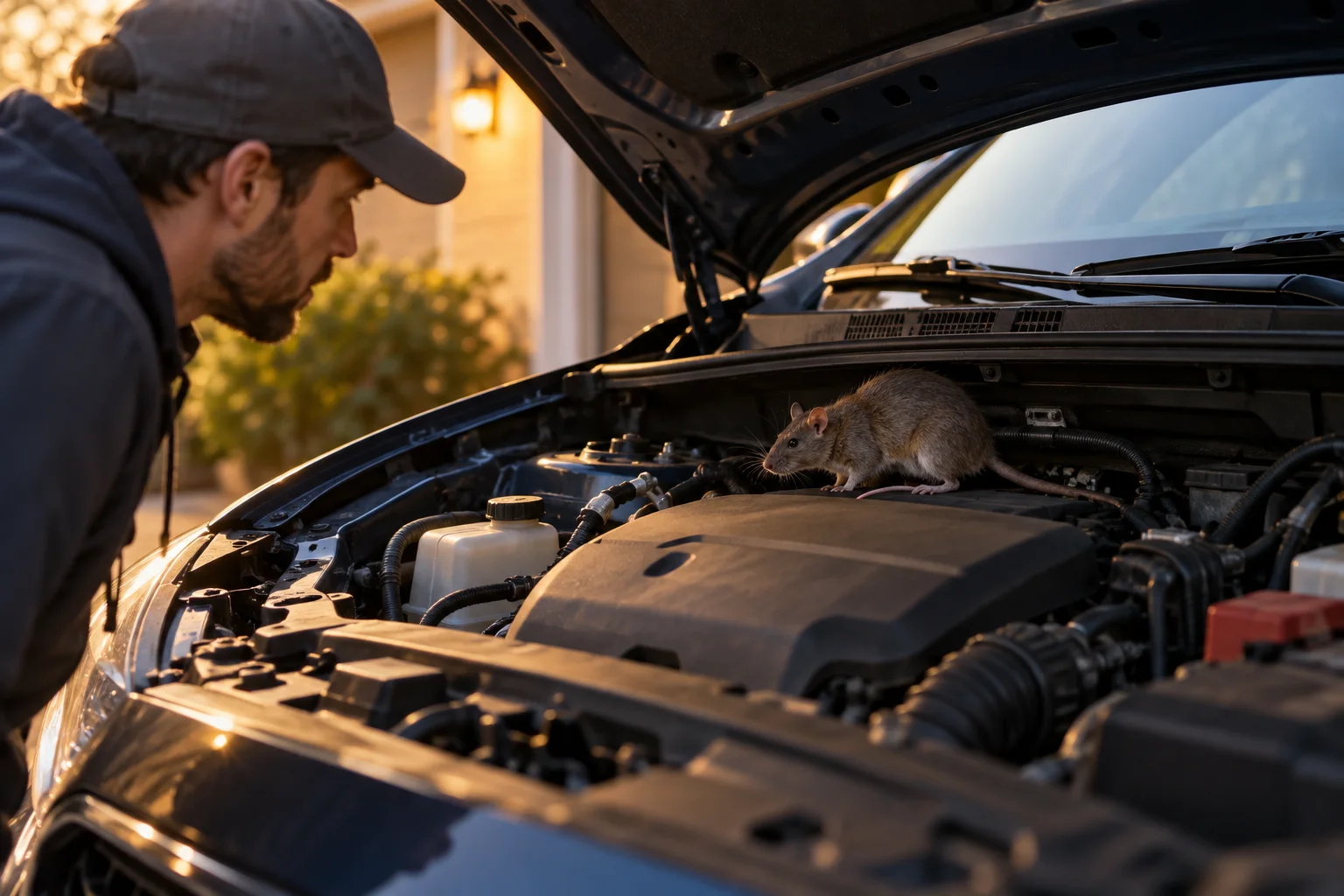
A rat in a car is different from a rat in a garage because the engine compartment, wiring, belts, hot surfaces, and fuel system create hazards that a homeowner should not treat as a pest-control project. Park the vehicle in a safe, well-lit place, switch the engine off, allow it to cool completely, and keep children and pets away while you look for signs. Do not start the vehicle merely to see whether an animal will leave. Do not reach into the engine compartment, disconnect wiring, remove covers, use flame or smoke, or put chemicals into the vehicle. Look from accessible positions for nesting material, acorns or pet food, droppings, chewed insulation, a sharp odor, or warning lights that appeared after the car was parked. Photograph anything visible without touching it. If wiring, hoses, insulation, or fuel-system components appear damaged, arrange an inspection by a qualified mechanic before driving. Rodent damage can affect vehicle operation, and a visual check cannot establish that an electrical or fuel-related system is safe.
Separate vehicle evidence from the parking-area problem
The car may be a shelter or feeding place, but it is rarely the whole reason rats are present. Note where it is normally parked, how long it sits, whether it is near garbage, pet feeding, vegetation, woodpiles, a carport, or a wall, and whether other vehicles or equipment show signs. Inspect the ground around the tires and the nearby parking area for droppings, burrows, fallen fruit, spilled birdseed, or clutter that gives rodents cover. UC IPM notes that rats can gnaw engine-wire insulation and that vehicle protection works best when the surrounding landscape and neighborhood conditions are also addressed. That means a mechanic can repair the car while a separate inspection addresses the routes and resources around it. Moving the car to a different spot may help observation, but it does not eliminate the reason rodents were using the original location. Keep the parking area tidy enough to inspect rather than adding repellents and hoping the odor solves the problem.
Use prevention that does not alter the vehicle
For a car that must remain parked outdoors or in a carport, UC IPM describes a weighted cover that touches the ground all around the vehicle as one way to discourage access to the engine compartment. Follow the cover maker's use and fire-safety directions, and never place a cover over a hot engine. A cover is one layer of prevention, not proof that rats are gone. Remove food, wrappers, pet-feed bags, and nesting material from the cabin and nearby storage. Keep garbage lids closed, correct standing water, and reduce dense cover against the parking area. Avoid relying on mothballs, loose poison, ultrasonic devices, engine-bay sprays, or improvised wiring barriers. These products can create health, fire, corrosion, warranty, or animal-exposure issues and do not repair the conditions attracting rodents. Do not use a running vehicle, exhaust, or any gas-producing device to force an animal out; that is dangerous and not a valid control method.
Let a mechanic assess damage before travel
A mechanic should inspect any suspected gnawing on wire insulation, hoses, belts, vacuum lines, air-intake parts, or sound-deadening material. Tell the shop where you found signs and whether the car has had warning lights, starting trouble, unusual smells, or visible nesting. That information can guide a targeted inspection without asking the technician to guess. Do not patch wire insulation with household tape, reconnect a chewed wire, or clear a warning light as a substitute for repair. Do not probe fuel lines or electrical connectors. The proper repair depends on the affected circuit or component, and a vehicle may have damage that is not visible from the top of the engine bay. Ask for the findings and repair recommendations in writing, including whether there is any evidence of active nesting. Save photographs and invoices. They help track a recurring problem and can be useful if you later need to discuss a warranty or insurance question with the relevant provider.
Remove accessible contamination carefully
After mechanical concerns are addressed, clean visible droppings or nesting material using the same caution used for other rodent-contaminated areas. CDC advises against sweeping or vacuuming dry rodent waste because it can stir contaminated particles into the air. Put on gloves, wet the material with an appropriate disinfectant, allow the stated contact time, and remove it with disposable towels. Clean hard accessible surfaces according to product directions and wash hands after removing gloves. Do not spray liquids into wiring harnesses, air intakes, electrical boxes, or mechanical components. If contamination is inside the dashboard, ventilation system, insulation, or another inaccessible area, discuss the appropriate cleaning method with the repair shop rather than flooding the space with cleaner or fragrance. A persistent odor may indicate material that has not been removed, but it can also have another automotive cause. A deodorizer should not be used to hide a condition that needs inspection.
Verify prevention at the next parking cycle
For the next several days or parking cycles, check the ground around the vehicle, the cover if used, and accessible areas under the hood only after the engine is off and cool. Record fresh droppings, displaced material, new chew marks, or unusual vehicle behavior. No new signs after cleaning and changes to the parking area is encouraging; continued signs mean the exterior conditions need another review. Check garages and carports for door gaps, storage clutter, food sources, and wall penetrations that may let rats travel toward the vehicle. Protected, accessible monitoring in the surrounding structure can be more useful than placing a device under the hood, where it may damage the car or be impossible to check safely. The durable outcome is a mechanically sound vehicle and a parking environment that no longer offers easy food, cover, water, or a protected route to the engine compartment.