
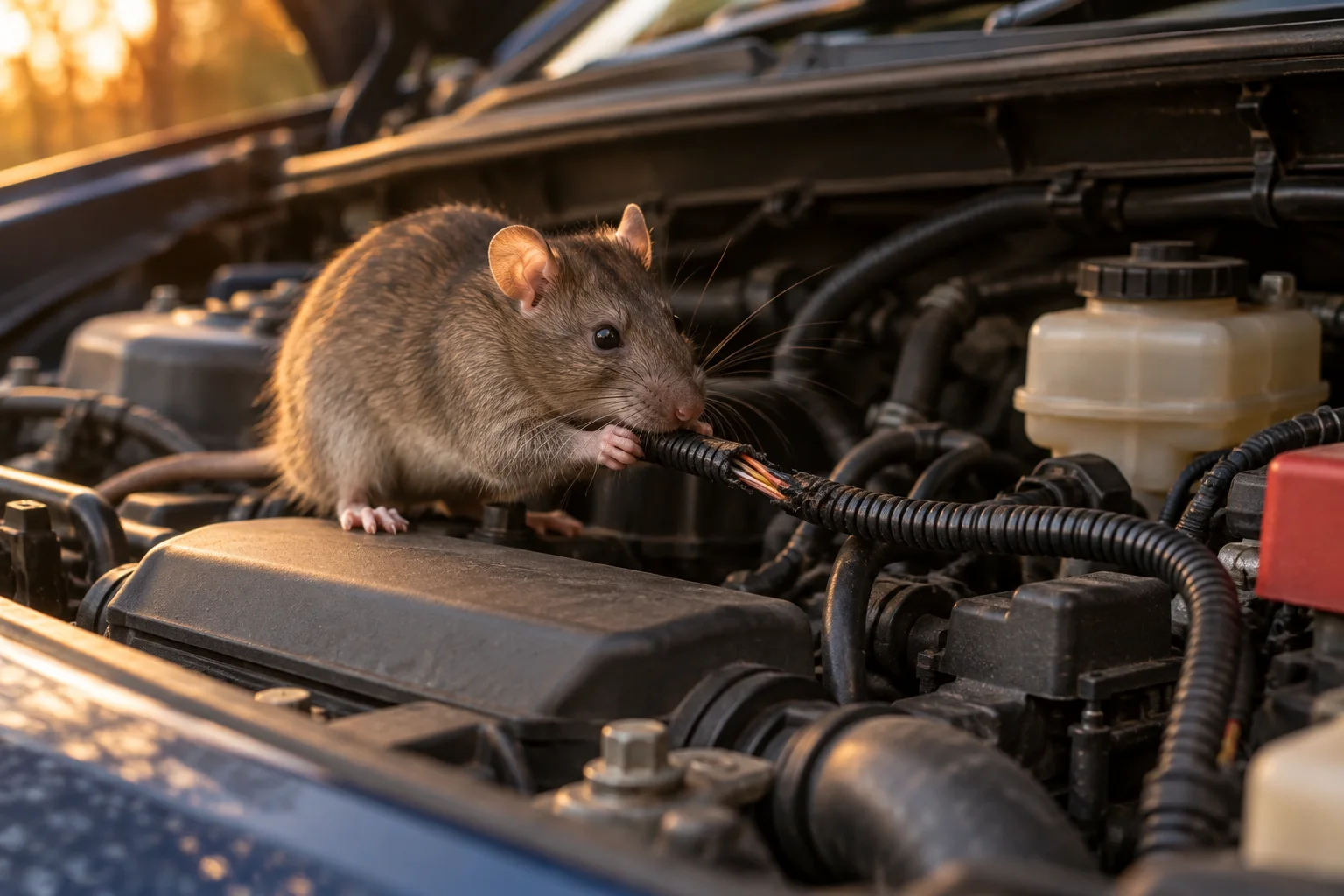
AI-generated illustration
Wiring damage is a real mechanical concern
Rats can chew the insulation on engine wiring. UC IPM notes that rodent damage to vehicle wiring can cause significant malfunctions and expensive repairs. A vehicle may show warning lights, fail to start, run irregularly, or have no obvious symptom at all. Do not treat a chewed wire as a cosmetic problem. Wiring carries electrical current, controls safety and engine systems, and may sit beside hot components. A visual suspicion should lead to a qualified mechanic's assessment.
Start by looking for a pattern rather than reaching into the engine bay. Shredded insulation, leaves, fabric, droppings, food remnants, or a nest can indicate recent rodent use. Take photographs before cleanup, especially if you may need a repair estimate or insurance documentation. A broken-looking sheath does not always prove a rat caused it, and a rat may have damaged an unseen section. The mechanic can diagnose the circuit and decide whether the vehicle should be driven.
Inspect an idle vehicle carefully
Before starting a car that has sat unused, open the hood and check the engine bay, air intake, cowl area, and visible wiring. CDC advises airing out a vehicle that has been idle, checking air intakes and filters, and inspecting before starting. Keep your hands away from moving parts and do not climb into the engine compartment. Follow the vehicle manual's safety information, and if you need to work near cables, have a professional handle battery and electrical precautions.
Do not use compressed air, a leaf blower, or a vacuum on visible droppings or nest material before disinfecting it. CDC warns against vacuuming or high-pressure spraying rodent waste before it is wet and disinfected. Those shortcuts can spread contamination into the cabin or your breathing zone. If the material is deep in the dashboard, ducts, or a tightly packed engine area, do not pull it apart blindly. A mechanic or qualified cleaner can access it without damaging parts.
Clean nests before assessing repairs
Wear gloves and spray rodent waste or nesting material with disinfectant until fully wet. CDC advises allowing five minutes of contact time, or following the product label, before using paper towels to collect it. Clean the affected hard surfaces afterward and wash hands after removing gloves. If nesting material is in an air intake, CDC advises removing it and the air filter and installing a replacement filter. This is important because a nest can block airflow as well as hide damage.
A strong odor, extensive waste, or material in a ventilation system may require professional cleaning. Do not try to cover the smell with fragrance products or run the heater at maximum output. Those actions do not remove the nest and may distribute debris. Save photographs and, if possible, ask the shop to retain damaged components until you understand repair and insurance requirements. Clear records help distinguish a mechanical repair from a routine cleaning.
Let a mechanic repair the circuit
A technician can inspect wire harnesses, connectors, hoses, filters, and components that may be damaged near the visible nest. Ask for an itemized estimate and a plain-language description of what was found. Do not wrap an exposed wire with household tape and assume it is repaired; the right repair depends on voltage, location, heat exposure, and the manufacturer's specification. Driving with an unresolved electrical fault can create reliability and safety problems that are separate from the rodent issue.
If you are considering an insurance claim, call your insurer and ask how your policy handles rodent damage before authorizing work based on expected coverage. Keep diagnostic reports and receipts. Coverage, deductibles, exclusions, and claim procedures differ, so no article can promise payment. Mechanical safety comes first: follow the shop's advice on towing, driving, and repair timing even while an insurer is reviewing the claim.
Remove the conditions around the car
The car is usually one part of a larger route. Inspect the garage, carport, driveway edge, trash area, birdseed, pet-food storage, compost, and dense vegetation nearby. Remove food from the vehicle, secure feed and garbage, and clean spills. If the car is kept in a garage, check the door seal and gaps around utilities. A repaired harness can be damaged again if the same rat has a warm, quiet engine bay and easy food nearby.
UC IPM mentions a weighted car cover as a possible deterrent when it reaches the ground around the vehicle. Use it only as a supplement to sanitation and exclusion, not as a substitute. Keep the ground under and around the car visible, avoid leaving boxes or tarps below it, and inspect the engine bay periodically. A cover cannot prevent a rat that is nesting inside an open garage wall or feeding from an unsecured bag nearby.
Use monitored removal where evidence leads
If fresh evidence continues after the area is cleaned, address rats in the building or protected route, not under the car. CDC recommends rat-sized traditional snap traps placed where signs show travel, kept out of reach of children and pets, and checked daily. Do not set loose traps in a driveway or carport where non-target animals can encounter them. Do not use glue or live traps; CDC advises against them because frightened rodents can urinate.
Call a pest professional when activity appears in an inaccessible wall, ceiling, roofline, or shared garage. Call a mechanic when wiring or safety systems may be affected. The completed job is a safe vehicle and a parking area with no food, nesting cover, or access route that rewards rodents. Recheck for new material before driving a recently affected car and after any long period of storage.