
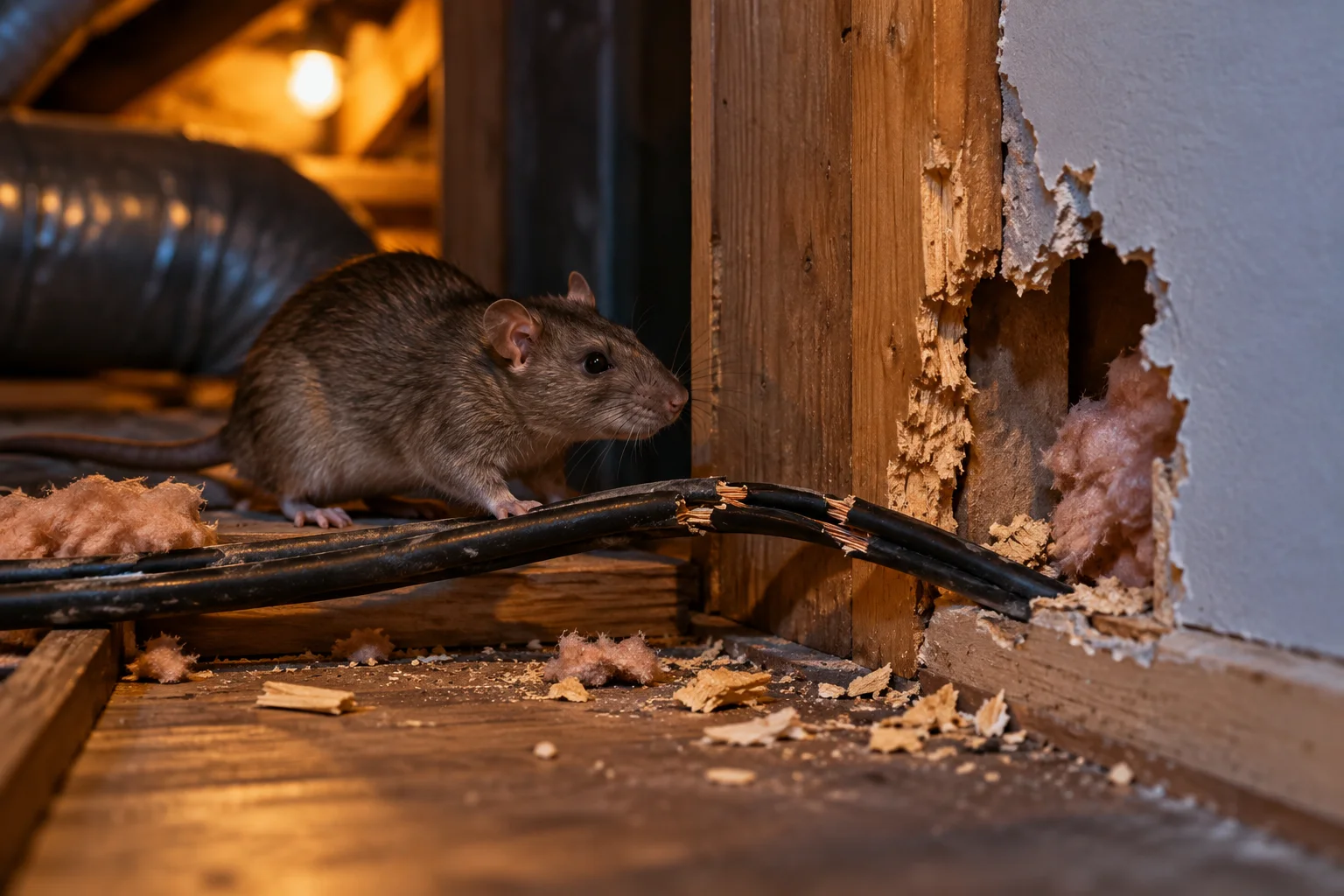
AI-generated illustration
Start with a damage map
Rat damage repairs are easier to plan after the active routes are understood. Make a room-by-room list of gnawed materials, stains, droppings, disturbed insulation, damaged screens, loose vent covers, and gaps at doors or service penetrations. Photograph each item before it is cleaned or covered. Separate damage that affects a building system from damage that is mainly cosmetic. A chewed storage carton is different from wire insulation, a duct connection, or a roof opening. Also distinguish a suspected entry point from a confirmed one. A rubbed mark or a gap near a pipe deserves inspection, but it does not prove that every rat used it. The map helps a repair professional see patterns: damage in a garage may connect to a wall chase, while attic activity may connect to vegetation, roof transitions, or a failed vent screen. It also prevents one obvious hole from receiving all the attention while smaller routes remain open.
Address electrical and mechanical damage first
Do not treat chewed wire insulation as a cleanup detail. A damaged cord, cable, appliance lead, or branch circuit should be evaluated by a qualified electrician or the appropriate service technician before it is put back into use. Avoid wrapping exposed conductors with tape and assuming the problem is solved. The same caution applies to damaged flexible ducts, condensate lines, appliance wiring, and combustion-air or exhaust components. These systems have safety requirements that a rodent-exclusion patch cannot replace. If water staining or urine has affected insulation near electrical equipment, identify the source before installing new material. Take clear photographs and keep service reports. They are useful when coordinating the pest-control work with repair trades and when documenting the condition for an insurer, landlord, or property manager. A good scope says what will be repaired, who is responsible for it, and how the repaired system will be checked.
Use materials that match the assembly
Rats can chew or pull apart many common patch materials. UC IPM recommends sealing openings larger than one-quarter inch with materials such as steel wool, wire screen, or sheet metal, while the repair still has to suit its location. A door-bottom gap may need a durable sweep and correctly adjusted door; a torn vent screen needs corrosion-resistant screening securely fastened to a sound frame; a gap around masonry or siding may need metal backing plus an exterior-grade repair appropriate to the surface. Do not use foam as the only barrier where it can be reached and chewed. Do not fill drainage paths, weep holes, appliance vents, or other required openings merely because they look like access. The goal is a sound building detail that denies entry without changing ventilation, drainage, or equipment clearances. Where the surrounding wood, fascia, trim, or flashing has failed, repair that defect instead of attaching a small patch over unstable material.
Coordinate sealing with active removal
A repair can be timed badly. Closing every visible opening while rats are still using an interior void may leave an animal in a wall, ceiling, or attic, and closing only one opening can redirect activity to another route. The right sequence depends on where activity is occurring and whether the work includes monitored trapping or a professionally designed exclusion device. Ask the provider to identify the suspected primary routes, the openings that will remain under observation, and the point at which permanent closures will be installed. A one-way device is not a casual add-on: it must be fitted to a confirmed route, protected from weather and interference, and removed when the work is complete. Do not seal from a ladder, roof edge, crawl space, or electrical chase unless the work can be performed safely. A repair plan that acknowledges inaccessible areas is more credible than one that claims to have closed every possible opening without inspection.
Clean and replace affected materials appropriately
Repair work often follows cleanup. CDC advises against sweeping or vacuuming dry rodent droppings, urine, or nesting material because it can stir contaminated particles into the air. Wet the material with an appropriate disinfectant, allow the stated contact time, and wipe it up using disposable materials and gloves. Hard, nonporous surfaces may be cleaned and disinfected according to product directions. Heavily contaminated insulation, cardboard, or nesting material may need removal rather than surface treatment. Do not conceal a contaminated void with fresh drywall or new insulation before deciding whether removal is needed. When insulation is replaced, preserve required clearances around fixtures and ventilation paths. A repair estimate should state whether cleanup, disposal, insulation replacement, drywall finishing, and repainting are included; those are different tasks. Odor treatment alone is not evidence that a dead animal, nesting material, or contaminated porous material has been removed.
Inspect the completed work
After repairs, walk the exterior and the accessible interior with the work record in hand. Check that vent covers, door sweeps, flashing, screens, and service-penetration repairs are firmly attached and do not block their intended functions. Review photographs of areas that were difficult to reach. Then monitor the original sign locations for new droppings, fresh gnawing, or sounds. Several checks without new evidence are more meaningful than one quiet night. If activity continues, reassess the route before adding more patching. It may be a missed opening, a defect in the repair, or an unrelated route from a neighboring structure, vegetation, garbage area, or utility path. Keep the inspection notes and invoices. Rat repair is successful when the building is still weather-resistant and functional, its active access routes are closed, contaminated materials have been handled appropriately, and follow-up supports the conclusion that activity has stopped.