
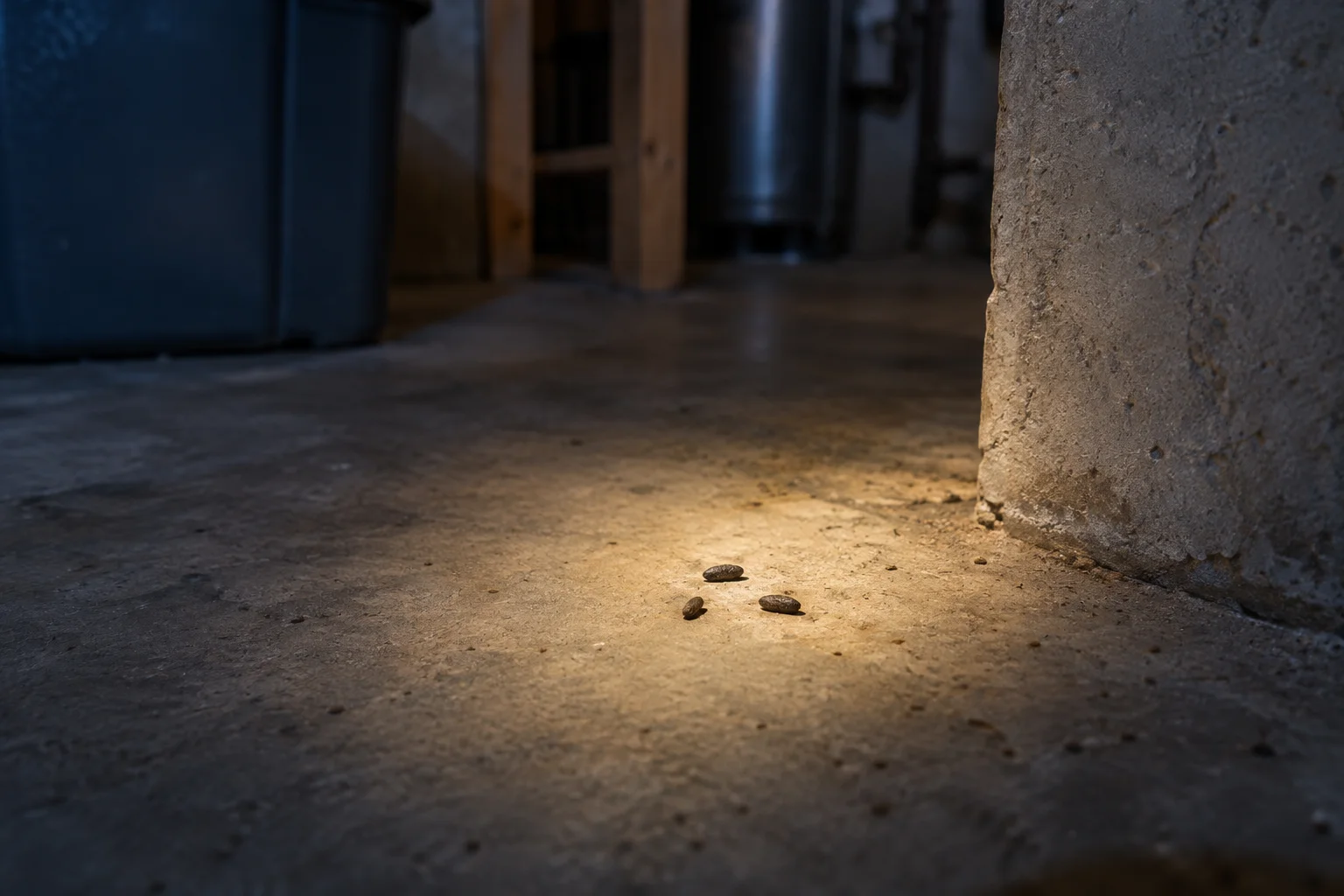
AI-generated illustration
Do not identify a health risk from droppings alone
An attic can collect waste from rodents, birds, bats, insects, or a domestic animal that found a way inside. Shape and location may suggest a source, but a homeowner should not diagnose the species, age of the contamination, or a disease by looking at feces. That distinction matters because cleanup methods and legal considerations can differ. A few pellets beside a utility penetration call for a different response than heavy contamination in insulation or evidence of birds or bats using a protected roost. Take clear photographs from a safe distance, note where the material appears, and inspect accessible routes. Do not touch unknown waste bare-handed or scrape it dry to get a closer look.
The first safe assumption is simple: unknown animal waste may be contaminated, and dry disturbance makes cleanup harder. Keep children and pets out of the attic, do not store uncovered belongings there, and postpone work that will blow dust through the space. If the animal is still active, focus first on identification and a plan for removal. Cleaning an attic while animals are continuing to use it only duplicates the job and can close a route at the wrong time. Wildlife professionals, pest professionals, or local wildlife agencies can advise when the signs suggest an animal that should not be handled casually.
Prepare the space before cleaning
For ordinary rodent contamination in a home or outbuilding, CDC recommends opening doors and windows for 30 minutes before cleaning, then leaving the area during that airing period. Wear rubber or plastic gloves. Gather a household disinfectant labeled as a disinfectant, or use the appropriate CDC bleach solution, paper towels, sealable bags, and a covered disposal container. Plan the route in and out of the attic so you will not carry contaminated material across bedrooms or down stairs. Put down protection only if it can be removed without stirring dust, and use stable walking boards rather than stepping through ceiling insulation or drywall.
Avoid a routine vacuum, broom, leaf blower, or compressed air. CDC specifically advises against vacuuming or sweeping rodent urine, droppings, and nesting materials dry because this can put small contaminated particles into the air. Do not assume a dust mask makes that process safe. Heavy infestation, a long-vacant building, contamination of exposed insulation, or a work assignment that requires respiratory protection belongs with trained professionals who can meet the relevant safety requirements. The right response is to reduce disturbance, not to turn an attic into a cloud of dust.
Use the wet method for confirmed rodent waste
When the waste is confirmed or reasonably believed to be rodent material and the amount is small enough for household cleanup, wet it thoroughly with disinfectant. CDC says to let it soak for five minutes or for the product label’s stated contact time, then use paper towels to pick it up. Place the used towels in a covered garbage container, disinfect nearby hard surfaces, wash gloved hands before removing the gloves, and wash bare hands afterward. The material should be wet enough to pick up without crumbling or becoming airborne. Follow the product label for compatibility with the surface; some materials can be damaged by bleach.
Do not turn the wet method into a universal recipe for every animal source. Bird and bat waste, for example, may need different precautions and local advice. If you cannot reliably identify the source, call a qualified wildlife or cleanup professional rather than applying rodent guidance to every pile in an attic. The homeowner’s part is still valuable: prevent access, photograph evidence, keep the area undisturbed, and communicate exactly what was found. That avoids a false choice between ignoring unknown waste and attempting a cleanup method that does not fit the situation.
Deal with nests, carcasses, and insulation carefully
A dead rodent or nest should be sprayed with disinfectant and allowed to soak before it is handled. CDC recommends placing the material in a plastic bag, sealing it, placing that bag into a second bag, and putting it into a covered garbage container as local rules permit. Used traps can be included in the bag, or a traditional snap trap can be disinfected and reused according to CDC’s instructions. Do not pick up remains with a bare hand, and do not use an attic hatch as a place to shake contaminated material loose.
Exposed insulation contaminated with rodent urine or droppings may need to be bagged for removal. CDC advises placing it into plastic bags; the challenge in an attic is moving it without disturbing surrounding contamination or falling through the ceiling. Extensive soiling, a strong odor, wet insulation, damaged wiring, or material inside inaccessible cavities calls for professional cleanup. Ask whether the work includes controlled removal, inspection for damaged electrical or ventilation components, and a plan for replacing insulation if needed. Replacing insulation without closing the entry route simply creates fresh nesting material for the next animal.
Find the route before final repairs
Attic waste is evidence of a pathway, not a complete diagnosis. Inspect roofline vents, gable vents, soffits, eaves, damaged screens, cable and pipe penetrations, attic access panels, and gaps where siding meets the roof. Also look for exterior vegetation, fences, or stored materials that connect cover to an upper opening. Photograph the defect before repair. If the animal is still present, coordinate removal before sealing the final route so it is not trapped in a wall or ceiling void.
Use a repair that keeps the building feature working. Vents need airflow; roof components need drainage; electrical and plumbing penetrations need appropriate protection. UC IPM notes that rats can chew through soft materials such as foam, plastic, wood, and caulk, so a durable barrier or proper construction repair is often needed. A roofer, electrician, HVAC technician, or exclusion professional should assess any feature whose purpose is unclear. Do not cover a functioning vent with solid material simply because it looks like an animal opening.
Protect stored belongings and prevent a repeat
Cardboard boxes contaminated with rodent waste are usually better discarded than carried through the house. Hard plastic, glass, or metal containers can be disinfected after the waste has been safely removed. CDC says clothing, bedding, and stuffed items that may be contaminated can be laundered with hot water and detergent, then dried on a high setting or in sunlight. Keep stored goods in sealed containers after cleanup and leave an inspection path around the attic access rather than building a hidden pile over the repaired area.
The prevention work belongs at ground level too. Secure garbage, pet food, birdseed, and other food sources; remove fallen fruit; avoid outdoor pet feeding; and reduce dense cover tight against the house. Recheck the attic after the repair, especially after storms or roof work. Fresh material in the same location means the route is still active or another route was missed. A clean attic is not only one with less visible waste; it is a dry, accessible space with sound vents, intact screens, durable repairs, and no continuing animal access.