
AI-generated illustration
Start by deciding whether the rat is accessible
A dead rat in an open garage, basement, shed, or accessible attic can usually be handled with a deliberate cleanup process. A carcass behind a finished wall, under fixed flooring, near electrical equipment, in ductwork, or in a tight unsafe space is different. Do not break open a wall, reach near exposed wiring, or enter an unstable area just to retrieve it. First identify the exact location if you can, note whether there is surrounding waste or nesting material, and decide whether access is safe.
Keep children and pets away from the area while you plan cleanup. Do not touch the carcass with bare hands, dry sweep nearby droppings, or use a household vacuum on rodent material. CDC’s cleanup guidance treats a dead rodent, nest, droppings, and urine as materials to wet and remove carefully. The objective is not to react quickly with whatever product is nearby; it is to limit contact and avoid stirring contaminated dust.
Prepare the room before cleanup
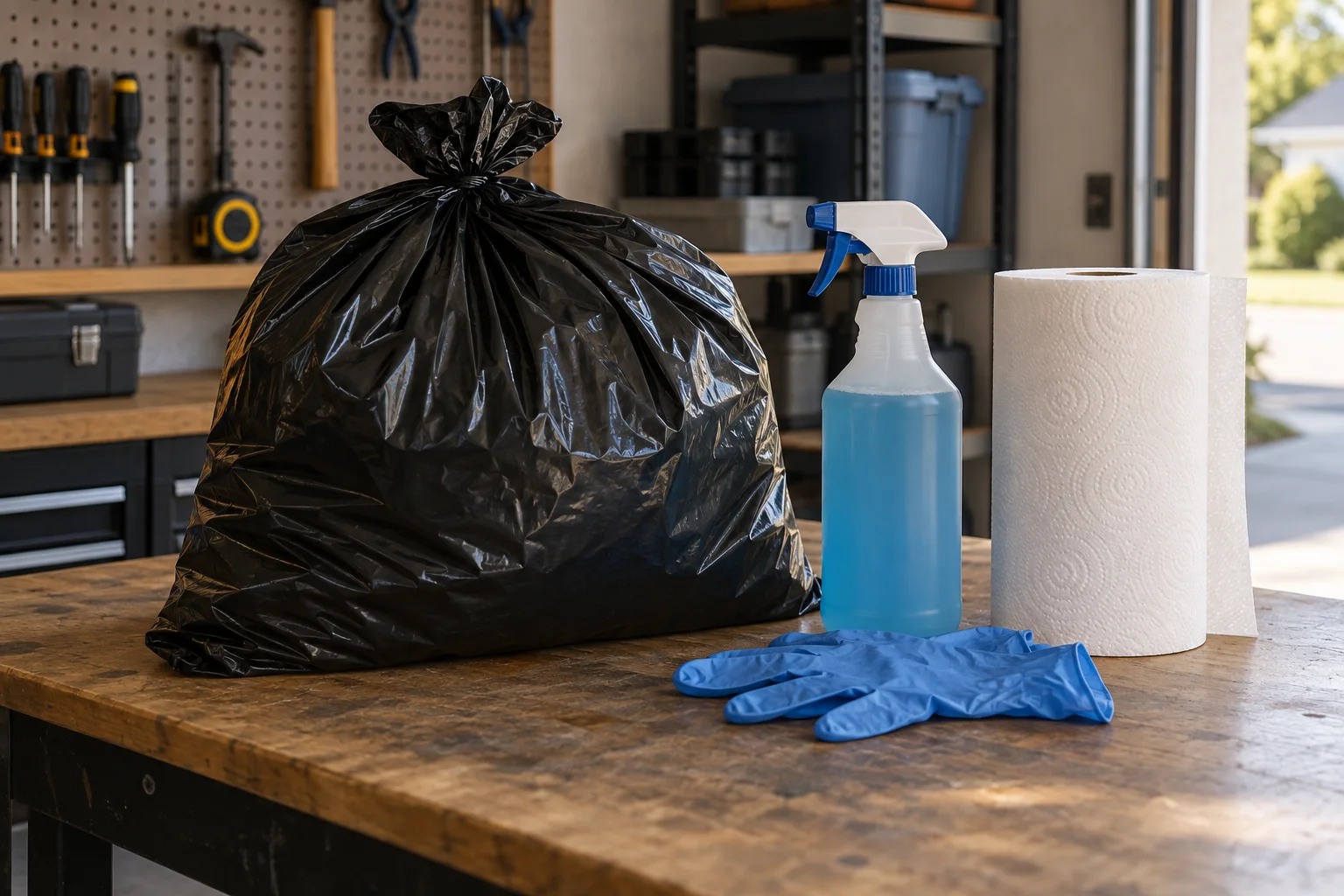
For a home, shed, or other enclosed space, CDC advises opening doors and windows for ventilation before cleanup and leaving the area during that period. Once it has aired, put on rubber or plastic gloves and gather the needed materials before approaching the carcass. Keep the work area organized so you do not need to walk through the room with contaminated gloves looking for a bag or disinfectant.
Read and follow the disinfectant label. CDC says to spray the dead rodent, nest, and surrounding area with disinfectant and let it soak for the label’s contact time or for five minutes as directed in its cleanup guidance. Do not mix cleaning products or substitute a strong odor for a proper wet-cleaning process. If the area contains extensive contamination, wet insulation, a large nest, or damaged building materials, pause and seek help rather than expanding a small cleanup task into a difficult renovation.
Bag and dispose of the carcass carefully
After the carcass and nearby material are wet, place the rat and any used disposable cleanup materials into a plastic bag. CDC instructs homeowners to tie the bag closed, place it into a second plastic bag, seal that bag, and put it in a covered garbage can that is emptied regularly. It also advises contacting the state health department for other disposal information if needed. Follow local rules where they differ, especially for multifamily properties or places with special waste requirements.
Wash gloved hands with soap and water or disinfectant before removing the gloves, then wash bare hands with soap and warm water. If a trap was used and will be reused, CDC provides separate disinfection directions for traditional snap traps. Do not carry a contaminated trap through food-preparation areas, set it down on a clean counter, or reuse it before it has been cleaned and dried. Treat every item that contacted the carcass as part of the cleanup task.
Clean the surrounding evidence
A carcass is often not the only sign of a rat problem. Check the nearby space for droppings, urine, nesting material, and food contamination, but do not dry sweep or vacuum them. Wet the material with disinfectant, allow the stated contact time, then remove it with paper towels or other suitable tools. Clean hard surfaces according to the disinfectant directions. This gives you a clearer view of whether the rat died alone, was caught on an active route, or was part of a larger indoor activity pattern.
Porous materials require more judgment. CDC advises that exposed insulation contaminated with urine and droppings be bagged for removal. Cardboard with visible contamination is usually not worth saving, while hard plastic, glass, and metal containers may be disinfected. Do not treat odor alone as a map of the whole problem. Document where the carcass and material were found, then look for the entry route and current signs before deciding whether additional cleaning or repairs are necessary.
Call a professional for inaccessible or complex cases
A professional is appropriate when the carcass is in a wall cavity, ceiling, duct, electrical area, or another place that cannot be reached safely. CDC advises using professionals experienced with rodent access to heating and cooling systems when rodents have reached ducts. A pest professional, contractor, electrician, or duct specialist may each have a different role depending on the location. Ask who will remove the carcass, clean accessible contamination, repair the opening, and verify the result before work begins.
Do not pour chemicals through a wall, run a fan into a suspected cavity, or drill exploratory holes at random to chase an odor. These attempts can spread contamination, damage finishes, or leave an access route open. A persistent odor may have causes other than a carcass, so a diagnosis should be based on location and evidence. The right approach is controlled access when warranted, followed by cleanup and repair, rather than covering the symptom with fragrance.
Find out how the rat got inside
Removal is not the final step. Inspect the route around the room and the exterior of the building: door sweeps, garage edges, foundation gaps, vents, pipe and cable penetrations, roofline features, and nearby food or shelter conditions. CDC recommends sealing gaps and holes around common rodent-entry points with materials suited to the size and feature. A dead rat may be evidence of an old event, but an open route remains a future problem until it is corrected.
Take a dated photograph of the repair and monitor the same area for fresh droppings, gnawing, or disturbed material. If the rat was found in a trap, assess why it was there and whether other traps or signs show continued activity. A safe cleanup protects the immediate space; exclusion, sanitation, and follow-up protect the house afterward. The goal is an accessible area that is clean, dry, and free of fresh rat evidence, not merely a carcass that is out of sight.