
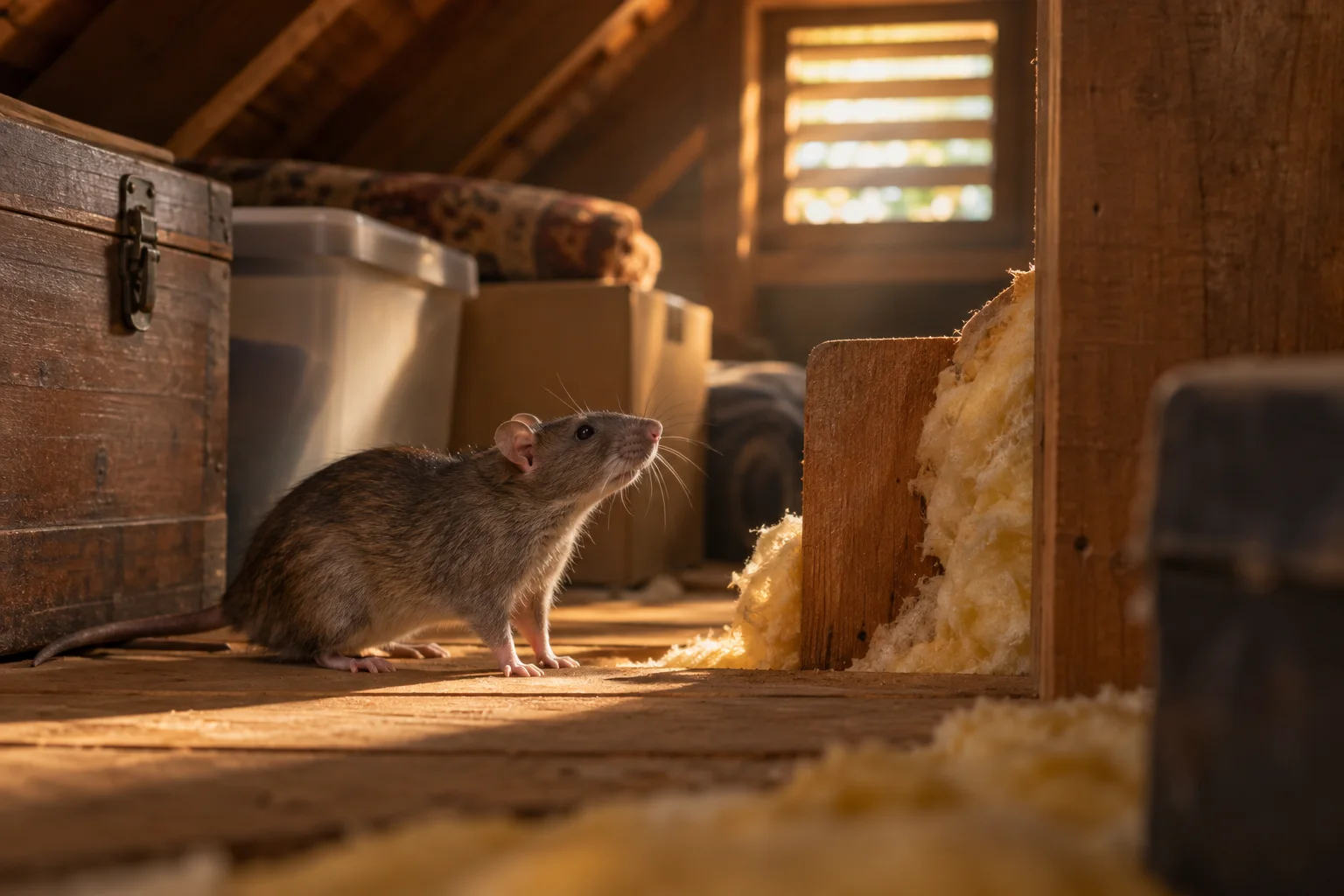
AI-generated illustration
Indoor death has several possible causes
A dead rat in a home does not reveal one certain story. It may have been caught in a trap, injured, sick, confined after a route changed, or exposed to a pesticide. A carcass in a wall may also have entered and died there without any action by the homeowner. Avoid confident guesses based only on odor or location. The practical tasks are to identify whether the animal is accessible, remove it without exposing people or pets, and determine whether an entry route or active rat problem remains.
A persistent odor, flies, a pet focused on one spot, or a trap that is no longer visible can be clues, but none precisely identifies a location. Record when the odor began and which room is affected. Check safe, accessible spaces first: behind storage, near trap locations, beneath accessible sinks, in garages, and around attic access. Do not cut into a wall or crawl into a tight void simply because the odor seems strongest there.
Do not search by causing building damage
Sound and odor travel through framing, ducts, and gaps, so the source may not be directly behind the spot where it is noticed. Inspect the exterior and accessible routes for a hole, damaged vent, or evidence of current activity. A carcass near a building system has its own risks. Do not reach through sharp openings, disturb wiring, or remove duct components without the relevant professional. A pest professional can help locate a rodent, but a contractor, electrician, HVAC technician, or plumber may be needed for safe access.
Avoid ozone generators, smoke, loose powders, or strong fragrances as a substitute for finding a carcass. These do not remove the source, can complicate later inspection, and may expose people and pets to chemicals. If the source is inaccessible and the odor is the only evidence, ask for a methodical inspection plan that includes how a finish will be opened, how the animal will be removed, and who will make the building repair afterward.
Remove an accessible dead rat with the wet method
CDC recommends wearing rubber or plastic gloves, spraying a dead rodent, nest, and surrounding area with disinfectant, and letting it soak for five minutes or the time specified by the disinfectant label. Place the rat and any nesting material or used trap in a plastic bag, seal it, then put it in a second sealed bag before disposal in a covered garbage container. This method reduces direct contact and disturbance of contaminated material.
Wash gloved hands before taking off gloves, then wash bare hands with soap and warm water. Do not sweep or vacuum surrounding droppings dry. Wet them first with disinfectant and wipe them up with paper towels. Keep children and pets out of the area until it is clean. If fleas may be present, CDC notes that insect repellent on clothing, shoes, and hands can reduce flea bites while picking up rodents and nests; follow the product label.
A dead rat can reveal an active route
Finding one carcass does not mean the property is clear. Look for fresh droppings, new gnawing, nest material, bait taken from an unset trap, or an exterior hole near the location. CDC recommends trapping until there are no more rodents, and it uses a week with no captures or fresh signs as a useful milestone. If a dead rat is in an attic or wall, look for roofline, vent, eave, or utility openings instead of assuming it simply appeared there.
Do not immediately seal the nearest gap if other rats may still be inside. A planned removal and exclusion sequence reduces the chance of creating another inaccessible carcass. Traditional rat-sized snap traps in protected, accessible locations give a checkable outcome for confirmed indoor activity. Do not use glue or live traps; CDC advises against them because trapped rodents can become frightened and urinate.
Be cautious with poison and inaccessible spaces
A poisoned rat can die in a wall, attic, crawl space, or other place that is difficult to reach. EPA also warns that rodenticides can expose pets and wildlife, including through poisoned rodents. This is one reason to avoid treating poison as the automatic answer to a noise or odor. If a persistent infestation requires a bait decision, use an EPA-registered product exactly as labeled, protect access, and make carcass monitoring part of the plan.
If a rat dies in an air duct, electrical area, heating system, or behind fixed building material, do not try to dismantle equipment without professional advice. CDC recommends professional help when rodents have accessed heating and cooling ventilation systems. The repair should resolve the access route and any contaminated material, then restore safe system operation. A dead animal should not be left as an excuse to skip the broader inspection.
Prevent a repeat
Once the carcass is removed and no active activity remains, repair verified entry points around doors, vents, utility lines, foundations, and roof features. Keep food and garbage secured, remove clutter and dense cover near the house, and inspect the affected route after storms or repairs. UC IPM identifies sanitation, exclusion, and population control as the core pieces of rat management.
If odor or new signs persist after an accessible removal, do not keep adding deodorizer. Reassess the route and obtain professional help for a hidden source or missed entry point. The end result should be a clean, accessible space with no fresh rodent evidence and no open path that lets another rat enter and die indoors.