
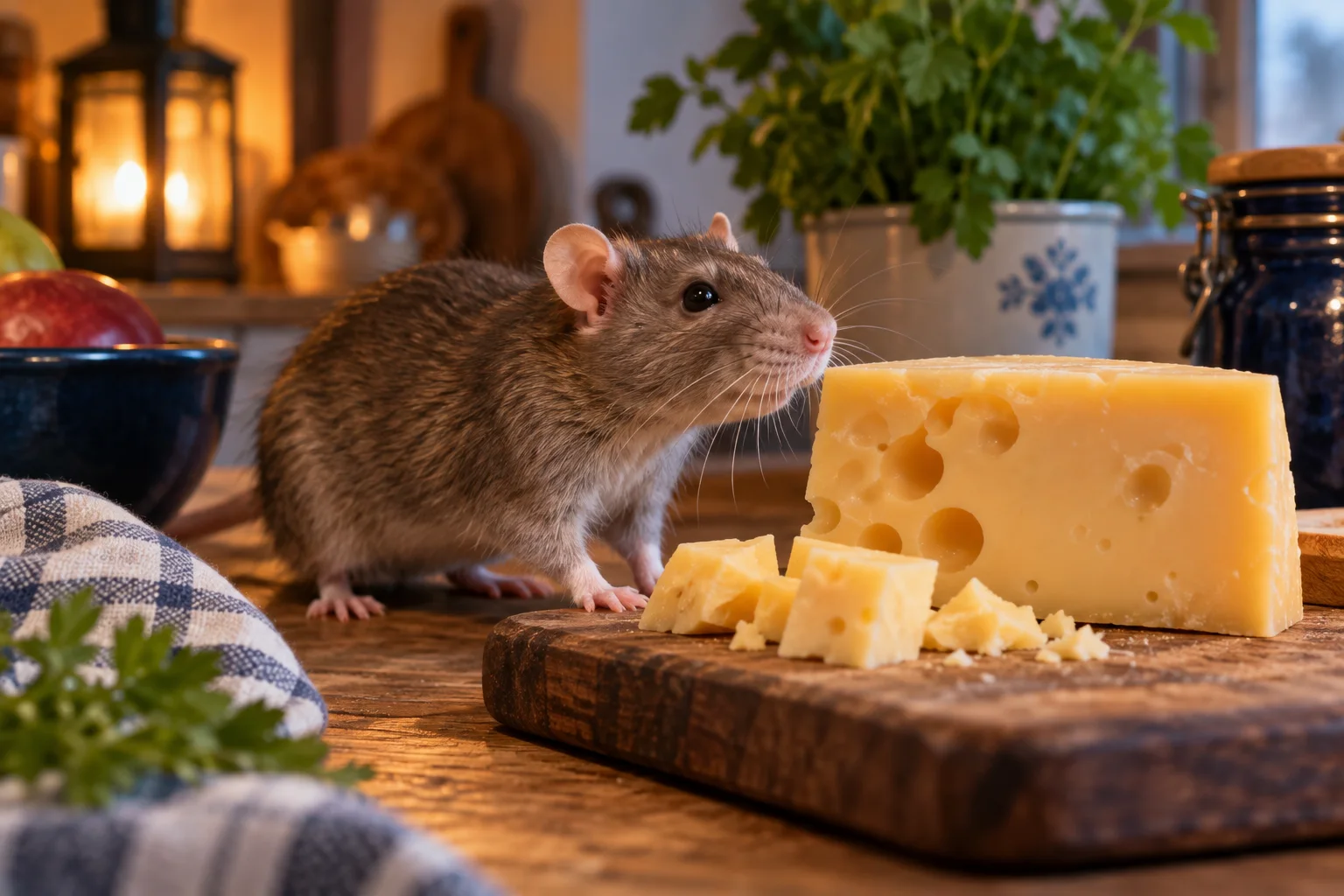
AI-generated illustration
Cheese is not a special rat food
Rats may eat cheese if it is available, just as they eat many other foods. But a rat problem is not explained by a cartoon preference, and cheese is not automatically the most effective trap bait. UC IPM describes rats as consuming a wide variety of foods and identifies fruits, nuts, animal feed, garbage, and household foods among relevant resources. What matters most is the food the rat already knows and the protected route it uses to reach it.
A refrigerator sighting or a chewed cheese wrapper is evidence to investigate, not a reason to set a giant cheese-covered trap in the middle of the kitchen. Check for food storage gaps, crumbs behind appliances, pet food, garbage, and wall or utility openings. A rat that finds regular food will not need to take an unfamiliar bait. Sanitation makes a trap easier to interpret because it removes competing food sources.
Follow the existing food pattern
Look at what has been disturbed: fruit from a tree, birdseed, dry pet food, cereal, garbage, or food left in a car. The best bait decision starts with this evidence, while avoiding the mistake of putting the same food in a large loose pile. Store the broader food source in sealed containers and clean spills. Then use a small bait on the trap's bait pan so the rat must interact with the trigger rather than feed beside it.
CDC lists chunky peanut butter or mutton fat as examples for snap-trap bait and says a small amount should be used. UC IPM also notes foods such as nuts, dried fruit, bacon, or dry pet food can be attractive. These are options, not guarantees. A rat's location, prior diet, and wariness can matter more than a flavor. Do not use bait as a substitute for repairing the opening that lets the rat reach the food area.
Rats may avoid a new trap
Rats are cautious around unfamiliar objects and foods. CDC recommends pre-baiting an unset trap until the bait has been eaten, then setting it. This lets the animal encounter the object without an immediate capture attempt and can reveal whether the location is active. Keep notes of which bait is taken and where. If it is ignored, reconsider the route, placement, and competing food before adding more bait or switching flavors every few hours.
Use a rat-sized traditional snap trap for confirmed rats, as CDC recommends, and keep it inaccessible to children and pets. Place the baited end next to the wall so the trap forms a T shape, matching protected travel habits. Do not use glue or live traps; CDC advises against them. Do not set an unprotected trap where a pet, child, or non-target animal can find it merely because the bait smells appealing.
Keep food safe while trapping
Discard food that may have been contaminated by rat urine, droppings, or gnawing. Clean shelves and hard food-storage surfaces after the waste is removed using CDC's wet disinfection method. Do not sweep or vacuum droppings dry. Put dry goods, feed, and seed in suitable tightly closed containers, and clean the floor behind appliances. A trap cannot do its job well if a rat still has an open bag of food two feet away.
Do not leave cheese or any other bait loose around a home. It can attract other rodents, insects, and pets and makes it difficult to know what animal visited. In an outdoor setting, food bait can attract wildlife. Keep bait limited to a protected trap setup or let a professional handle complicated outside activity. The goal is a controlled observation of a rat route, not a new buffet.
Avoid bait myths and unsafe products
Strong odors, old cheese, and homemade mixtures do not make a bait safer or more effective. Do not add poison to food or create a pesticide product from household materials. If a persistent infestation requires a rodenticide decision, use an EPA-registered bait station exactly as labeled and keep it away from children, pets, and wildlife. EPA says consumer rodenticide products are sold in secured bait stations, not as loose homemade food.
Do not use cheese, milk, or food bait to lure a rat out of a wall or attic while leaving the entry route open. That may draw activity deeper into the building. First inspect where the animal entered and reduce food sources, then place monitored equipment only in accessible travel locations. If the rat is in a wall, roofline, duct, or inaccessible cavity, professional removal and exclusion are a better choice than a more elaborate bait experiment.
End with exclusion, not a favorite flavor
Once activity stops, repair the exterior gaps that gave the rat access. Check door sweeps, vents, utility penetrations, roofline features, garage edges, and foundation gaps. Use durable materials suited to the building feature; UC IPM warns that rats can chew soft foam, plastic, wood, and caulk. Do not block required ventilation or drainage while sealing an opening.
Continue until there are no fresh signs or captures for a week, then maintain food storage and regular exterior checks. The right bait may help remove a rat, but it cannot prevent the next one. A secure pantry, clean food areas, a sound building envelope, and reduced outdoor food sources make cheese trivia much less important to the actual outcome.