
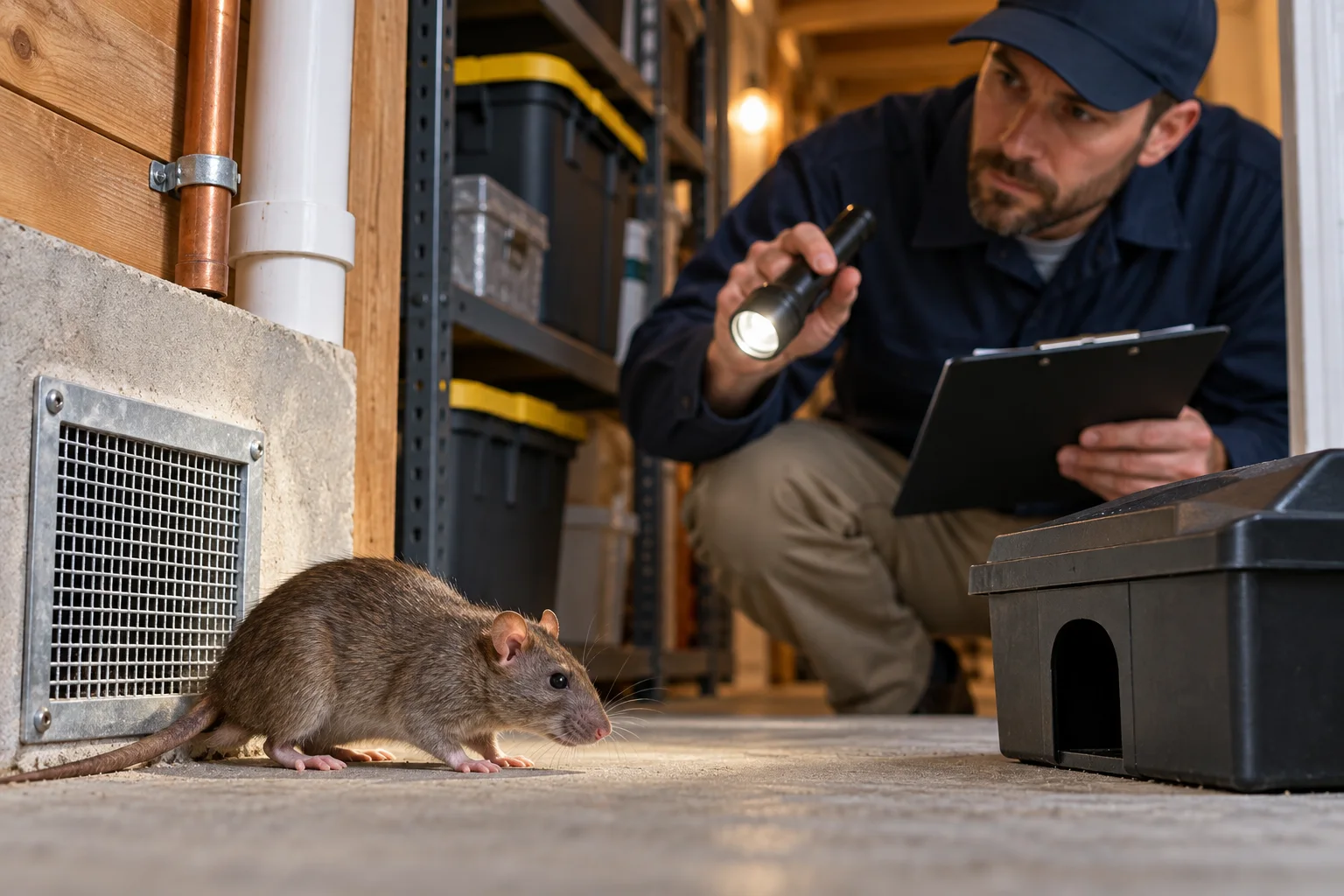
AI-generated illustration
An exterminator should solve a site problem
A rat professional is most useful when they identify the animal activity, the entry route, the food or shelter supporting it, and a plan to confirm the work is complete. A visit that only places a product may not address a damaged vent, a garage gap, contaminated attic insulation, or accessible feed. Before calling, collect the useful evidence: locations of droppings or noises, photos of gaps or damage, dates of sightings, pets or children in the home, and any areas that are unsafe to access.
Ask whether the company will inspect both the exterior and interior, identify the likely species or activity, and document the route. Roof rats and Norway rats can use different areas, but a good plan follows evidence rather than a label alone. A professional should explain which observations support the diagnosis and what remains uncertain. That makes it easier to compare proposals without treating a dramatic promise as proof of a thorough solution.
Ask how removal will be protected and checked
CDC recommends traditional snap traps for rats and says traps and bait must be kept out of reach of children and pets. Ask what equipment will be used, where it will go, how non-target access will be prevented, and how often it will be inspected. A professional can work in places homeowners should not, including a high roofline, difficult crawl space, or controlled attic route, but those locations still need a plan for regular checks and carcass recovery.
If pesticides are proposed, ask for the product’s label, why it is needed, how stations will be secured, and how dead rodents will be found and removed. EPA says consumer rodenticide products are ready-to-use bait stations and that labels govern their use; professional products can have different restrictions. Do not accept loose bait scattered around a home, pet area, or wildlife route. A qualified provider should be able to explain the safety controls in plain language.
Separate removal from exclusion and repair
Removing active rats is one phase. Exclusion is the work of stopping the next rat from using the same route. Ask which gaps the provider found, whether removal must occur before final closure, what materials will be used, and who is responsible for each repair. UC IPM notes that rats can chew soft materials such as foam, plastic, wood, and caulk, so a temporary plug may not be a durable repair.
Some repairs require another trade. Roof damage may need a roofer; a compromised appliance vent or AC chase needs HVAC expertise; gnawed wiring requires an electrician; plumbing penetrations may need a plumber. A careful pest professional should recognize these boundaries rather than sealing or altering a system they do not understand. Do not block a drain, chimney, exhaust, or required vent in the name of rodent proofing.
Clarify cleanup scope and safety
Ask whether the proposal includes cleanup of droppings, nests, dead rodents, or contaminated insulation, and how the work will prevent dry disturbance. CDC says not to vacuum or sweep rodent waste dry. For accessible material, its guidance uses gloves, disinfectant, wet pickup, and handwashing. Heavy infestation, long-vacant buildings, insulation, ducts, or sealed cavities can require specialized cleanup and protective measures.
A company should not promise that every stain proves a disease or diagnose illness from an attic inspection. If someone has been bitten, scratched, or becomes ill after meaningful rodent contact, contact a healthcare professional and explain the exposure. If a pet has contacted a rat or bait, contact a veterinarian. The contractor’s role is to reduce property exposure and document remediation, not to replace medical or veterinary assessment.
Compare proposals by evidence and follow-through
A useful proposal identifies areas inspected, evidence found, equipment type and location, safety controls, exclusion repairs, cleanup scope, monitoring schedule, and what counts as completion. It should also distinguish an estimate from a confirmed repair. Be cautious about guarantees that promise a permanently rat-free property without describing maintenance, food sources, or new damage. Weather, landscaping, construction work, and neighboring conditions can create new access later.
EPA recommends asking a professional about licensing, experience, references, insurance, pesticide-use plans, and prevention recommendations. Local licensing rules vary, so verify the company through the relevant state or local authority if that information matters to the job. The lowest price may omit repair or follow-up; the highest price is not automatically more complete. Compare the actual scope and the evidence supporting it.
Keep the homeowner part of the plan
Professional work succeeds better when the household supports it. Secure food, feed, garbage, and birdseed; remove outdoor pet food after meals; reduce clutter and dense cover near the house; and give the technician access to the documented areas. Keep children and pets away from work zones and do not move traps or bait stations without contacting the provider. Ask where activity records will be kept so household members do not accidentally undo the plan.
The final visit should include a reinspection of the original evidence areas. Ask the provider to show the repaired location, state which openings remain outside the agreed scope, and identify the next weather or maintenance event that should prompt a recheck. CDC uses a week without captures or fresh signs as a useful indication that rats are gone. Continue the sanitation and property-maintenance steps after service. A good exterminator leaves a homeowner with documented repairs, clear monitoring instructions, and a building that offers fewer routes and rewards—not just an empty product container.