
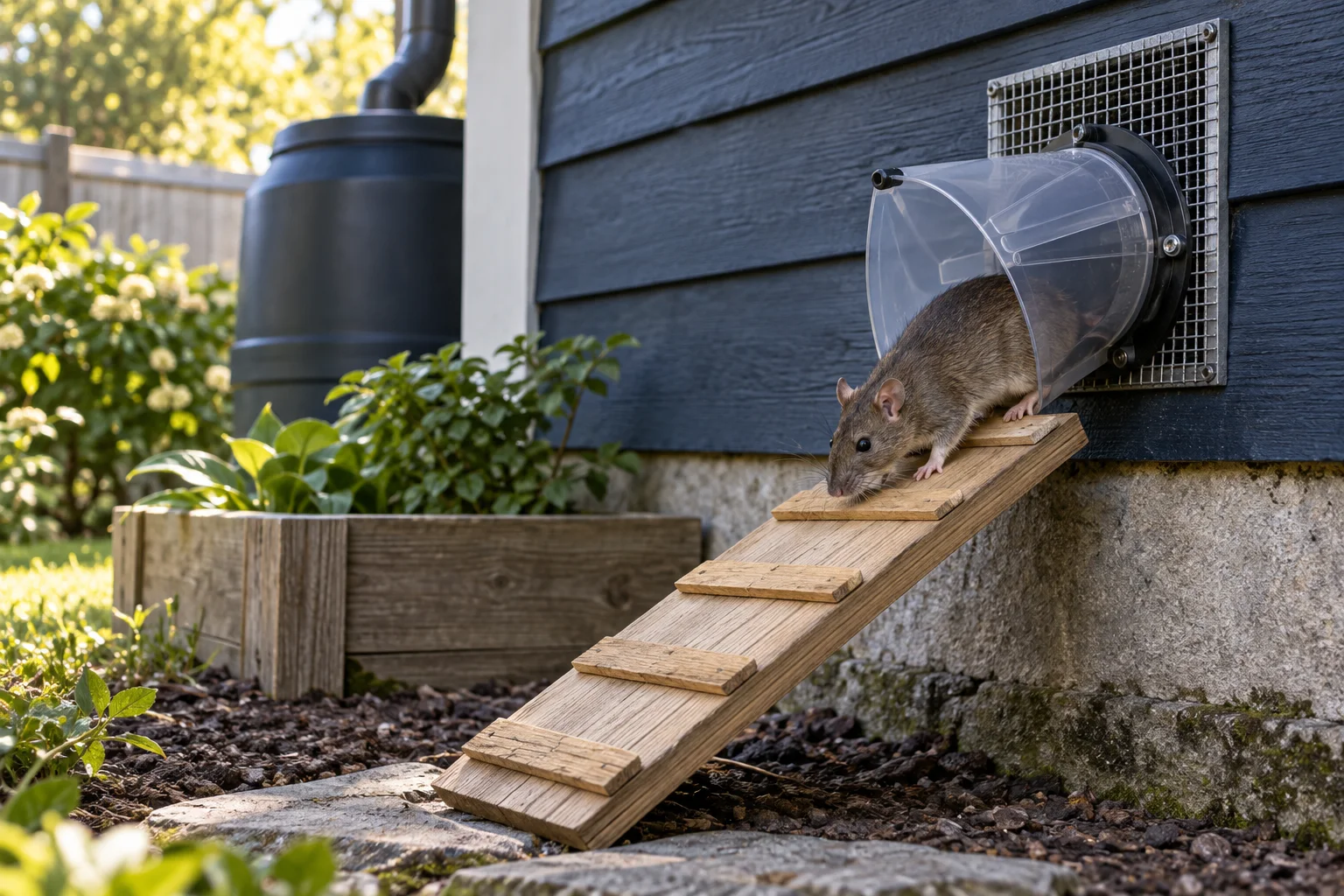
AI-generated illustration
What one-way exclusion is
A one-way exclusion device is intended to let an animal leave a structure while preventing it from returning through the same opening. It may be a purpose-built door, tube, flap, or professionally installed feature that is matched to a documented route. It is not a general plug for every hole, and it is not proof that all animals have left. Its usefulness depends on the species, season, opening, building layout, and whether the device is actually the route in use.
For rats, the first task is to confirm activity and identify the route. A hole may be an old defect, a vent, a drain feature, or one of several openings. Look for fresh droppings, rub marks, gnawing, nests, travel paths, and evidence on both sides of the feature. A one-way device placed at the wrong spot may simply send the homeowner into a waiting period while the rats use another route.
Why timing and inspection matter
Do not install one-way exclusion blindly while dependent young, multiple animals, or a nest may be inside. A blockage can separate animals, create prolonged distress, and lead to chewing or odor in an inaccessible wall. The risk is not eliminated by assuming a sound stopped for one night. Activity should be assessed across the route and the related interior space before a final closure decision.
An inspection should include attics, crawl spaces, garage connections, wall-adjacent areas, vents, roofline features, and nearby food sources where accessible. If the route is high, inside a wall, near electrical equipment, or part of a ventilation system, a professional should assess it. A one-way device can be a useful technique, but it does not replace safe access or evidence.
Choose a device that fits the opening
A one-way feature has to be securely installed and sized for the opening and target animal. A loose flap, makeshift screen, or piece of flexible material can fail, create a weather opening, interfere with ventilation, or become another object rats chew. The device must permit the animal’s exit while remaining secure against reentry, wind, rain, and contact from pets or wildlife.
Do not attach an exclusion device to a dryer vent, combustion vent, plumbing vent, drain, chimney, electrical enclosure, or other feature without knowing its required operation. Closing or restricting airflow, drainage, exhaust, or service access can create a more serious building hazard than the original rat issue. Use the relevant roofer, HVAC technician, plumber, electrician, or exclusion specialist for a feature whose function is unclear.
Monitor rather than assume success
A one-way device needs a monitoring plan. Record the date of installation, the documented signs before it went up, and the areas to recheck. Look for fresh droppings, new gnawing, new noise, reopened gaps, or signs at another route. Cameras or professional monitoring can sometimes help, but no single tool replaces repeated inspection of evidence.
Do not immediately remove the device and seal the opening after one quiet day. CDC uses a week without captures or new signs as a useful indicator that rats are gone. The appropriate observation period can depend on site conditions and professional assessment. If fresh signs continue, investigate alternate routes and food sources rather than repeatedly modifying the same device.
Pair exclusion with removal where necessary
One-way exclusion is not always the right removal method for an active indoor infestation. CDC recommends traditional rat-sized snap traps for confirmed rats and advises checking routes before trapping. In some buildings, protected monitored traps in accessible areas may provide clearer evidence that the animals are gone before final repair. A professional can decide whether exclusion, trapping, or a sequence of both fits the actual route.
Avoid glue traps and live traps; CDC advises against them because frightened rodents can urinate. Do not use loose poison as a substitute for route assessment. A dead rodent in a wall creates a new problem, and poison does not reveal whether a one-way door is working. Controlled monitoring is more useful than a hidden solution.
Make the permanent repair durable
After removal is confirmed, replace the temporary device with a durable repair suited to the opening. This may mean a fitted metal barrier, correct vent screen, flashing, door sweep, repaired soffit, or properly sealed utility penetration. UC IPM notes that rats can chew through foam, plastic, wood, and caulk, so soft filler alone may fail.
The repair should preserve ventilation, drainage, and access for future service. Photograph it from the relevant accessible side and note the date. Recheck after storms, roof work, utility service, and landscaping changes. A temporary one-way device only helps if it leads to a permanent building correction.
Reduce the pressure on the repair
Exclusion works better when the property has fewer rewards. Secure garbage, pet food, birdseed, and feed; remove fallen fruit; reduce dense cover against the house; and manage outdoor storage so rats do not have hidden runways toward the same opening. These changes do not replace a repair, but they reduce the incentive for animals to test weak spots.
The success measure is not simply seeing an animal leave once. It is a building with no fresh evidence, an opening repaired without damaging a system, and fewer food and shelter opportunities outside. If one-way exclusion feels complicated, that is a useful signal to seek professional help before turning a small opening into a trapped-animal or building-safety problem.