
AI-generated illustration
Start with what you mean by a no-kill approach
Wanting to avoid personally harming an animal is understandable. In a home rat problem, however, the practical question is whether the chosen method actually protects people, pets, the building, and wildlife while ending the infestation. Chasing a rat, using repellent fumes, or repeatedly live-trapping and relocating it can prolong exposure and leave the entry route open. CDC advises against live traps and glue traps because frightened rodents may urinate and increase the chance of illness.
A lower-exposure plan starts with prevention and a clear division of tasks. You can reduce food and shelter, document entry points, and arrange repairs without handling a rat. A qualified pest professional can assess active indoor activity and select a lawful, monitored removal method. That is different from pretending an infested wall or attic will empty itself if the property is made briefly unpleasant. The method must address the rats already inside as well as the conditions that invite new ones.
Make the building unavailable
Inspect the outside first. Look at door bottoms, garage seals, crawl-space panels, vents, roof and attic screens, gaps around utility lines, foundation cracks, and openings where walls meet roofs or siding. UC IPM recommends sealing openings and notes that rats can chew through foam, plastic, wood, and caulk. A lasting repair is fitted to the feature: a durable door sweep, suitable metal screening, flashing, or a proper utility penetration repair rather than an improvised plug.
Timing still matters. Do not close an active route while rats may be using an interior void, or you may trap them inside and create damage elsewhere. An inspection professional can determine whether removal must happen before final closure. Do not block a chimney, appliance exhaust, dryer vent, plumbing vent, drain, or other feature without knowing its function. Keeping rodents out should not compromise airflow, drainage, or safe equipment operation.
Remove the rewards outside
Rats stay near homes that provide regular food and protected cover. Store garbage, feed, and dry food in tight containers; bring pet food inside after feeding; clean outdoor cooking residue; and pick up fallen fruit and nuts. Reduce clutter, woodpiles, and dense vegetation against the building so rats do not have hidden travel routes and nesting cover. These actions help whether the activity is in an attic, garage, wall, or yard.
Do not substitute scent products, ultrasonic devices, or an outdoor cat for the work of sanitation. UC IPM says frightening devices quickly lose effectiveness and that no repellents solve a rat problem for more than a short time. A cat can also be exposed to rodent-borne parasites or poison and may leave food that attracts rats. Prevention succeeds because it changes access and resources, not because it hopes a rat will dislike a smell forever.
Discuss nonlethal preferences before authorizing removal
Tell a provider explicitly if avoiding lethal control is your priority. Ask whether the inspection supports exclusion after animals have left, whether dependent young may be present, and how the provider would verify that the structure is empty before closure. A professionally assessed one-way route may be an option in some settings, but it is not suitable for every species, entry layout, or occupied nest. Do not install an improvised exit or seal a cavity merely because it has been quiet. Agree on the method before work begins; hiring a professional does not by itself make the treatment nonlethal.
If you do not want to set or empty traps yourself, that is a sensible reason to hire help. Ask a professional how they will confirm the animal and route, keep equipment away from children and pets, check it, remove catches, clean contamination, and complete exclusion. Do not accept a plan that only places a product and leaves the entrance unaddressed. The goal should be an end to fresh signs and a house that is difficult for the next rat to enter.
CDC recommends traditional rat-sized snap traps for rats around the home, while advising against glue and live traps. A professional can place protected traps in difficult locations such as an attic, crawl space, wall access point, or roof route and monitor them appropriately. If pesticides are proposed for a persistent infestation, ask why they are needed, how bait stations will be secured, and how carcasses will be recovered. You do not need to personally handle the equipment to insist on a careful plan.
Do not rely on relocation as a resolution
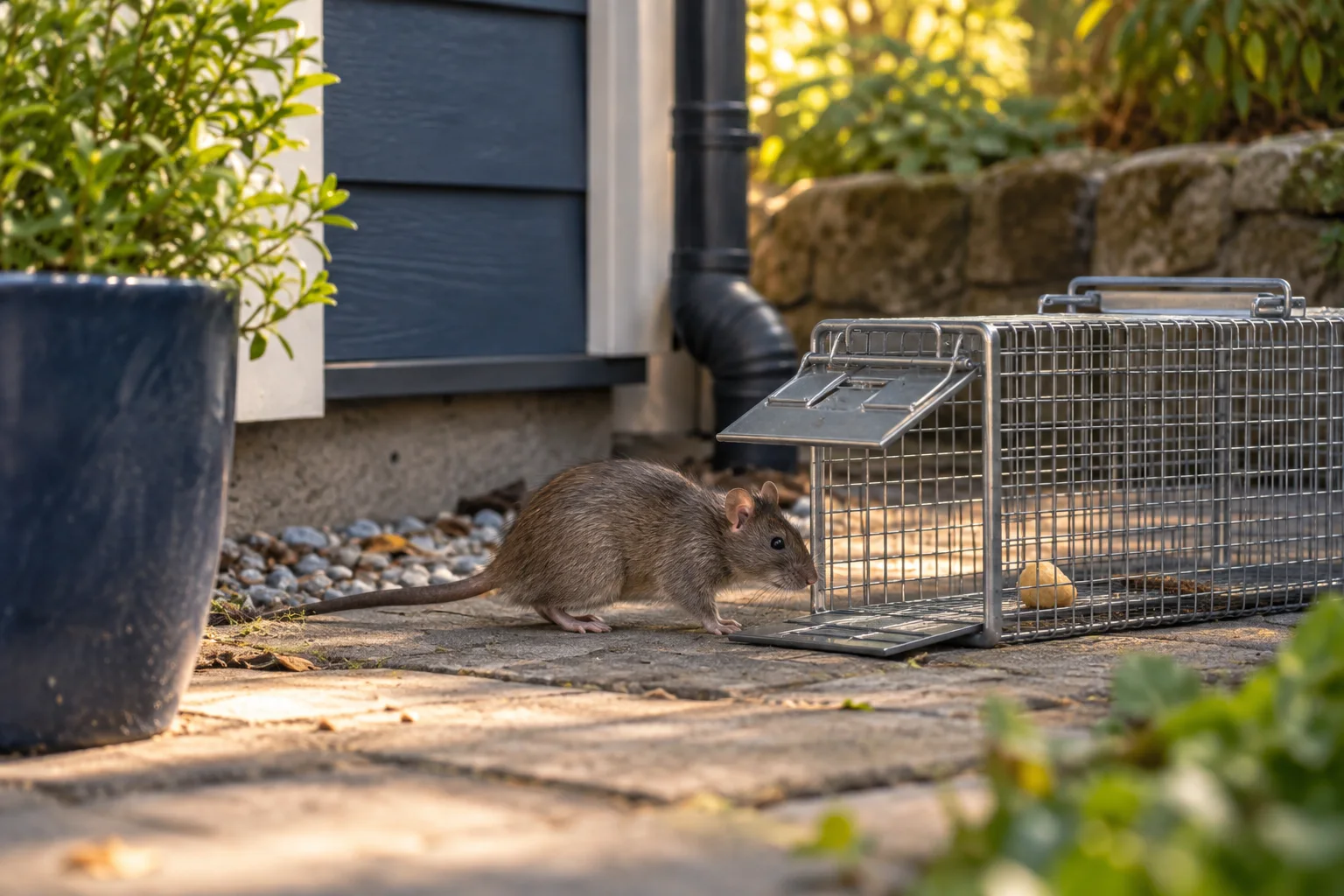
Relocation sounds gentler than killing but is often a poor home-control strategy. It leaves your entry points untouched, can return the animal to an unfamiliar and unsafe setting, and may be restricted by local law. UC IPM says nonprofessionals should not use live trapping for rats and notes that immediate release at the capture site or humane euthanasia may be legally required in its context. The local rule may differ, which is why a homeowner should not assume a distant release is permitted or effective.
If a rat is already in a live trap, keep people and pets away and call a professional or local animal-control resource for guidance. Do not transport it loosely in a car, keep it overnight in a garage, or attempt to free it by hand. The humane part of a home response is reducing distress, exposure, and repeated displacement through a controlled solution—not creating a long, stressful chain of captures and releases.
Clean safely and verify the result
After activity has ended, clean droppings, nests, and dead rodents with the CDC wet method. Do not sweep or vacuum dry waste. Wear gloves, wet material thoroughly with disinfectant, allow five minutes or the label contact time, then wipe it up. For heavy infestations, contamination in insulation or ducts, or a difficult wall cavity, use a specialist rather than attempting a large cleanup with household tools.
Continue checking the repaired area for a week without captures or fresh evidence. Keep the sanitation and exclusion routines in place instead of viewing them as temporary measures. If signs return, treat that as information: an opening, food source, or sheltered route was missed. A thoughtful no-handle approach does not promise that every rat will leave voluntarily. It gives the homeowner a clear way to reduce harm and risk while actually resolving the conditions that made the home accessible.