
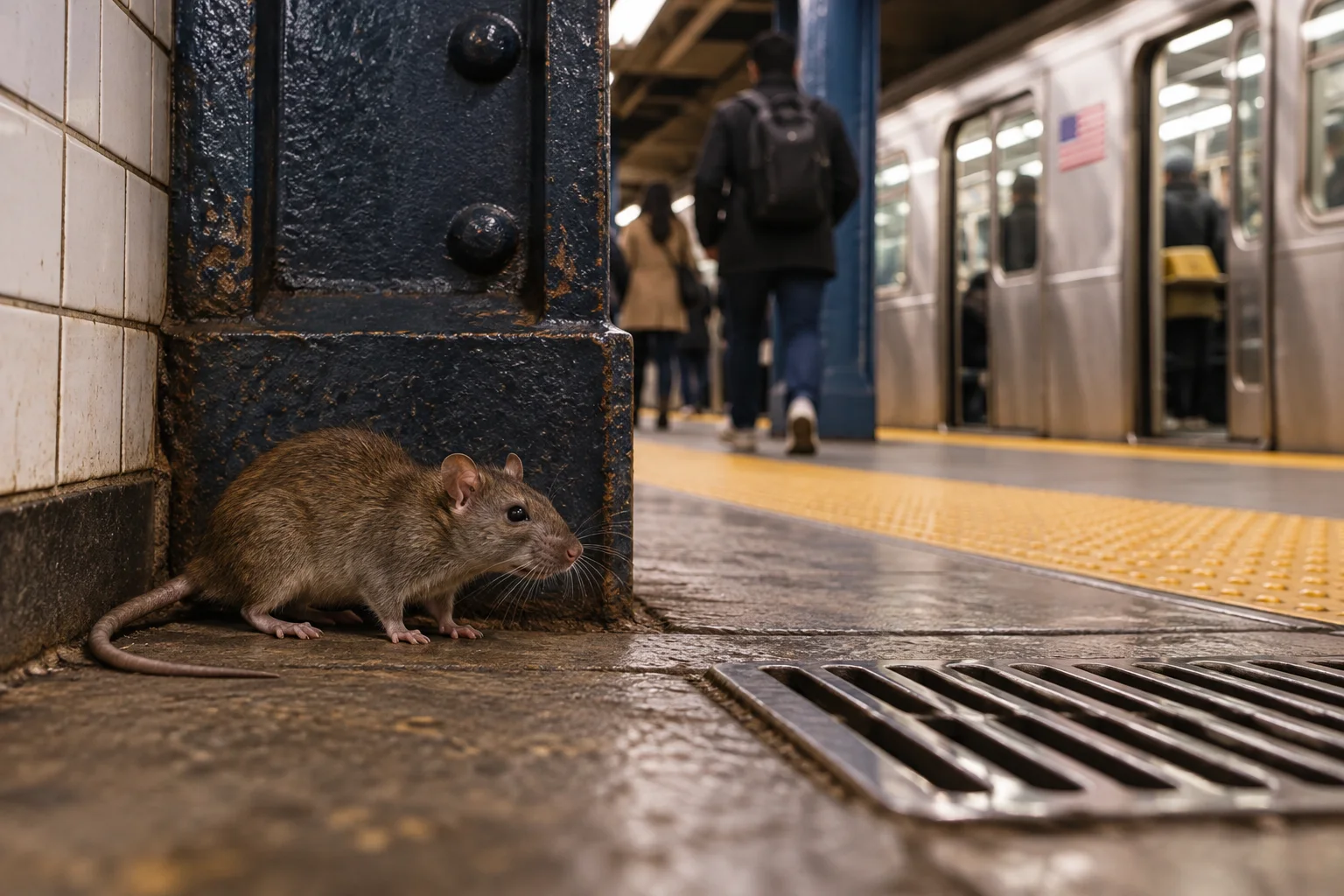
AI-generated illustration
A transit sighting is not a census
Seeing a rat on a subway platform or near tracks is memorable, but one sighting does not show how many rats live in the system or whether activity has changed citywide. NYC's older public education material cautions against the myth of large rat cities occupying all sewers and subways, noting that only small pockets live in those settings and that most rats live in ground-level or basement burrows. Conditions differ across stations, yards, tunnels, and adjacent blocks.
The correct response is to report a specific problem rather than draw a broad conclusion. Note the station, line or area if known, platform or entrance location, date, time, and visible condition such as overflowing waste, food debris, damaged enclosure, or a rat entering a particular gap. Do not go near tracks, enter restricted areas, or try to chase or trap an animal in a transit environment. Train movement and electrified infrastructure create serious hazards.
Transit locations are connected to the city around them
Rats can use food waste, shelter, and routes in and around a station, but a platform is not isolated from street-level waste, nearby buildings, construction, drainage, vegetation, and maintenance conditions. A control effort may therefore involve several parties. The useful question is which condition can be corrected at the reported location: food access, litter, waste containment, a burrow, a structural opening, or a route that needs inspection.
Blaming riders or station workers without evidence does not improve the response. Waste management, cleaning schedules, construction access, and infrastructure repair are operational tasks. Riders can help by putting food waste in bins, not feeding wildlife, and reporting a location accurately. That does not promise immediate eradication, but it gives the relevant agency or operator a concrete condition to inspect.
Use the current official reporting route
NYC311's current rat and mouse complaint guidance includes a route for rats or mice at MTA subway, bus, or rail locations. The instructions can change, so use the official page or transit reporting tools rather than relying on a number copied from an old post. The report should identify the station or facility and describe what you observed. For an emergency unrelated to rodents, use emergency instructions instead of submitting a pest complaint.
A report does not make a passerby responsible for remediation. It creates a record that can support inspection and maintenance. If the sighting is inside a nearby restaurant, residential building, park, or private waste area rather than the station itself, the correct agency or owner may be different. Location precision matters because a few feet can change who controls the waste, structure, or access route.
Why poison is not a public DIY response
A transit system is not a place for a member of the public to place bait, traps, repellent devices, or chemicals. These can endanger people, wildlife, pets, staff, and rail operations, as well as violate rules. Rodenticides must be used according to their labels and in the right controlled context. EPA emphasizes label directions and required tamper-resistant stations for applicable consumer bait products.
Professional integrated pest management does more than apply a product. It identifies the source of food and shelter, uses monitoring, maintains structures, and evaluates results. In transit settings, those steps have to fit operational safety, public access, and infrastructure. A rider cannot see the full maintenance plan from a platform, so the responsible action is to avoid interfering and give staff the best possible location information.
Keep the response proportionate
Rats can contaminate food and contribute to unhealthy conditions, but a brief sighting does not require panic. Maintain distance, keep personal food secure, and avoid contact with animals or contaminated waste. If you witness an injured animal or a condition that creates an immediate hazard to people, report it through the appropriate service channel and follow staff directions. Do not delay a safety response while trying to film or identify the animal.
A useful public conversation about subway rats focuses on sanitation and repair, not spectacle. Street waste containment, station cleaning, accessible food, ground-level burrows, construction, and building defects all shape opportunities. Continued reports tied to locations help agencies identify patterns. The most durable result is a system with fewer resources and routes for rats, not a promise that a dense city will never produce another visible animal.
Make a report usable in a transit setting
Keep personal belongings and food away from the platform edge and do not encourage an animal toward another rider or track area. If a rat is visible near a station entrance, note its exact route and any accessible food or damaged waste container. Avoid treating old viral footage as a current station condition: date and location are essential for a useful service request.
A report is information, not an invitation to intervene. Staff may have access restrictions and schedules that riders cannot see. Accurate reports over time can be compared with cleaning schedules, structural work, and inspections. Maintain distance, use the official route, and let trained personnel decide how to work safely around transit infrastructure and public crowds.