
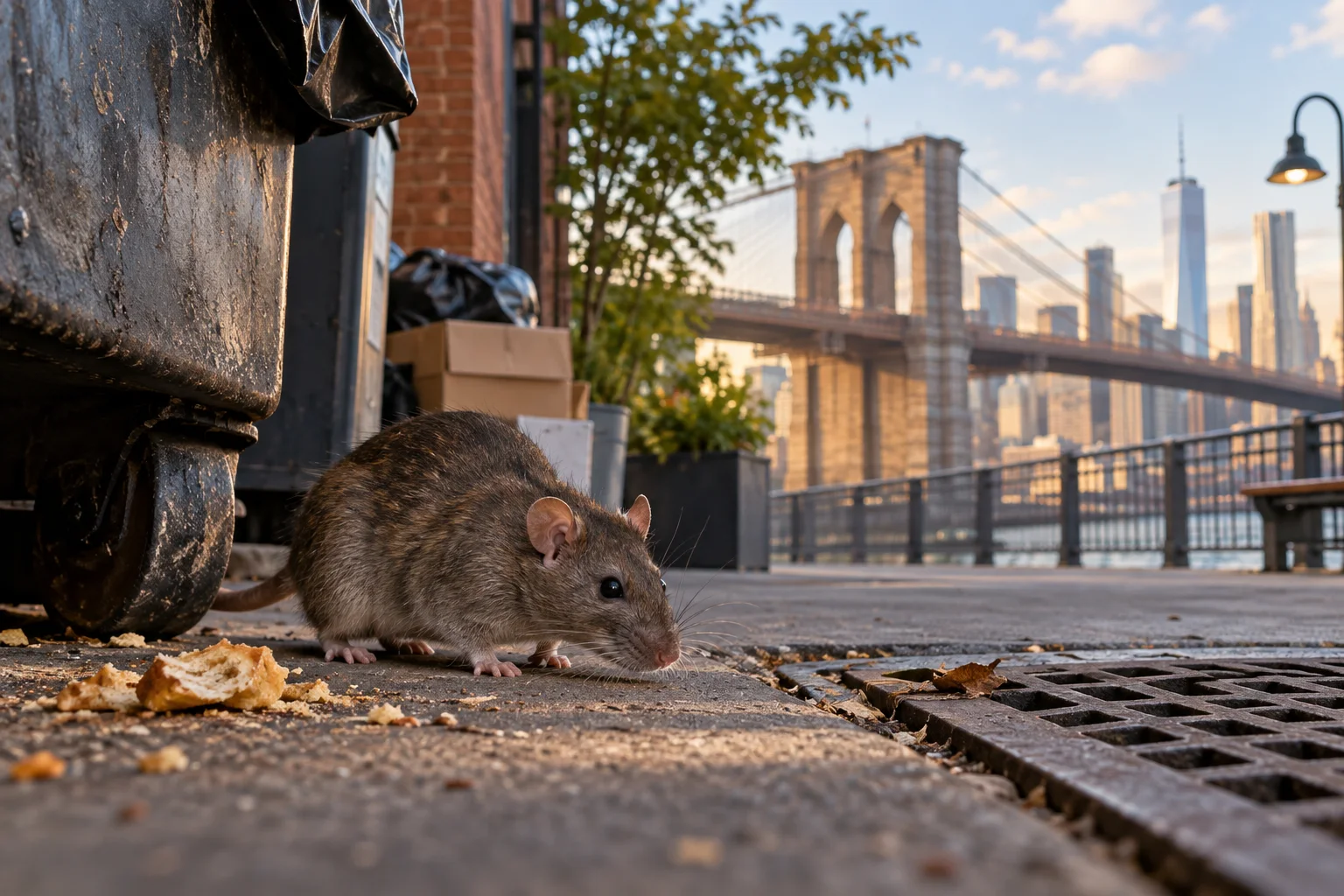
AI-generated illustration
A citywide question needs local evidence
Rats are highly visible in New York City because dense neighborhoods can concentrate the things rats use: food waste, water, cover, travel edges, basements, construction gaps, and places to burrow. A sighting is not a population count, however, and a rise in reports can reflect more activity, different reporting behavior, season, local construction, or a change in how people use public spaces. It is more accurate to ask which conditions are supporting rats at a specific address or block than to look for a single explanation for the entire city.
NYC Health describes the basic conditions plainly: rats seek food, water, shelter, and safe ways to get around. Exposed garbage, clutter, tall weeds, unsealed openings, and damaged hardscape can provide parts of that system. Those conditions can occur in wealthy or low-income areas, in parks, alleys, restaurants, homes, and transit-adjacent spaces. The burden is not distributed evenly, so a serious discussion should not blame residents for circumstances that require coordinated property maintenance, sanitation services, and public enforcement.
Waste matters because it is a dependable food source
Rats do not need a spectacular food source. Repeated access to bags, overflowing containers, spills, discarded takeout, bird feeding, pet food, or uncovered organics can support a route close to shelter. NYC Health recommends hard plastic rat-resistant containers with tight-fitting lids and enough container capacity for occupants. Cleaning up litter and reducing clutter removes both food and hiding cover. These practical measures matter because a rat may choose to live close to a reliable resource rather than range far from its burrow.
Citywide containerization has changed the way New York addresses street waste, but a bin is useful only when it is closed, used correctly, and paired with collection and property upkeep. Do not assume a single household can solve an alley, commercial corridor, or shared waste area alone. Document the exact condition, the time it is present, and the responsible location. That evidence makes a report more useful than a general complaint that rats are everywhere.
Burrows and buildings connect the public and private problem
The Norway rat is the species most often associated with New York City. It commonly burrows at ground or basement level, including near foundations, debris, garbage areas, landscaped cover, and damaged pavement. A burrow system can link an outdoor food source to a basement or a lower-level opening. Indoors, rats can use wall voids, utility paths, storage rooms, and other sheltered spaces, so a sighting in a kitchen may begin with a defect outside the room.
Property owners need to address conditions they control: secure waste, repair foundation and door defects, manage dense cover, and keep food and feed protected. The repair must respect drainage, ventilation, utilities, and building code requirements. A patch that blocks an intended vent or forces a rodent into an occupied wall is not durable control. In an apartment building, a written record helps distinguish the tenant's household tasks from repairs or common-area conditions that management must handle.
New York provides tools for a documented response
NYC Health's Rat Information Portal provides address and neighborhood inspection information, while NYC311 routes certain complaints to the responsible agency. Those tools do not guarantee an immediate result or substitute for urgent building maintenance, but they help residents describe a persistent public or property condition. For rats in a restaurant or food-serving place, NYC311 directs reporting to Health; for rats in an MTA location, it identifies a transit reporting route. Use the current official instructions because contact paths and responsibilities can change.
The best report is specific: location, date, type of condition, whether it is public or private, and whether there is a damaged structure, open waste, active burrow, or indoor entry. Avoid exaggerating numbers or claiming that a particular neighborhood is inherently dirty. A report based on observable conditions is easier to inspect, respond to, and follow up. Keep copies of service requests and photographs of repairs so recurring activity can be compared with the original conditions.
Lasting change is coordinated rather than theatrical
Rats are a real quality-of-life and public-health concern, but sensational claims can obscure the work that actually reduces activity. NYC Health emphasizes food, water, shelter, and routes. That means the useful answer combines reliable waste containment, regular cleanup, property repairs, landscape management, targeted monitoring, and treatment where appropriate. Killing individual rats without changing the supporting conditions usually produces only a temporary visible change.
At home, do not scatter loose poison or try to flood or smoke burrows. For confirmed indoor activity, use a qualified plan that protects children, pets, and non-target animals. CDC recommends traditional snap traps and advises against glue traps and live traps. On a block, talk about the conditions that can be corrected and use official reporting for shared problems. The question of why there are rats becomes constructive when it leads to a record of food sources removed, repairs completed, and activity that can be checked over time.
Compare reports with the place that produced them
Citywide data can show where inspections or complaints have occurred, but a chart cannot identify the food source or opening at one address. Use the Rat Information Portal as a starting point for questions about a property or block, then inspect the present conditions. A past inspection may be outdated, and a complaint count may reflect access, reporting habits, or a nearby source rather than an exact number of rats.
A useful follow-up looks at the same waste area, planted edge, foundation, and doors after cleanup or repair. If the condition crosses property lines, share the documented location and repair need with the responsible owner or agency. That makes a neighborhood response specific enough to verify without making unsupported claims about all of New York City.