Rat removal in Greenville, SC
Start with the signs. Get a plan for your property.
Help with rats
in Greenville.
For a rat problem in Greenville, SC, call 864-642-0295. Describe the property, where you have noticed activity, and any removal or repair work already attempted.
Confirm coverage for your exact address, current availability, and inspection pricing when you call. A city listing describes a service contact; the map below does not identify a business office.
Rat-control follow-up for Greenville homes
A control plan is incomplete if it ignores what happens after an animal is found. The City of Greenville says its Solid Waste Division assists with dead-animal removal on public property or roads within city limits, while a property owner is responsible on private property. This local division makes it useful to identify the exact location of a carcass or control device before deciding who handles it.
Example scenario: a pet-safe backyard review
Imagine a Greenville household with a dog finds activity along the back of a storage shed and later an animal carcass near the fence. Establish whether the location is private property, a public right-of-way, or an edge needing clarification. The City’s animal-control guidance distinguishes public locations from private property for removal. This is a reason to locate the issue accurately and prevent an uncertain handoff.
Check the shed threshold, vent screens, food storage, water bowls, and stacked materials before placing any device. Draw a pet’s normal access route on the site sketch. Use it to decide whether a device can be secured, inspected, and kept away from the pet. If not, prioritize exclusion, food storage, and habitat reduction.
Avoid a hidden-carcass problem
Where control methods may result in an animal dying in an inaccessible area, discuss that possibility before anything is placed. Ask which spaces can be opened for inspection, who will check devices, and how an odor will be addressed. This helps prevent a sanitation problem behind a wall or beneath a shed.
Remove outdoor food after use, place stored feed in closed containers, and repair verified entry points. Recheck the shed edge and fence line after repairs. If the carcass is in a City public area, use Greenville’s public-property route; on private land, the owner needs a direct removal plan.
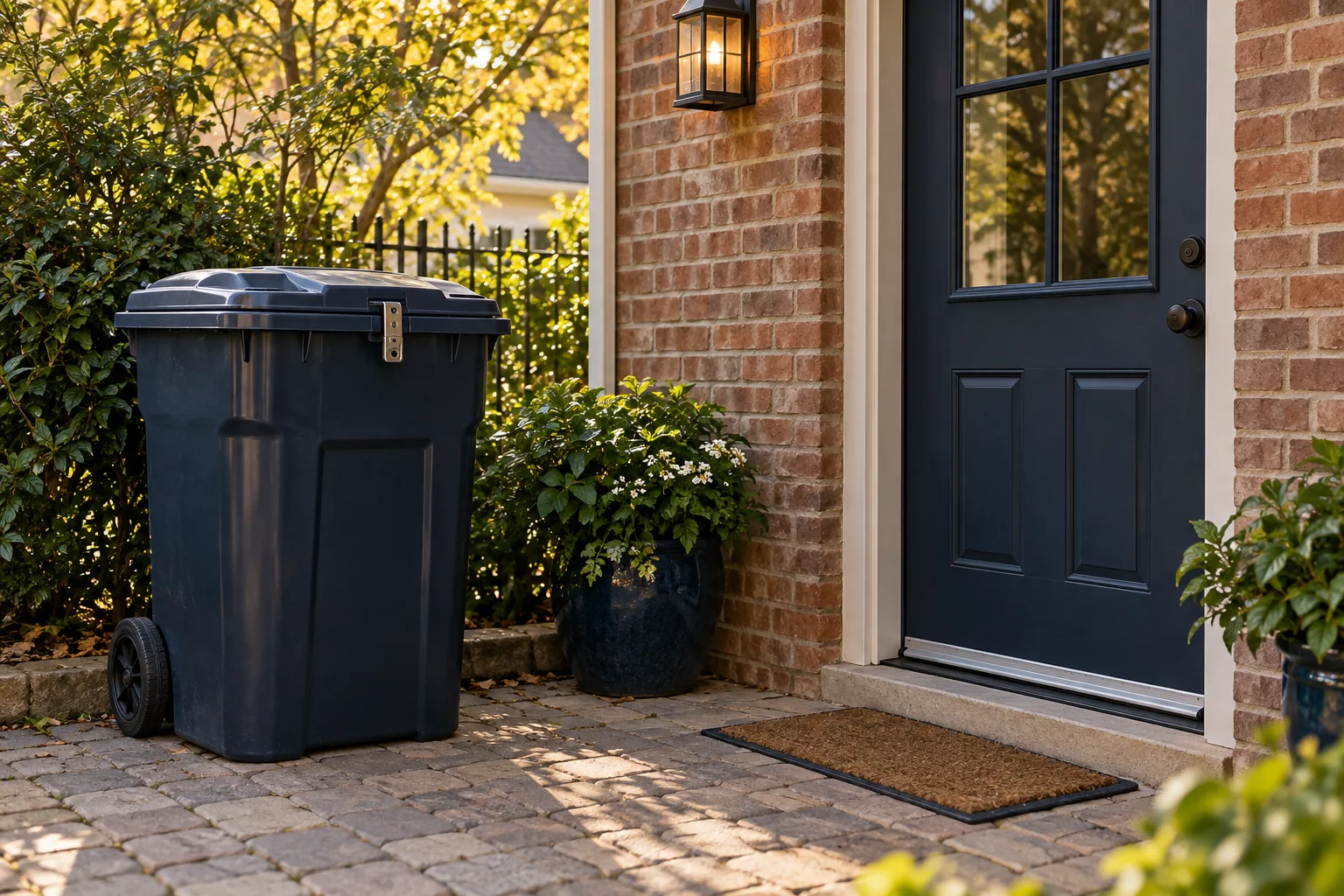
Illustrative example and AI-generated image; not a report of a completed service visit.
Further local guidance: City of Greenville: Animal Control and dead-animal removal guidance · City of Greenville: Municipal Code
Plan the inspection
Scratching overhead, a damaged food container, or droppings near storage can point to different routes through a building. Record the affected room and the time you notice activity. Mention whether the property has an attic, crawl space, attached garage, or shared wall so the inspection can account for connected spaces.
A useful proposal should identify suspected entry points, explain how animals will be removed and monitored, and describe the repairs intended to prevent a return. Keep cleanup and damage repair in the conversation; neither is automatically included in a trapping visit.
When you call 864-642-0295
- Confirm service at your Greenville address.
- Explain fresh signs and how long they have continued.
- Mention children, pets, or areas that cannot be safely accessed.
- Ask what inspection, follow-up, exclusion, and cleanup will cost.
Greenville area map
City-area reference map. Confirm your service address by phone. Open Greenville in Google Maps.