
Rat removal in Lakeland, FL
Start with the signs. Get a plan for your property.
Help with rats
in Lakeland.
For a rat problem in Lakeland, FL, call 863-232-5058. Describe the property, where you have noticed activity, and any removal or repair work already attempted.
Confirm coverage for your exact address, current availability, and inspection pricing when you call. A city listing describes a service contact; the map below does not identify a business office.
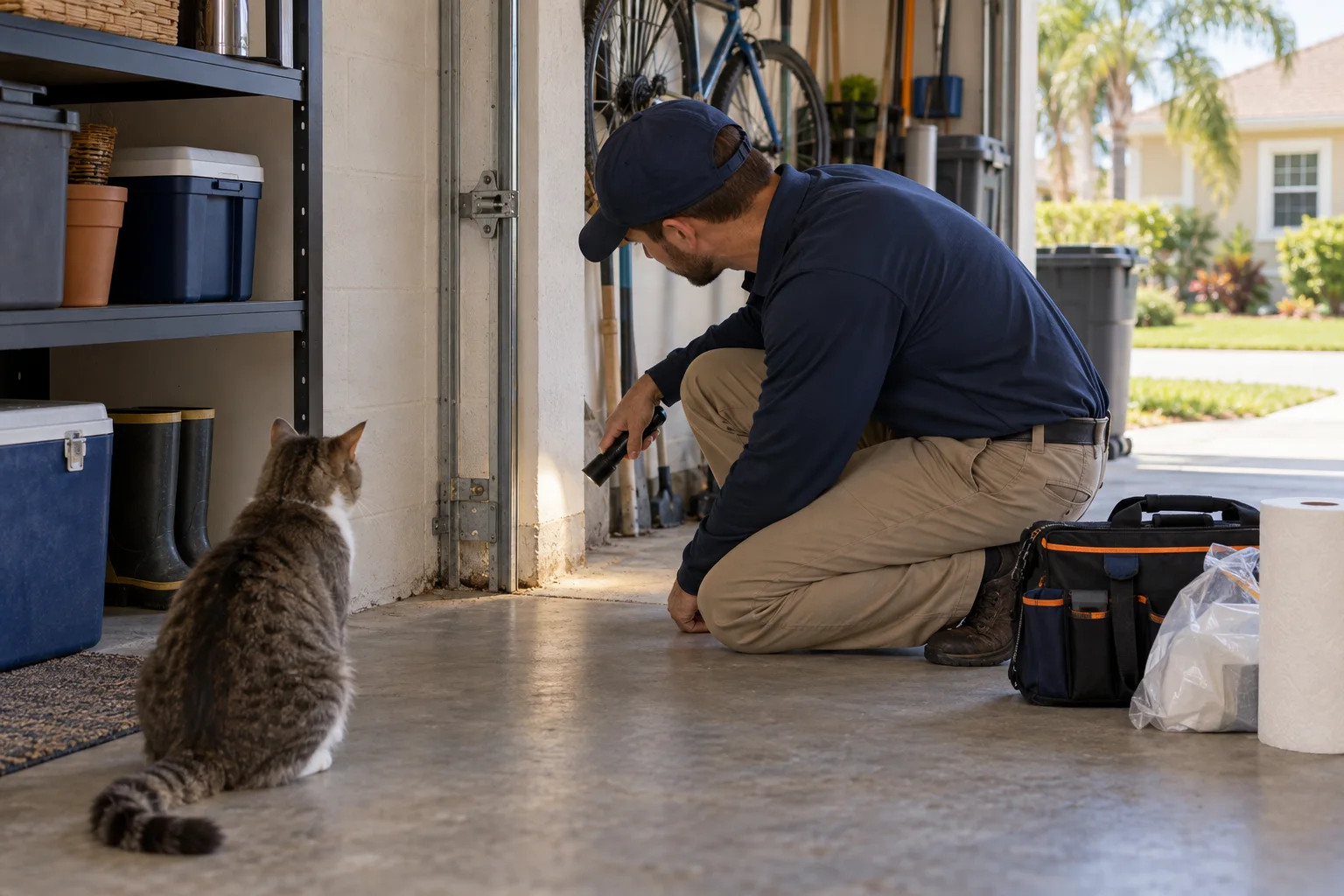
Lakeland rat control: a cat is not an inspection plan
A cat may notice or pursue a rodent, but that does not show where the animal entered or whether food and shelter conditions remain. In Lakeland, use a pet’s interest as a reason to inspect safely, not as proof that the problem will solve itself.
What a pet can tell you
Imagine a Lakeland household whose cat repeatedly watches one corner of a garage. This is a hypothetical example, not a completed job. The cat’s behavior may point to movement, a smell, or an inaccessible space, but it cannot distinguish a rat from another animal or identify the entry route. Sending a pet into the area can expose it to waste, trapped animals, or control products.
Florida Extension guidance focuses on excluding rodents and reducing food, water, and shelter. It advises keeping pet food from becoming an outdoor food source and protecting pets from rodenticides. Start by inspecting accessible walls, door sweeps, storage, and food containers, then keep the pet away while the area is assessed.
A better role for the homeowner
Secure pet food, remove bowls after feeding where practical, and keep the garage floor clear enough to see along walls. Do not place a trap where a pet can reach it or expect a cat to remove a rodent from a wall or ceiling. Photograph visible signs before moving storage so an inspection can compare old and new evidence.
The useful question is: “What condition near the area of interest could let rodents enter, feed, or hide?” The answer should identify a specific feature to correct and a protected way to monitor activity afterward. That gives the household a prevention plan even if the cat loses interest or the sounds stop temporarily.
Local prevention detail
UF/IFAS guidance does not treat cats as a substitute for fixing food, shelter, and access conditions that support rodents.
For the cat scenario, prevent pet access to traps and carcasses, but inspect the suspected route and food source as the actual control decision.
Illustrative example and AI-generated image; not a report of a completed service visit.
Further local guidance: UF/IFAS Extension: Wondering About Wildlife—Rodents
Plan the inspection
Scratching overhead, a damaged food container, or droppings near storage can point to different routes through a building. Record the affected room and the time you notice activity. Mention whether the property has an attic, crawl space, attached garage, or shared wall so the inspection can account for connected spaces.
A useful proposal should identify suspected entry points, explain how animals will be removed and monitored, and describe the repairs intended to prevent a return. Keep cleanup and damage repair in the conversation; neither is automatically included in a trapping visit.
When you call 863-232-5058
- Confirm service at your Lakeland address.
- Explain fresh signs and how long they have continued.
- Mention children, pets, or areas that cannot be safely accessed.
- Ask what inspection, follow-up, exclusion, and cleanup will cost.
Lakeland area map
City-area reference map. Confirm your service address by phone. Open Lakeland in Google Maps.