
Rat removal in New York City, NY
Start with the signs. Get a plan for your property.
Help with rats
in New York City.
For a rat problem in New York City, NY, call 718-568-9414. Describe the property, where you have noticed activity, and any removal or repair work already attempted.
Confirm coverage for your exact address, current availability, and inspection pricing when you call. A city listing describes a service contact; the map below does not identify a business office.
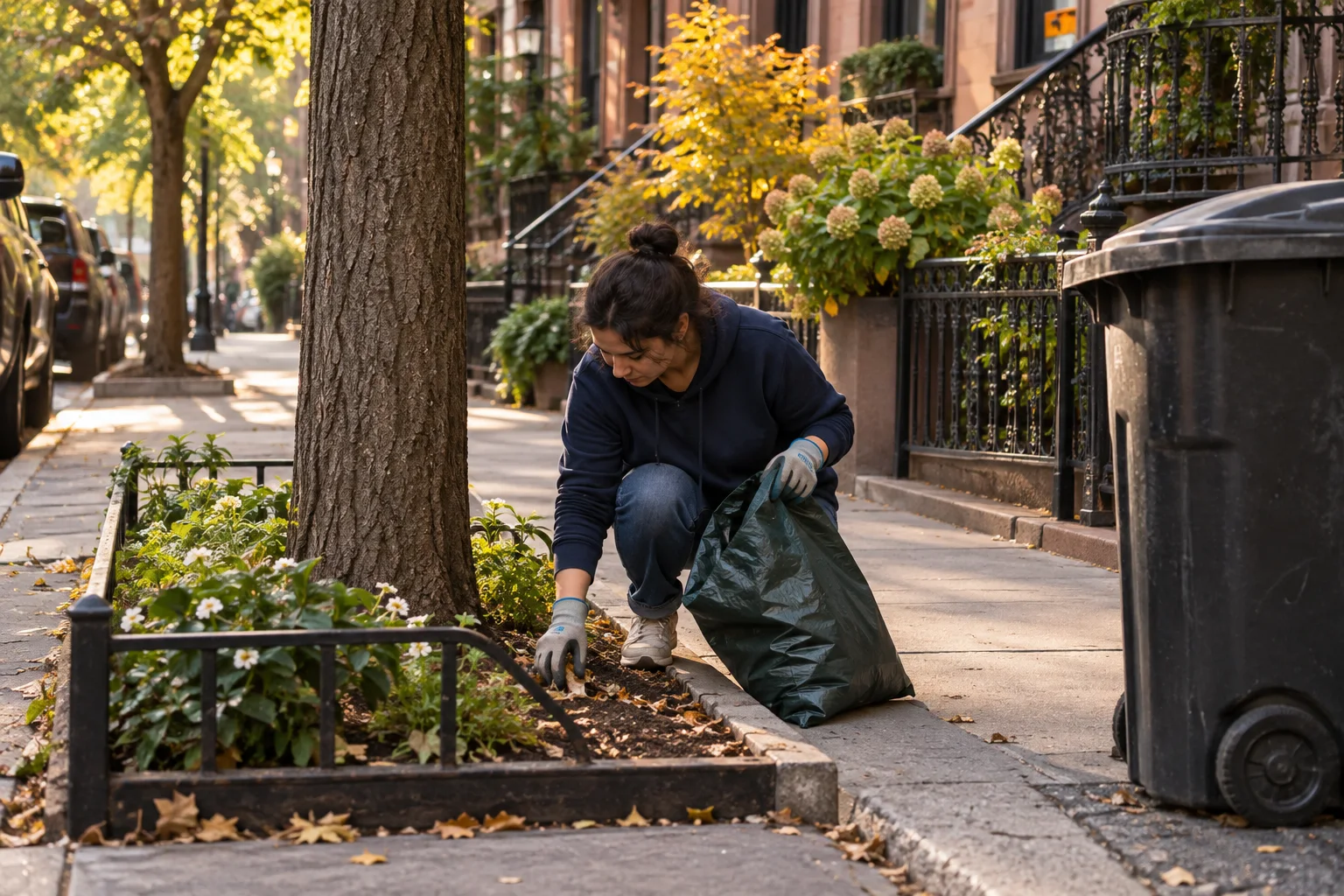
New York City tree beds: protect the roots while removing food access
A street tree bed can collect litter, animal feed, and standing water close to a building or curb. NYC Health explains that tree beds can become burrowing sites and gives specific steps that protect trees while reducing food, water, shelter, and travel conditions. That makes a tree-bed concern different from an indoor inspection.
Example scenario: a curbside tree bed
Imagine a New York City resident seeing a small opening in the soil of a tree bed near a curbside garbage setout. The opening may not be active, and it should not be filled with concrete, chemicals, or objects. Photograph the tree bed, pick up litter and animal feed, move garbage as far from the bed as practical, and sweep away standing water without disturbing tree roots.
NYC Health advises against covering tree beds with pavers, concrete, or asphalt unless approved by Parks. It recommends removing food and litter, controlling dense low plantings, and carefully collapsing burrows or using landscaping pebbles without damaging roots. These city-specific measures let a resident change conditions while preserving the street tree.
Check the curb and building edge separately
Make a note of the tree-bed feature, curb condition, garbage timing, and any crack in the sidewalk or building foundation. Do not treat the tree bed as proof that an indoor route exists. If a crack or gap is visible, record it separately so the responsible party can assess the right repair method.
A later check should compare the same bed after litter, water, and plant conditions are corrected. This turns a New York City tree-bed observation into a practical public-space maintenance task without inventing a local infestation claim.
Illustrative example and AI-generated image; not a report of a completed service visit.
Further local guidance: NYC Health: Preventing Rats in Tree Beds
Plan the inspection
Scratching overhead, a damaged food container, or droppings near storage can point to different routes through a building. Record the affected room and the time you notice activity. Mention whether the property has an attic, crawl space, attached garage, or shared wall so the inspection can account for connected spaces.
A useful proposal should identify suspected entry points, explain how animals will be removed and monitored, and describe the repairs intended to prevent a return. Keep cleanup and damage repair in the conversation; neither is automatically included in a trapping visit.
When you call 718-568-9414
- Confirm service at your New York City address.
- Explain fresh signs and how long they have continued.
- Mention children, pets, or areas that cannot be safely accessed.
- Ask what inspection, follow-up, exclusion, and cleanup will cost.
New York City area map
City-area reference map. Confirm your service address by phone. Open New York City in Google Maps.