
Rat removal in Reading, PA
Start with the signs. Get a plan for your property.
Help with rats
in Reading.
For a rat problem in Reading, PA, call 570-240-4883. Describe the property, where you have noticed activity, and any removal or repair work already attempted.
Confirm coverage for your exact address, current availability, and inspection pricing when you call. A city listing describes a service contact; the map below does not identify a business office.
Rat-control planning for Reading properties
A rat-control visit should turn a troubling sighting into a practical list of repairs and housekeeping changes. In Reading, the City’s property-maintenance summary calls for exterior openings to be protected against rodent entry and trash to be kept in approved containers with lids.
Example scenario: a basement wall and alley-side bins
Imagine a Reading rowhouse where a resident notices droppings by a basement shelf after collection day. Map the evidence: note the shelf, foundation utility penetration, exterior bin area, and low openings that line up with the interior mark. Then determine whether activity is fresh and whether a route is visible, rather than guessing from one old stain. A flashlight inspection along the wall, behind stored cartons, and around the sill can identify gaps that need repair.
The City’s checklist connects lidded trash containers, exterior upkeep, and rodent-resistant openings. A technician can distinguish a lid that is not closing, a torn screen, a loose utility cover, and a structural opening. Record each condition with its location and recommended correction. If a shared alley serves several properties, describe only conditions seen on the subject property.
A repair sequence that stays manageable
Remove food and nesting material from the immediate indoor area, then move stored goods off the floor so the wall edge can be checked and cleaned. Seal confirmed entry points only after considering whether activity could already be inside; closing a gap blindly can leave an animal in an inaccessible space. Use a durable repair for a deteriorated wall, door, or utility penetration.
Before choosing a control device, identify evidence that would show the plan is working: a dated activity log, a recheck of the known route, and a review of the bin area after normal use. This keeps the next visit tied to conditions that can be observed and corrected.
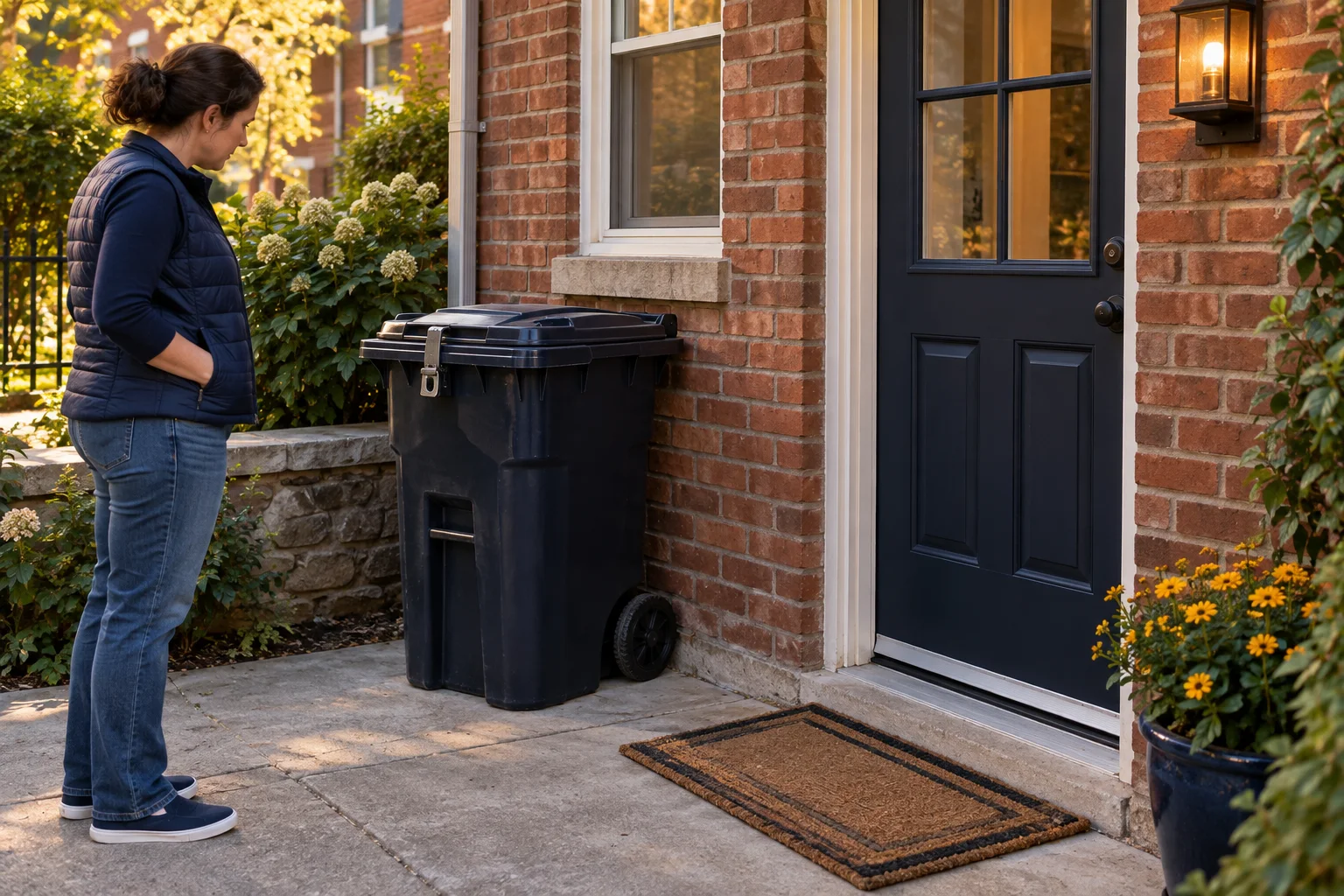
Illustrative example and AI-generated image; not a report of a completed service visit.
Further local guidance: City of Reading: Property Maintenance Code Summary · City of Reading: Property Maintenance Code Summary PDF
Plan the inspection
Scratching overhead, a damaged food container, or droppings near storage can point to different routes through a building. Record the affected room and the time you notice activity. Mention whether the property has an attic, crawl space, attached garage, or shared wall so the inspection can account for connected spaces.
A useful proposal should identify suspected entry points, explain how animals will be removed and monitored, and describe the repairs intended to prevent a return. Keep cleanup and damage repair in the conversation; neither is automatically included in a trapping visit.
When you call 570-240-4883
- Confirm service at your Reading address.
- Explain fresh signs and how long they have continued.
- Mention children, pets, or areas that cannot be safely accessed.
- Ask what inspection, follow-up, exclusion, and cleanup will cost.
Reading area map
City-area reference map. Confirm your service address by phone. Open Reading in Google Maps.