
Rat removal in San Diego, CA
Start with the signs. Get a plan for your property.
Help with rats
in San Diego.
For a rat problem in San Diego, CA, call 858-257-3420. Describe the property, where you have noticed activity, and any removal or repair work already attempted.
Confirm coverage for your exact address, current availability, and inspection pricing when you call. A city listing describes a service contact; the map below does not identify a business office.
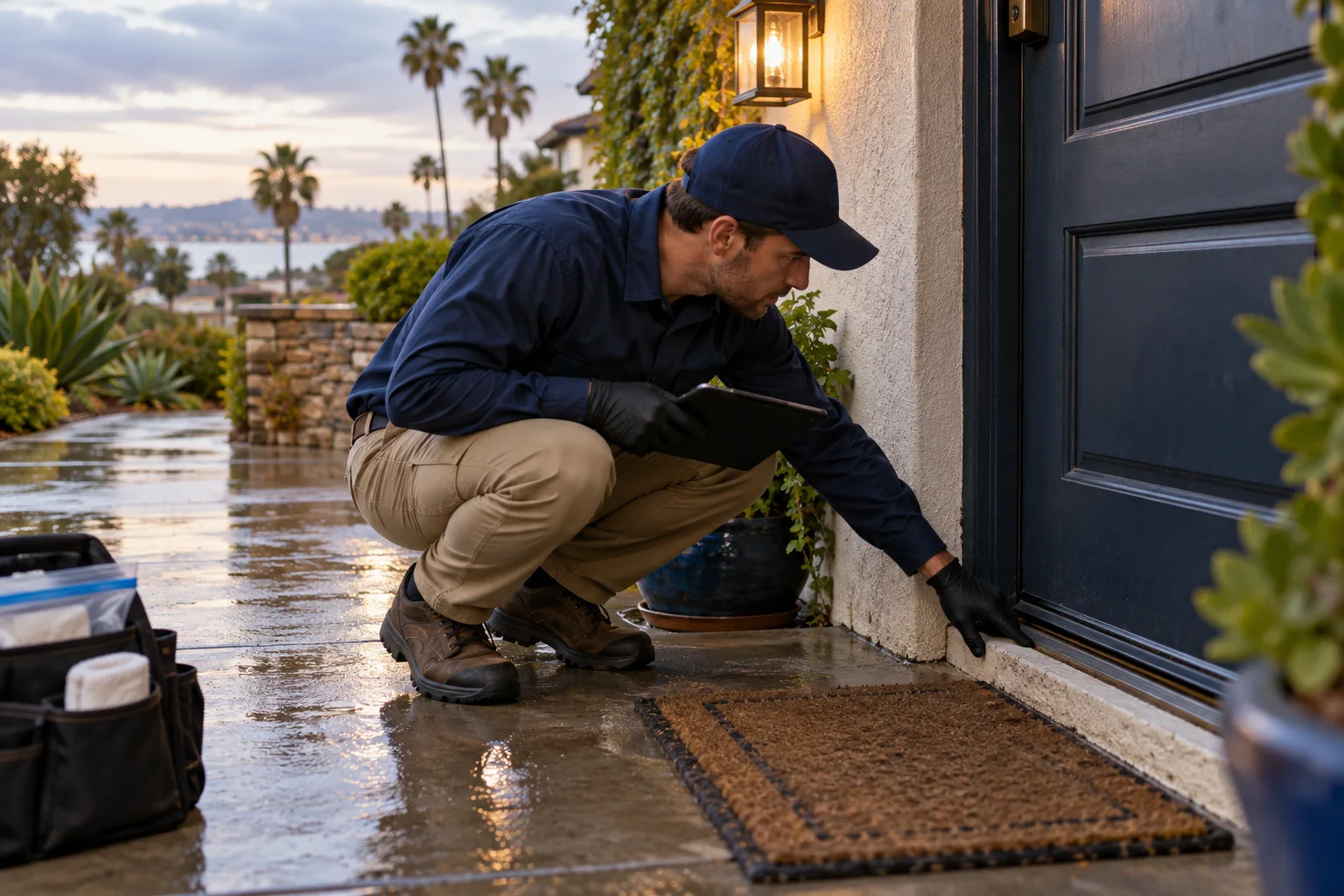
San Diego rat activity: respond to evidence, not a weather assumption
A change in weather can make a rat concern feel newly urgent, yet weather alone does not show where an animal is entering or nesting. In San Diego, a useful plan begins with current signs and accessible building conditions rather than a seasonal story about why activity must be happening.
A hypothetical change-after-rain report
Picture a hypothetical San Diego resident hearing movement near a lower wall after several wet days. This is a hypothetical scenario, not a completed job. The timing is worth recording, but it does not establish that weather drove an animal indoors. The inspection could compare the lower wall, drainage routes, door thresholds, foundation openings, and any nearby food or shelter sources for fresh evidence.
UC IPM describes both ground-associated and above-ground rat activity and recommends a combination of sanitation, exclusion, and population control. That framework keeps the decision tied to the property: observe what is active, reduce access and attractants, and use any direct control method in a place that can be checked safely.
Decision point: what changed on the property, not just outdoors?
Keep a short record of when sounds occur and where new marks appear. Check only accessible exterior features from the ground; do not reach into a drain, crawl space, or wall opening. Clear standing clutter if it can be done safely, and keep refuse and pet food secured while the signs are evaluated.
Ask: “Which current sign links the activity to a specific entry, shelter, or food source?” A good answer should distinguish evidence from an assumption about the season. It should name the next inspection area, define the corrective work, and include a later check so the homeowner can confirm whether the evidence changes after that work is complete.
Local practical detail
San Diego County Vector Control provides rodent-prevention guidance. Use its local framework to inspect food, water, shelter, and access rather than infer indoor entry from one outdoor sighting.
Illustrative example and AI-generated image; not a report of a completed service visit.
Further local guidance: UC Statewide IPM Program: Rats · County of San Diego: Rodents
Plan the inspection
Scratching overhead, a damaged food container, or droppings near storage can point to different routes through a building. Record the affected room and the time you notice activity. Mention whether the property has an attic, crawl space, attached garage, or shared wall so the inspection can account for connected spaces.
A useful proposal should identify suspected entry points, explain how animals will be removed and monitored, and describe the repairs intended to prevent a return. Keep cleanup and damage repair in the conversation; neither is automatically included in a trapping visit.
When you call 858-257-3420
- Confirm service at your San Diego address.
- Explain fresh signs and how long they have continued.
- Mention children, pets, or areas that cannot be safely accessed.
- Ask what inspection, follow-up, exclusion, and cleanup will cost.
San Diego area map
City-area reference map. Confirm your service address by phone. Open San Diego in Google Maps.