
Rat removal in San Francisco, CA
Start with the signs. Get a plan for your property.
Help with rats
in San Francisco.
For a rat problem in San Francisco, CA, call 415-481-0753. Describe the property, where you have noticed activity, and any removal or repair work already attempted.
Confirm coverage for your exact address, current availability, and inspection pricing when you call. A city listing describes a service contact; the map below does not identify a business office.
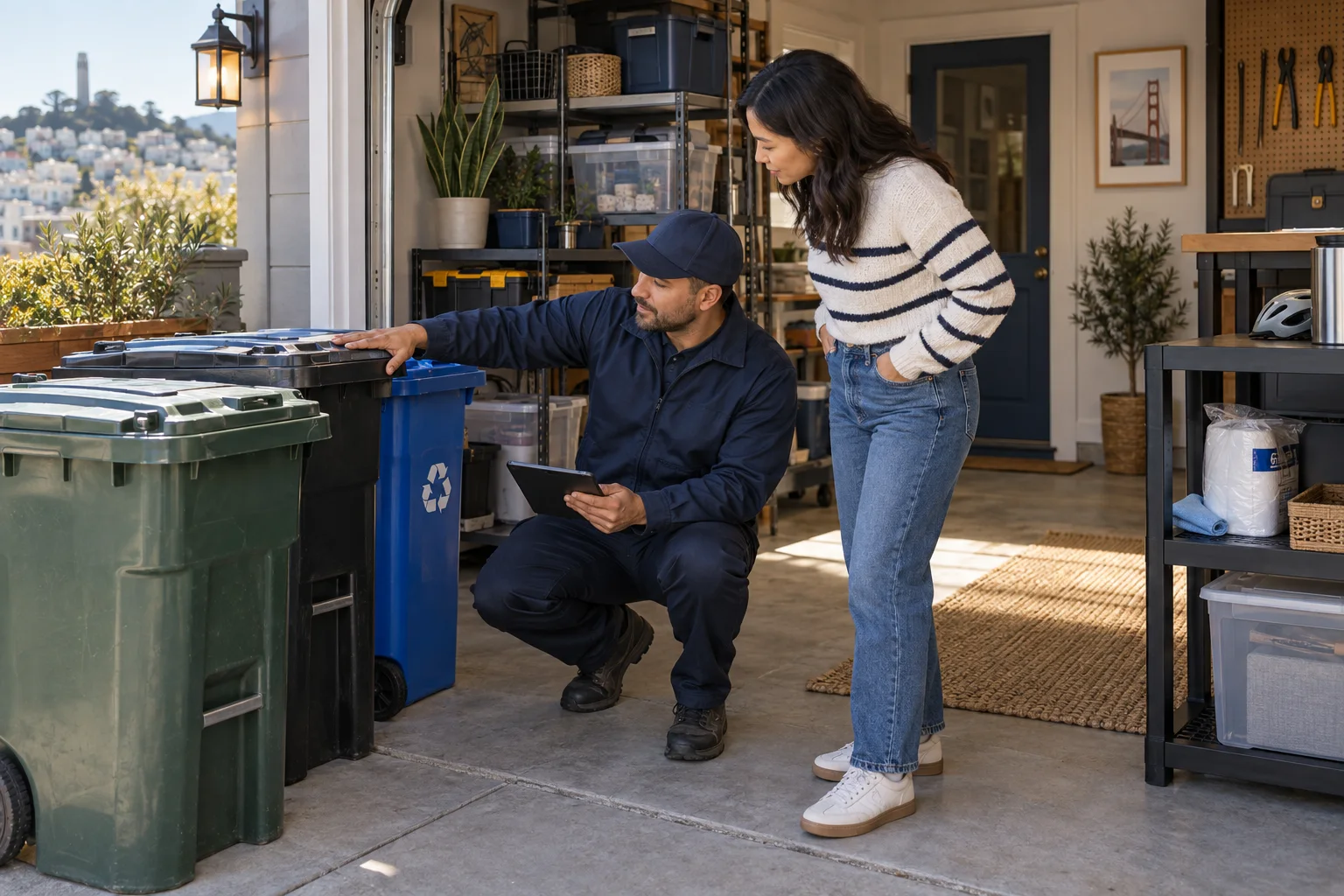
San Francisco rat prevention: audit food, cover, and access together
A property can offer more than one opportunity for rat activity, which is why a single cleanup task rarely tells the whole story. For a San Francisco household, a short audit of food storage, waste handling, exterior cover, and building gaps can create a clearer prevention plan.
A hypothetical multi-source yard audit
Imagine a San Francisco resident finding chewed fruit near a bin, pet-food crumbs on a porch, and dense storage behind a garage. This is a hypothetical scenario, not a completed job. Each item may matter, but assuming one is the cause can overlook the connection between feeding opportunities, hidden travel space, and an opening into the building. A better assessment groups the conditions by what can be changed and observed.
UC IPM recommends tight-fitting covers for garbage, prompt collection of fallen fruit and nuts, rodent-proof food storage, and tidier off-the-ground storage. Those measures are useful because they reduce food and shelter while making signs easier to spot. They work best alongside building exclusion, rather than as a promise that cleaning alone will solve every problem.
Decision point: what should be corrected first?
Begin with the easiest visible items that do not require a ladder or repair work: secure food, close refuse lids, remove fallen produce, and create clearer space around stored materials. Photograph any suspected opening before changing it. Avoid moving unfamiliar debris or reaching into voids where another animal could be present.
Ask: “Which two conditions provide the clearest food or shelter, and which opening is closest to those signs?” The response should prioritize a limited set of actions, then set a reinspection point. That creates useful evidence about whether the changes helped and prevents a long list of chores from replacing an actual investigation of entry routes.
Local practical detail
San Francisco provides a 311 route for rodent concerns. Report the exact waste, harborage, or building condition and retain separate records for any private repair.
Illustrative example and AI-generated image; not a report of a completed service visit.
Further local guidance: UC Statewide IPM Program: Rats · San Francisco: Report rodents
Plan the inspection
Scratching overhead, a damaged food container, or droppings near storage can point to different routes through a building. Record the affected room and the time you notice activity. Mention whether the property has an attic, crawl space, attached garage, or shared wall so the inspection can account for connected spaces.
A useful proposal should identify suspected entry points, explain how animals will be removed and monitored, and describe the repairs intended to prevent a return. Keep cleanup and damage repair in the conversation; neither is automatically included in a trapping visit.
When you call 415-481-0753
- Confirm service at your San Francisco address.
- Explain fresh signs and how long they have continued.
- Mention children, pets, or areas that cannot be safely accessed.
- Ask what inspection, follow-up, exclusion, and cleanup will cost.
San Francisco area map
City-area reference map. Confirm your service address by phone. Open San Francisco in Google Maps.