
Rat removal in Seattle, WA
Start with the signs. Get a plan for your property.
Help with rats
in Seattle.
For a rat problem in Seattle, WA, call 206-829-4744. Describe the property, where you have noticed activity, and any removal or repair work already attempted.
Confirm coverage for your exact address, current availability, and inspection pricing when you call. A city listing describes a service contact; the map below does not identify a business office.
Seattle rat control: make the route visible before treating it
Seattle rat control is more useful when a resident records the food, shelter, and travel conditions supporting activity. Seattle Parks describes an integrated pest-management approach that begins with litter pickup, appropriate waste cans, cleaning, and design that reduces rat burrowing areas.
Example scenario: a park-edge building route
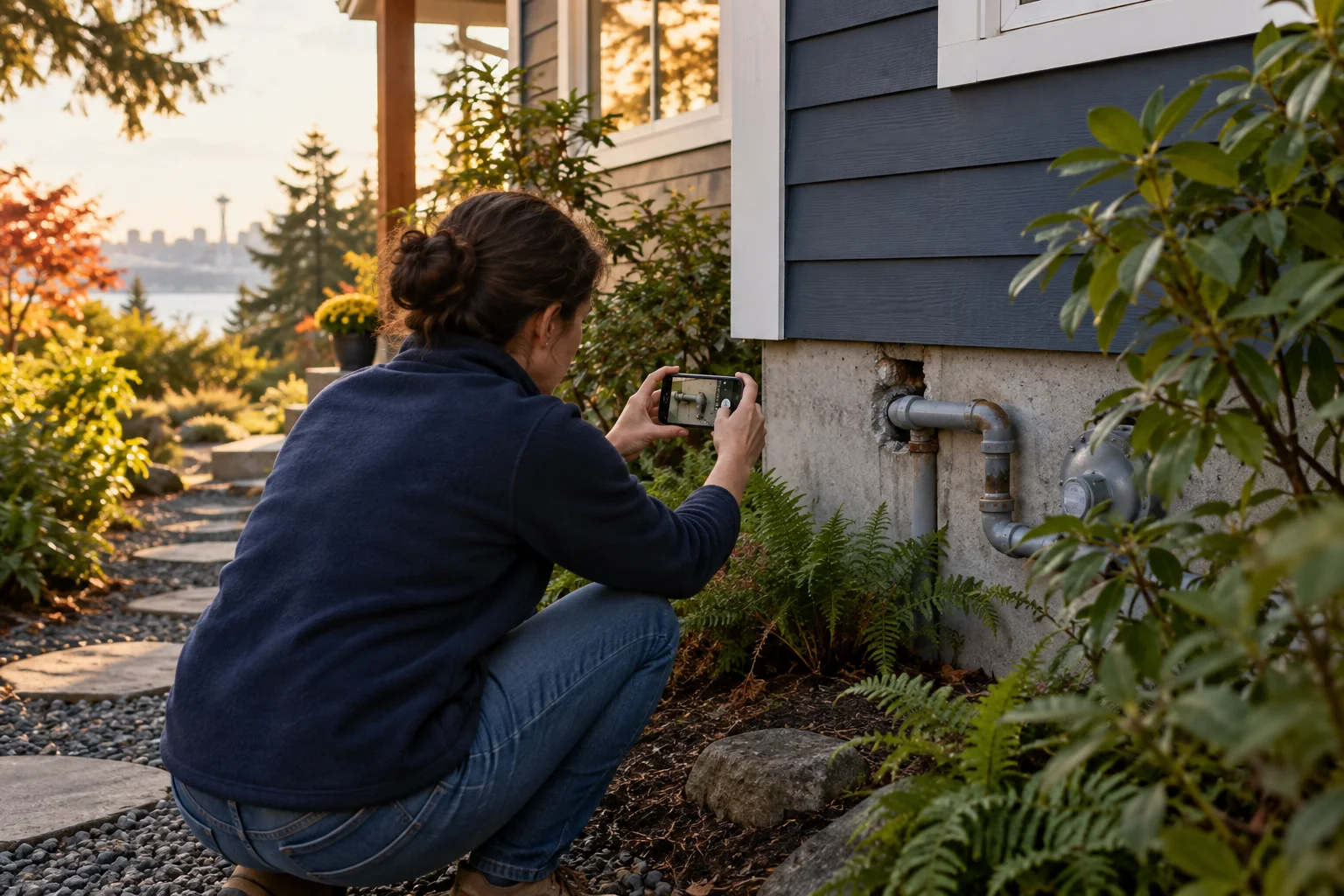
Imagine a Seattle resident sees activity along a planted edge near a building entrance after dusk. This is illustrative, not a report of City action. Note whether litter, overflowing waste, dense ground cover, or a door or utility opening gives the route continuity.
The practical implication is to report a public waste condition through the current City channel while separately documenting any private building gap. Do not place bait or traps in a public area. A route map supports the City’s sanitation-first approach and a focused property inspection.
Follow-up after the local detail
Revisit the same edge after cleanup, normal waste collection, and a period of ordinary use. Fresh droppings, reopened burrows, or new food damage identify a condition that still needs attention; a quiet observation alone does not prove that access is closed. Keep children, pets, and wildlife away from any control device, and use a qualified provider when the route is inaccessible or contaminated.
Keep public and private work clearly assigned
Seattle Parks’ management approach describes work on park property. It does not authorize a resident to treat a public planted bed or place a device along a path. Report the precise public location and the condition observed, while arranging inspection of the building features under the owner’s control. A public report and a private door repair can proceed as separate parts of the same practical response.
At the entrance, inspect the bottom of the closed door, nearby service entries, and any storage or deliveries left outside. If a shared refuse area serves several units, the manager may need to coordinate container capacity and cleaning. A resident can document a loose lid or gap without alleging that another household caused the problem. This keeps the response focused on correctable features along the route.
Illustrative example and AI-generated image; not a report of a completed service visit.
Further local guidance: Seattle Parks: The reality of rats in an urban ecosystem · Public Health – Seattle & King County: Getting rid of rats and mice
Plan the inspection
Scratching overhead, a damaged food container, or droppings near storage can point to different routes through a building. Record the affected room and the time you notice activity. Mention whether the property has an attic, crawl space, attached garage, or shared wall so the inspection can account for connected spaces.
A useful proposal should identify suspected entry points, explain how animals will be removed and monitored, and describe the repairs intended to prevent a return. Keep cleanup and damage repair in the conversation; neither is automatically included in a trapping visit.
When you call 206-829-4744
- Confirm service at your Seattle address.
- Explain fresh signs and how long they have continued.
- Mention children, pets, or areas that cannot be safely accessed.
- Ask what inspection, follow-up, exclusion, and cleanup will cost.
Seattle area map
City-area reference map. Confirm your service address by phone. Open Seattle in Google Maps.