
Rat removal in Toronto, Canada
Start with the signs. Get a plan for your property.
Help with rats
in Toronto.
For a rat problem in Toronto, Canada, call 289-729-0838. Describe the property, where you have noticed activity, and any removal or repair work already attempted.
Confirm coverage for your exact address, current availability, and inspection pricing when you call. A city listing describes a service contact; the map below does not identify a business office.
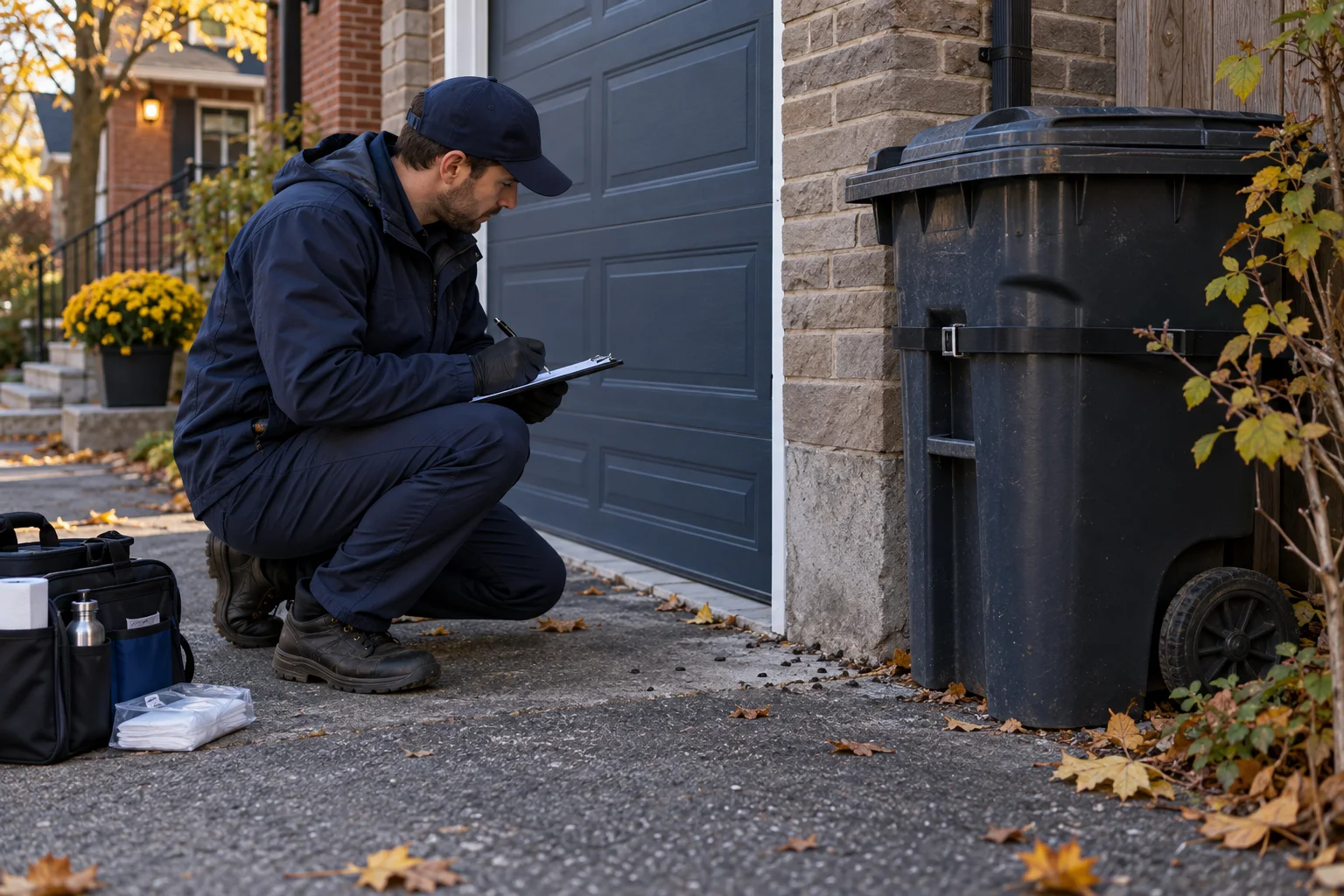
Toronto rat signs: use a pattern of evidence, not one dropping
A single dark pellet near a bin or garage does not identify an animal with certainty. In Toronto, the more useful first step is to map a pattern of signs—where they appear, whether they are new, and which narrow exterior routes or waste areas they connect to.
Reading a shared-lane pattern
Imagine a Toronto resident finding droppings along the side of a garage near a shared lane. The marks may be old, may come from another animal, or may show a current route between a bin area and a foundation gap. Cleaning everything at once can erase the pattern before it is assessed.
The City of Toronto lists sightings, droppings, burrows, and activity near buildings or fences as signs worth monitoring. It also advises property-level prevention through secure waste, reduced shelter, and sealed openings. A short record with dated photographs from a safe distance can make a later inspection more precise than a conclusion based on colour or shape alone.
Who handles the next property condition?
Check visible bin lids, fallen food, clutter, tall vegetation, and accessible gaps around the garage or shed. Do not reach into a burrow, touch droppings, or move waste with bare hands. If the concern affects a multi-residential property, record the exact common area and report it through the building’s usual management channel.
Ask: “What current evidence links these signs to a food source, shelter area, or entry opening?” The answer should separate confirmed signs from possibilities and identify the next condition to correct. Toronto’s guidance treats prevention on private property as a shared responsibility, so the plan should also say which task belongs to the resident, property owner, or building manager.
Local practical detail
Toronto Public Health directs residents to reduce rat food and shelter and use 311 for rat concerns. Identify the exact bin, laneway, garden edge, or opening before making a report.
Illustrative example and AI-generated image; not a report of a completed service visit.
Further local guidance: City of Toronto: Rat Control · City of Toronto: Rats
Plan the inspection
Scratching overhead, a damaged food container, or droppings near storage can point to different routes through a building. Record the affected room and the time you notice activity. Mention whether the property has an attic, crawl space, attached garage, or shared wall so the inspection can account for connected spaces.
A useful proposal should identify suspected entry points, explain how animals will be removed and monitored, and describe the repairs intended to prevent a return. Keep cleanup and damage repair in the conversation; neither is automatically included in a trapping visit.
When you call 289-729-0838
- Confirm service at your Toronto address.
- Explain fresh signs and how long they have continued.
- Mention children, pets, or areas that cannot be safely accessed.
- Ask what inspection, follow-up, exclusion, and cleanup will cost.
Toronto area map
City-area reference map. Confirm your service address by phone. Open Toronto in Google Maps.