
Rat removal in Washington DC, DC
Start with the signs. Get a plan for your property.
Help with rats
in Washington DC.
For a rat problem in Washington DC, DC, call 202-754-8770. Describe the property, where you have noticed activity, and any removal or repair work already attempted.
Confirm coverage for your exact address, current availability, and inspection pricing when you call. A city listing describes a service contact; the map below does not identify a business office.
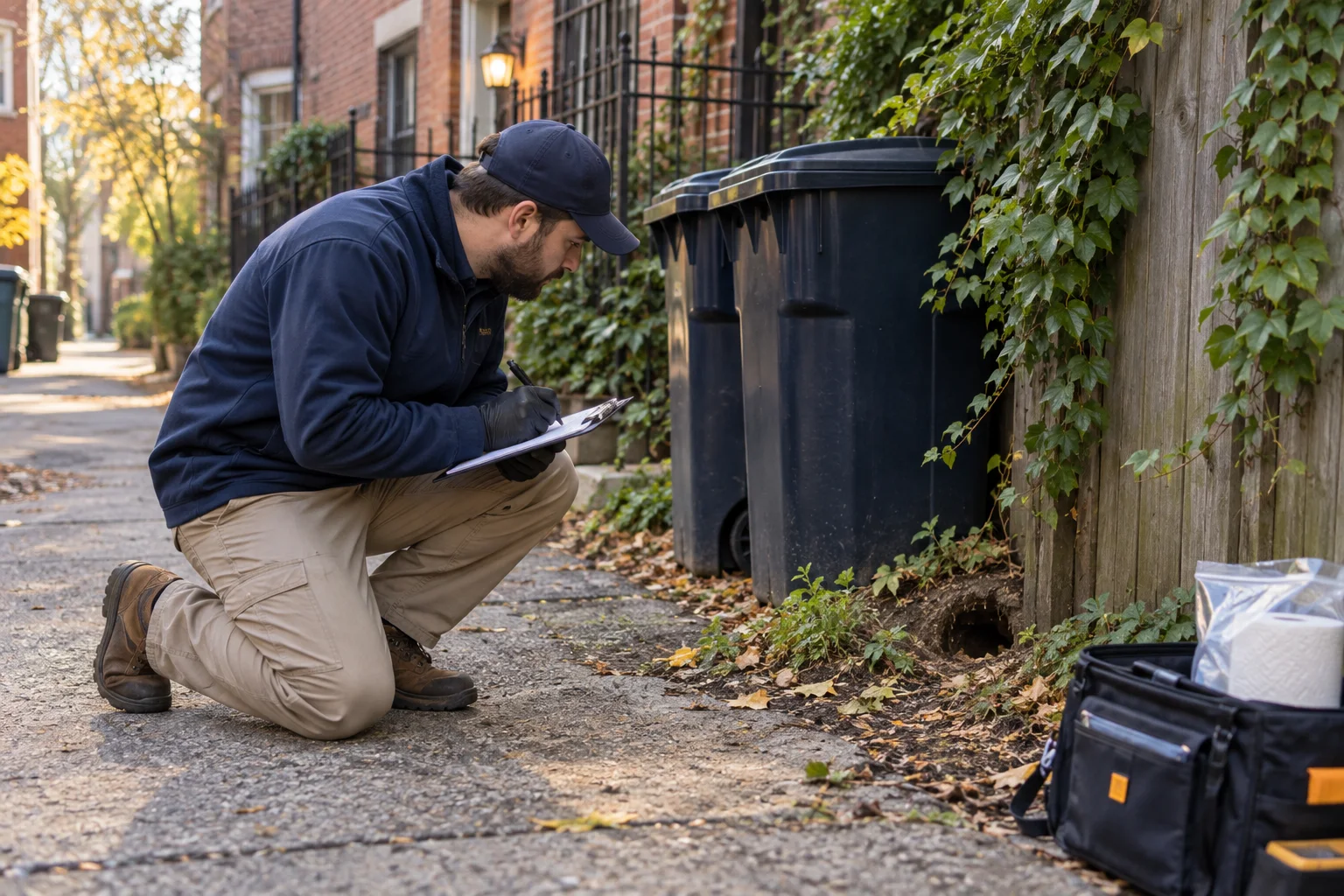
Washington, DC rodent control: prevent a hidden-space problem before baiting
Bait can seem appealing when rats are suspected near a basement or storage area, but it does not define where an animal will travel or die. In Washington, DC, start with the conditions that support activity and a clear plan for protected, responsible control if it is needed.
Start with the public-private boundary
Consider a hypothetical Washington, DC resident finding a burrow near a refuse area and hearing movement by a basement wall. Placing unprotected bait indoors or near a doorway could create risks for children, pets, and other animals while leaving the waste, clutter, or exterior opening untouched. The goal is to separate public-space conditions from private building access.
DC Health advises residents to secure garbage, remove exterior clutter and debris, store pet food securely, and use metal weather stripping or trim at doors. It also directs residents to report rodent concerns through 311. These are concrete steps that address conditions around a property before a homeowner assumes bait alone will solve a basement concern.
Use District reporting strategically
Document the exact location of visible burrows, damaged bins, or gaps around a private building. Keep pets and children away from any product or device, and do not place loose bait in an accessible area. Do not attempt to fill an active burrow or opening if you cannot determine whether it connects to the structure.
Ask: “Which conditions can be corrected on this property, and which should be reported for District inspection?” A useful plan distinguishes a private door or foundation repair from a public-space complaint, states how control items will be secured, and sets a follow-up check after waste and shelter conditions are improved.
Local prevention detail
DC Health advises residents to put garbage out shortly before pickup, remove uneaten pet food, and keep ivy, periwinkle, pachysandra, and hosta from becoming rat cover.
For a hidden-space concern, reduce the exterior food and cover conditions first, then have any utility or wall opening evaluated before bait is considered.
Illustrative example and AI-generated image; not a report of a completed service visit.
Further local guidance: DC Health: Rodent Control Tips
Plan the inspection
Scratching overhead, a damaged food container, or droppings near storage can point to different routes through a building. Record the affected room and the time you notice activity. Mention whether the property has an attic, crawl space, attached garage, or shared wall so the inspection can account for connected spaces.
A useful proposal should identify suspected entry points, explain how animals will be removed and monitored, and describe the repairs intended to prevent a return. Keep cleanup and damage repair in the conversation; neither is automatically included in a trapping visit.
When you call 202-754-8770
- Confirm service at your Washington DC address.
- Explain fresh signs and how long they have continued.
- Mention children, pets, or areas that cannot be safely accessed.
- Ask what inspection, follow-up, exclusion, and cleanup will cost.
Washington DC area map
City-area reference map. Confirm your service address by phone. Open Washington DC in Google Maps.