
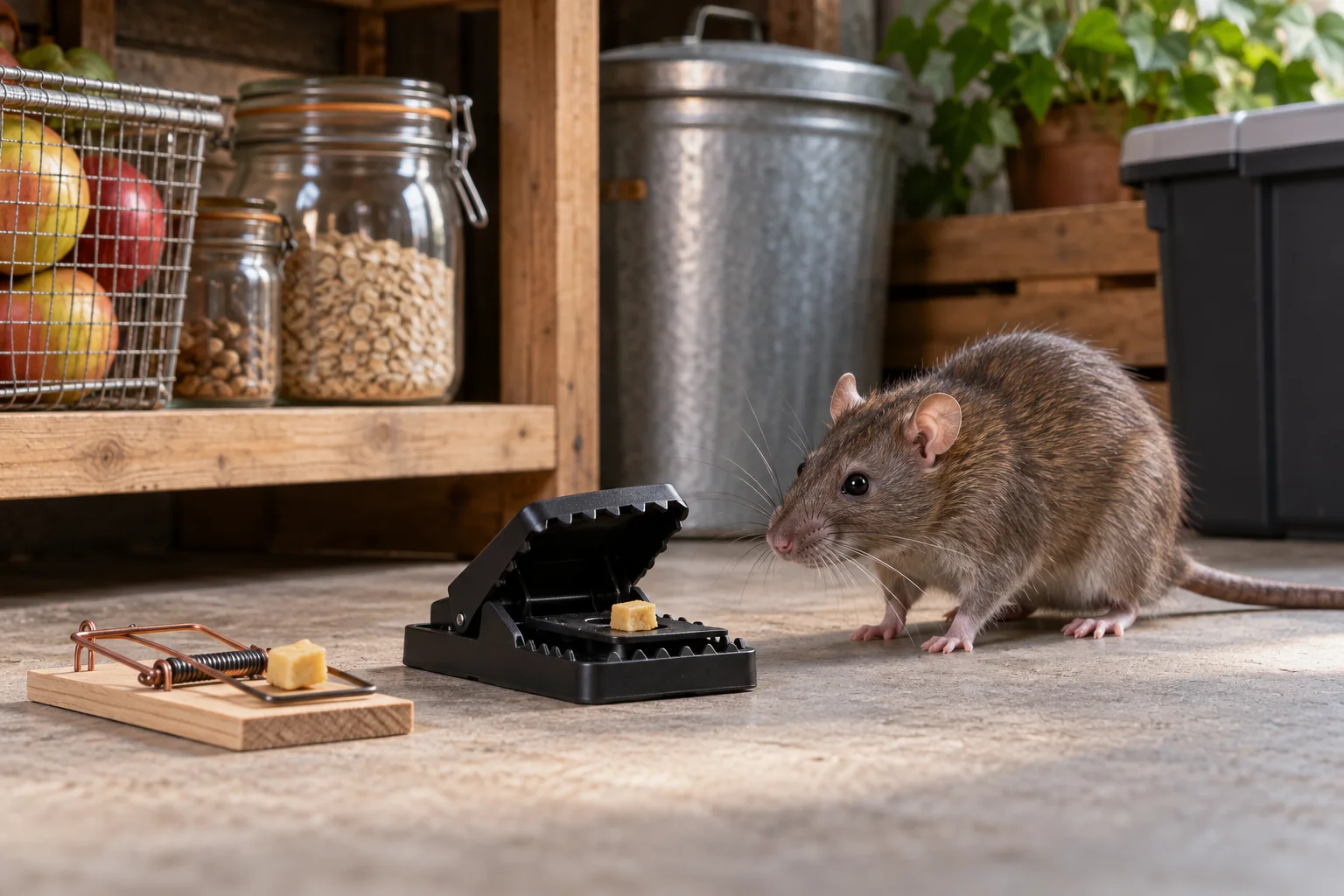
AI-generated illustration
Neither species is solved by a universal trick
Mice and rats can both enter buildings, contaminate food, and use concealed travel routes, but they do not respond to exactly the same equipment or placement. UC IPM notes that mice and small juvenile rats may not trigger a rat snap trap. CDC likewise says to choose the right kind of snap trap because mice and rats require different traps. Calling every small rodent a mouse or every scratching sound a rat can lead to a setup that misses the actual animal.
Begin with signs. Consider droppings, gnaw-mark size, travel height, nesting material, and the location of evidence. UC IPM describes roof rats as more associated with elevated routes and Norway rats as often more ground-oriented, while mice may use very small gaps. A young rat can resemble a mouse, so do not rely on one clue. Photograph signs or seek professional identification when the choice of trap or exclusion strategy depends on it.
Rats are often more wary of novelty
CDC explains that rats tend to fear new objects and suggests pre-baiting an unset trap until bait is eaten before setting it. UC IPM calls this caution neophobia and notes that it can be pronounced in roof rats. This can make a rat take longer to approach a new trap than a house mouse, but it does not mean rats are impossible to trap. It means the trap should appear in a documented route and be allowed to become familiar.
Mice can also avoid poor placement, excessive disturbance, or an available food supply. Do not turn the comparison into a contest of species intelligence. A trap fails when it is too small, too large, poorly positioned, inaccessible for checking, or competing with food. The best question is what animal is present and where it travels. That leads to a plan instead of a drawer full of random devices.
Size and placement must match the animal
Use a rat-sized snap trap for rats and a mouse-sized snap trap for mice. Read each manufacturer's instructions and protect every trap from children and pets. CDC recommends placing snap traps where evidence appears and setting the baited end near a wall so it forms a T shape. A rat trap placed in the center of a room is not made effective by using more bait, and a small mouse trap may injure a large rat without killing it.
Routes can differ. UC IPM notes that roof rats may use elevated ledges, shelves, pipes, fences, or beams, while ground-traveling rats are often found along walls and in protected corners. A mouse may use a gap near a cabinet or appliance that a rat cannot fit through. Never set a trap in a wall cavity or inaccessible space where it cannot be checked. For high, electrical, or roof locations, use a professional rather than unsafe placement.
Food management makes either trap clearer
Secure food, feed, pet bowls, birdseed, garbage, and spills before judging whether a trap works. A mouse or rat with an open food bag nearby has little reason to test a small bait pan. CDC suggests a small amount of bait such as chunky peanut butter for snap traps. UC IPM lists several potential foods, but the amount and placement matter more than a mythic favorite. Use bait to activate the trigger, not to feed the animal.
If a rat is cautious, pre-bait the unset trap; if a mouse ignores the setup, inspect for a different route or species rather than immediately adding poison. Do not leave loose food around the trap. Do not use glue or live traps; CDC advises against them because frightened rodents can urinate. A monitored traditional snap trap gives a clear result and lets you clean and reset safely.
Exclusion differs by route but not by purpose
Both mice and rats enter through building defects, and both are best prevented by durable exclusion. Inspect door bottoms, vents, utility penetrations, foundation gaps, crawl-space panels, eaves, and roofline screens. UC IPM advises sealing openings and notes that rats can defeat soft foam, plastic, wood, and caulk. A mouse-sized defect may be smaller, but it still needs a repair that respects ventilation, drainage, and the building's systems.
Do not seal every possible opening blindly while animals are still inside. Identify current activity, remove animals from accessible routes, then complete final closure. A roof rat route may demand an elevated inspection; a mouse route may point to a cabinet or door gap. The prevention goal remains the same: no accessible food and no durable path from outdoors to a protected indoor space.
Measure success by fresh evidence
CDC considers a week with no captures and no new signs a useful indicator that rats are gone. Use the same practical standard for a rodent-control effort: clean old evidence safely, then watch for fresh droppings, new gnawing, bait taken, or repeat noise. Do not declare success because one mouse was caught or one rat trap stayed untouched. The route and population may be elsewhere in the structure.
Call a qualified professional if activity continues in a wall, attic, duct, crawl space, roofline, or shared building. The easier animal to trap is the one accurately identified, approached through its documented route, and paired with a sound exclusion repair. Careful inspection and a protected, monitored plan matter more than whether a mouse or rat appears easier in a general comparison.